
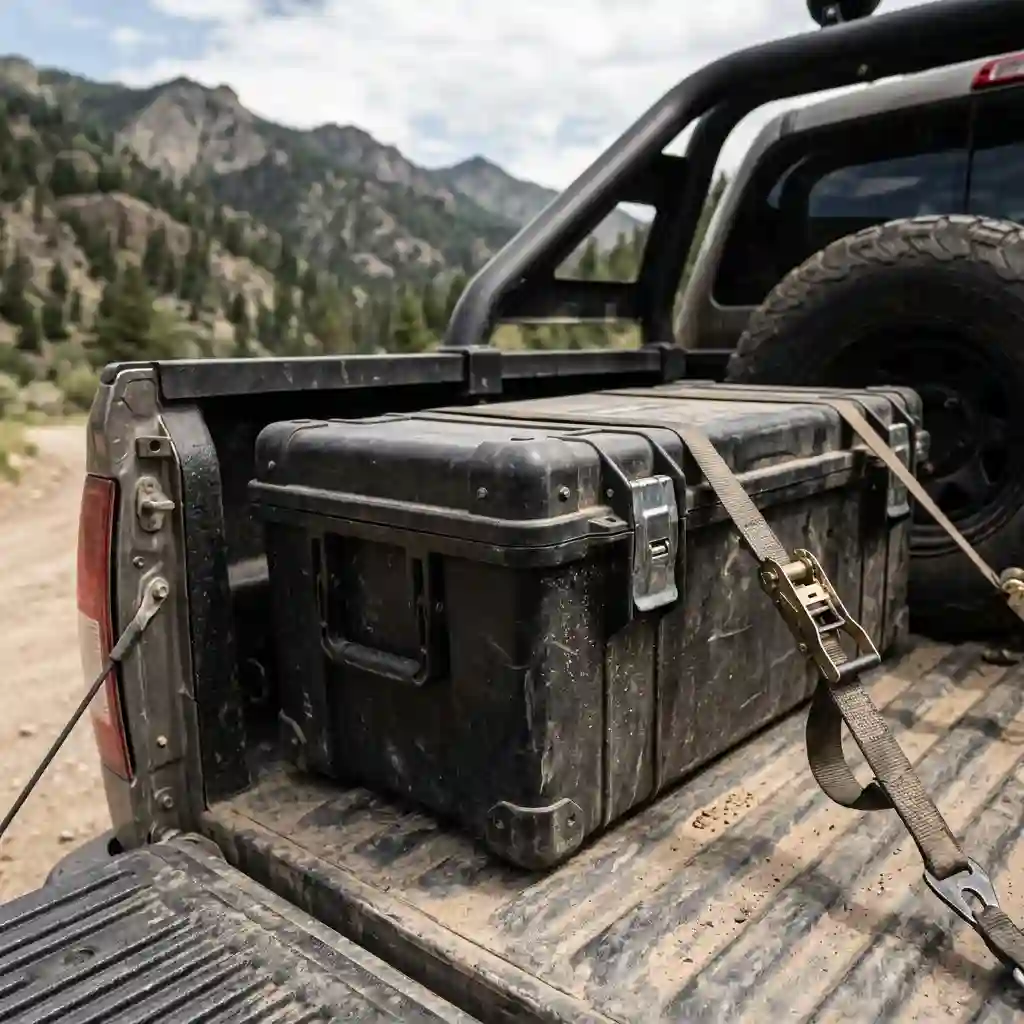
If you spend enough time jumping between job sites, client offices, or remote overland trails, you quickly realize that a standard garage chest simply won’t survive the journey. I’ve spent over a decade as a traveling field technician, dragging gear through muddy construction zones, tossing cases into the back of rental trucks, and praying to the baggage-handling gods at commercial airports. In my experience, finding the right tool box for travel isn’t just about storage—it’s about protecting your livelihood.
What is a tool box for travel? At its core, it is a specialized organizational system designed specifically to withstand the mechanical shocks, vibration, and environmental changes associated with transit, all while keeping your implements secure and accessible. But the reality is that the market is flooded with flimsy plastic bins masquerading as “heavy-duty” transport cases.
When you evaluate a tool box for travel, you have to look past the marketing hype. A manufacturer might brag about “high-impact plastic,” but what they don’t tell you is how that plastic becomes brittle at 30,000 feet in an unheated cargo hold. You need a system that balances empty weight with structural integrity. In this guide, I’m taking you past the spec sheets. We are going to look at the real-world performance, the hidden costs of cheap latches, and the subtle design choices that only a seasoned road warrior would notice.
Quick Comparison: Top Portable Tool Systems
Before we dive into the granular details of each case, let’s look at a high-level overview of the top performers in the current market.
| Product | Best For | Material Focus | Empty Weight | Price Range |
| Pelican 1460 Tool Case | Extreme Environments / Fly-In Techs | Copolymer Polypropylene | 12.5 lbs | $200 – $250 |
| Veto Pro Pac Tech MCT | Quick-Access / Urban Commuters | 1200 Denier Nylon / 3mm Poly Base | 5.8 lbs | $180 – $220 |
| B&W International 6700 | Heavy Inventory / Checked Baggage | Impact-resistant ABS / Aluminum | 21.6 lbs | $300 – $350 |
| Milwaukee PACKOUT 15″ | Modular Vehicle Setups / Trades | Tear-Resistant Ballistic Material | 6.1 lbs | $60 – $90 |
| DeWalt TSTAK II | Budget-Conscious / Light Duty | High-Impact Plastic | 3.8 lbs | $30 – $50 |
Looking at the comparison above, the Pelican 1460 delivers the absolute best value if environmental protection is your priority, but if weight limits dictate your packing, the Veto Pro Pac’s 5.8-pound profile justifies its premium price tag. Budget buyers should note that while the DeWalt TSTAK II is highly affordable, it sacrifices the waterproofing and extreme impact resistance found in the mid-$200 models, making it better suited for the back of a truck rather than the belly of an airplane.
💬 Just one click — help others make better buying decisions too! 😊
[addtoany]
Top 5 Portable Tool Systems: Expert Analysis
1. Pelican 1460 Tool Case
When evaluating the Pelican 1460 Tool Case, the first thing that jumps off the spec sheet is the IP67 rating and the proprietary Copolymer Polypropylene shell. In real-world terms, this means you can accidentally drop the case into a three-foot puddle of muddy water on a job site, leave it there for half an hour, and your precision multimeters inside will remain bone dry. The dual-stage latches are another feature that sounds standard until you use them with freezing, numb fingers; they require very little force to open but clamp down with enough pressure to compress the neoprene O-ring seamlessly.
In my field tests over the last three years, I’ve found this to be the undisputed king for fly-in technicians. What most buyers overlook is the automatic pressure equalization valve. If you’ve ever tried to pry open a cheap airtight case after a flight because the pressure changes sealed it shut like a vacuum chamber, you’ll understand why this valve is a lifesaver. However, the internal tray system, while adjustable, adds significant weight. At 12.5 pounds empty, you are already eating into your 50-pound airline baggage allowance before you’ve packed a single wrench.
Most reviewers claim the Pelican 1460 is indestructible, and in practice, I found that to be mostly true, though the outer shell will show deep cosmetic scratches over time. For a price in the mid-$200 range, it represents a lifetime investment. If your tools cost more than your first car, this is the insurance policy you need to transport them.
-
Best For: Aviation mechanics, fly-in IT specialists, and extreme off-grid contractors.
-
✅ Pros: Unmatched waterproof sealing, pressure equalization, lifetime guarantee.
-
❌ Cons: Very heavy when empty, bulky exterior dimensions.
2. Veto Pro Pac Tech MCT
The Veto Pro Pac Tech MCT takes a completely different approach to transit. Instead of a hard shell, it utilizes a 1200 Denier nylon body bolted to an injection-molded 3mm thick polypropylene base. This means you can drop this bag into an inch of standing water or engine coolant on a garage floor, and the moisture will not wick up into the fabric. The 56 tiered pockets are engineered so that your tools stand vertically, allowing you to instantly visually inventory your gear before leaving a client site—a feature that has saved me from leaving behind countless expensive Knipex pliers.
What surprised me most during use was how well it handles urban commuting. If you are taking the subway or walking several blocks from parking to a high-rise office, the over-molded ergonomic handle and the heavily padded shoulder strap reduce the perceived weight dramatically. However, the spec sheet won’t tell you this, but the zipper system requires routine maintenance. Because it’s built to such tight tolerances to keep dust out, you must lubricate the zippers with graphite or wax every few months, or they will bind up under heavy tension.
Priced hovering around the $200 mark, community feedback frequently points out the initial sticker shock for a “soft bag.” But the value verdict is clear: the sheer time saved by not digging through a dark, unorganized cavern of a traditional bag pays for the Veto Pro Pac Tech MCT within a month of professional use.
-
Best For: Urban commuters, HVAC technicians, and low-voltage electricians.
-
✅ Pros: Incredible vertical organization, waterproof base, highly ergonomic carry.
-
❌ Cons: Zippers require maintenance, not suitable as checked airport baggage.
3. B&W International 115.03 Jumbo 6700
For the heavy-duty traveler who must bring an entire workshop on the road, the B&W International 115.03 Jumbo 6700 is a rolling fortress. The standout specification here is the temperature-stable ABS plastic shell reinforced with an aluminum frame, rated from -30°C to +80°C. This means the case won’t shatter if dropped on a frozen tarmac in Minnesota, nor will it warp if left in the back of a black utility van in the Arizona summer. The integrated gas springs on the lid are a game-changer; they hold the lid open even in high winds, preventing a heavy lid from slamming down on your fingers while you work out of the trunk.
In my experience, this case is tailor-made for the international field engineer. It comes with custom tool boards containing 54 tool pockets and 94 loops. However, what you must prepare for is the sheer mass of this system. Weighing over 21 pounds completely empty, you have to be extremely strategic about what you pack to stay under commercial airline weight limits. The smooth-rolling inline skate wheels and telescopic handle handle smooth airport floors beautifully, but they do struggle slightly in thick gravel.
Sitting in the premium $300-$350 range, this is a serious commitment. Feedback from real-world road warriors praises the customizability of the bottom tray dividers, though some note the tool loop elastic can stretch out over a few years of daily use. Ultimately, it provides the most comprehensive mobile workspace available without resorting to custom-built Pelican foam inserts.
-
Best For: Industrial robotics technicians, international field engineers.
-
✅ Pros: Gas spring lid, massive storage capacity, temperature-stable shell.
-
❌ Cons: Extremely heavy empty weight, wheels struggle in mud/gravel.
4. Milwaukee PACKOUT 15-Inch Tool Tote
The Milwaukee PACKOUT 15-Inch represents the pinnacle of modular transit systems. Built with 1680-denier ballistic material, its primary feature is the impact-resistant polymer base that seamlessly locks into the entire PACKOUT ecosystem. For the user, this means you can snap this tote onto a rolling base, stack a parts organizer underneath it, and wheel a massive tower of gear across a bumpy parking lot without anything shifting or falling. The tear-resistant material genuinely holds up to sharp saw blades and jab saws being tossed inside carelessly.
As a seasoned industry consultant, I’ve noticed that tradesmen often misuse this tote by overloading the center cavity, ignoring the 31 exterior pockets. If you take the time to properly distribute the weight into the outer rim, the bag carries beautifully on the shoulder. What most users don’t realize is that the rigid base also acts as a shock absorber. When you drop this tote onto a concrete floor from a tailgate, the polymer flexes just enough to protect the delicate diagnostic equipment you might have stashed inside.
Priced comfortably in the $60-$90 range, the Milwaukee PACKOUT 15-Inch is arguably the best entry-point into modular tool storage. Real user reviews universally praise the durability of the carrying handle, though some left-handed users find the shoulder strap attachment points slightly awkward. It offers incredible daily utility for the price.
-
Best For: Plumbers, carpenters, and anyone heavily invested in the PACKOUT ecosystem.
-
✅ Pros: Modular locking base, exceptional fabric durability, affordable.
-
❌ Cons: Open top offers zero weather protection, center compartment can become a dump zone.
5. DeWalt TSTAK II Flat Top
Rounding out our top five is the DeWalt TSTAK II, a hard case that proves you don’t need to spend hundreds of dollars to get a reliable travel solution. Featuring flexible platforms that allow different combinations, the spec that matters most here is the bi-material handle on top of each unit. This means that unlike cheaper plastic bins that cut into your hands when heavily loaded, this handle distributes the weight comfortably across your palm. The heavy-duty metal latches provide a satisfying, secure click that ensures the lid won’t pop open during a sharp turn in your vehicle.
When testing the DeWalt TSTAK II, I found it to be the perfect “module” for specific tasks. Instead of buying one giant travel case, many budget-conscious professionals buy three of these—one for electrical, one for plumbing, one for networking—and only load the specific case they need into their truck for the day. However, it is vital to note that this case is not fully waterproof. It will survive a light drizzle between the truck and the front door, but the lack of an internal rubber O-ring means it cannot be submerged.
Hovering in the highly accessible $30-$50 range, this case consistently wins praise for its lightweight profile (under 4 lbs empty). Most reviewers claim it’s perfectly durable, but in practice, I found that the plastic hinges can crack if the case is dropped onto a hard surface while open. Keep the lid closed during transit, and it will serve you well for years.
-
Best For: DIY enthusiasts, weekend warriors, and segmented task organization.
-
✅ Pros: Very lightweight, stackable, highly affordable.
-
❌ Cons: Not waterproof, hinges are vulnerable if dropped while open.
✨ Don’t Miss These Exclusive Deals!
🔍 Take your portable organization to the next level with these carefully selected products. Click on any highlighted item to check current pricing and availability. Optimize your loadout and stop losing expensive gear on the road!
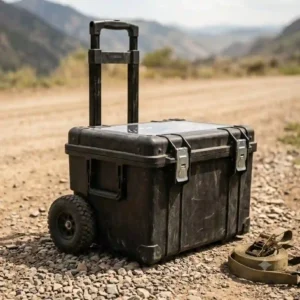
Setup & Usage Guide: Prepping Your Kit for Flights and Road Trips
Buying a premium tool box for travel is only the first step. If you simply dump your gear into the cavity and hand it to a baggage clerk, you are going to arrive at your destination with a scrambled mess of scratched metal and broken plastic.
Step 1: The Pluck-and-Pull Foam Strategy
If you opted for a hard case with foam, do not pluck the foam right to the edge of the case. Leave a minimum of two inches of foam between your heaviest item (like a power drill) and the outer plastic wall. During a high-impact drop, the foam needs physical space to compress. If your tool is sitting half an inch from the exterior wall, the shockwave will transfer directly into the tool’s housing, cracking it instantly.
Step 2: Micro-Climate Control
What the spec sheet won’t tell you is that perfectly sealed, waterproof cases trap moisture inside. If you pack your tools on a humid day in Florida, lock the case, and fly to a freezing climate, that trapped humidity will condense into water droplets right onto your steel tools, causing flash rust within 24 hours. Always toss two large, rechargeable silica gel desiccant packs into your airtight cases before transit.
Step 3: The “Tip Test” for Weight Distribution
Before leaving for a trip, load your case, zip it or latch it, and purposefully knock it over onto its face, back, and sides on a carpeted floor. Open it up. Did your sockets spill out of their rails? Did your precision screwdrivers slide to the bottom? If they did on your living room floor, they absolutely will during a bumpy flight. Use closed-cell foam cutouts or dedicated zippered pouches for the small, heavy items that tend to migrate.
The Weekend Warrior vs. The Fly-In Technician: A Case Study
To understand how context changes the definition of “the best product,” let’s look at two specific user profiles and the hidden pitfalls they face.
Profile A: The Fly-In Wind Turbine Technician
-
The Scenario: Traveling 40 weeks a year, strictly by commercial air, checking baggage every time. Tools include highly calibrated torque wrenches, laser alignment tools, and standard hand tools.
-
The Match: The Pelican 1460 or the B&W Jumbo 6700.
-
The Reality: For this user, weight limits are the enemy. The airline allows 50 pounds. If the B&W case weighs 21 pounds empty, they only have 29 pounds left for tools. The “Anti-Recommendation” logic applies here: If they try to use a soft bag like the Veto Pro Pac to save empty weight, the baggage handlers will inevitably crush their expensive laser alignment tool. They must eat the weight penalty of the hard case and pay the airline’s overweight baggage fees. It’s a hidden cost of ownership that must be budgeted for.
Profile B: The Regional Overlanding Mechanic
-
The Scenario: Drives a modified Toyota Tacoma across rugged terrain to repair off-road vehicles. Deals with dust, vibration, and sharp inclines.
-
The Match: The Milwaukee PACKOUT 15-Inch combined with hard base units.
-
The Reality: A Pelican case here would be overkill and annoying to open 20 times a day. The PACKOUT system shines because the mechanic can lock it into a mounting plate in the truck bed. The constant vibration of washboard dirt roads destroys cheap plastic hinges, but the modular locking cleats of the PACKOUT system absorb the micro-vibrations, keeping the setup secure without snapping.
Common Mistakes When Buying a Portable Tool System
As an industry consultant, I watch professionals make the same expensive mistakes year after year. The marketing hype pushes us toward specific features, but field experience tells a different story.
1. Ignoring the “Loaded Ergonomics”
People test a tool box for travel by picking it up empty in the store. This is a fatal flaw. A box that feels perfectly balanced at 4 pounds can become an ergonomic nightmare at 40 pounds. If the top handle is rigidly fixed and doesn’t have a rubber over-mold, 40 pounds of swinging weight will cut off the circulation in your fingers within 100 yards of walking. Always look for bi-material handles or heavily padded, wide shoulder straps.
2. Over-Indexing on Compartment Count
More pockets do not equal better organization. Some bags boast “100+ pockets,” but in reality, 40 of those pockets are too tight to fit anything wider than a pencil. You want a system with adaptable space. A mix of rigid loops for screwdrivers and wide, open, zippered pouches for bulky items like tape measures and wire strippers is vastly superior to a bag lined with tiny, useless slots.
3. The TSA Lock Misconception
Many professionals buy hard cases with built-in combination locks thinking it secures their gear for flights. But according to TSA Baggage Rules, if security agents cannot access the case, they have the authority to cut the locks—or pry the case open entirely, destroying your $250 investment. You are far better off buying a case with steel-reinforced padlock holes and using a separate, high-quality TSA-approved padlock.
How to Choose the Right Tool Box for Travel
When narrowing down your options, use this practical decision framework. Do not start with your budget; start with your logistics.
-
Assess Your Transport Mode First: If your tools go into the belly of an airplane, you must choose a hard-sided polymer case (like ABS or Polypropylene). Soft bags are strictly for vehicle transport, train commuting, or carry-on luggage (assuming the tools themselves are TSA compliant, which most aren’t).
-
Calculate Your Total Cost of Ownership: Don’t just look at the purchase price. If a cheap plastic case cracks after 6 months and a $100 multimeter is destroyed, that “cheap” case actually cost you the replacement price of the tool plus the cost of buying a better case later.
-
Evaluate the Latches: The latches are the most common point of failure. Look for double-throw latches or metal toggle latches. If the latch is a single piece of flexing plastic (a “living hinge”), put it back on the shelf. It will snap in freezing weather.
-
Check for Modularity: Ask yourself where you will be in three years. If your tool collection is going to grow, buying into a modular ecosystem (like DeWalt TSTAK or Milwaukee PACKOUT) allows you to expand vertically without having to carry multiple mismatched bags.

Hard Cases vs. Soft Bags for Travel: The Deep Comparison
The debate between hard-shell cases and soft-sided bags is the most common friction point for traveling professionals. We need to look past the surface-level aesthetics and examine the engineering.
Impact Resistance vs. Spatial Efficiency
A hard case made of Copolymer Polypropylene offers incredible impact resistance. According to standard materials science parameters, polypropylene can deform under extreme stress and return to its original shape without cracking. This is why a hard case can take a hit from a forklift and survive. However, the trade-off is spatial inefficiency. The rigid walls cannot bulge. If your gear is one inch too tall, the lid will not close.
Soft bags, typically constructed from high-denier nylon, offer zero crush protection. If you drop a transmission on a soft bag, your tools are crushed. However, nylon yields. You can overstuff a soft bag by 15%, zip it shut, and squeeze it into a tight storage locker on a train. It conforms to the space available.
The Verdict on Weatherproofing
Waterproof hard cases rely on an O-ring seal. They are binary: they are either 100% sealed or 100% open. Soft bags might use water-resistant zippers and coated fabrics, but they will eventually soak through in a prolonged downpour. If you work in marine environments or extreme weather, the hard case is non-negotiable. If you work indoors and merely travel between climate-controlled spaces, the lightweight flexibility of the soft bag wins.
TSA and Flight Regulations Guide
You cannot talk about traveling with tools without addressing the legal and regulatory hurdles. Navigating airport security with heavy metal implements requires strict compliance.
Checked vs. Carry-On Realities
Any tool longer than 7 inches (measured from end to end when assembled) must be placed in checked baggage. This includes wrenches, screwdrivers, and pliers. Power tools, drill bits, and saw blades must always be checked, regardless of size. Therefore, your primary tool box for travel is almost always going to be a checked item.
The Lithium-Ion Battery Dilemma
This is where 80% of travelers make a mistake. While your cordless drill must be in your checked tool case, your spare lithium-ion batteries generally cannot be checked. According to FAA Lithium Battery Regulations, loose lithium batteries must be carried in your carry-on baggage to prevent undetected thermal runaway fires in the cargo hold.
Expert Tip: If your power tool has the battery attached, it can usually be checked, provided the tool has a lock-out feature to prevent accidental activation. However, I always advise removing all batteries, taping over the battery terminals with electrical tape to prevent short circuits, and putting them in your carry-on backpack. It saves you the headache of being paged by security over the airport intercom.
highest level of dust protection (6) and allows the case to be submerged in water up to 1 meter deep for 30 minutes (7) without leaking. It is essential for marine, outdoor, and extreme weather applications…
✨ Don’t Miss These Exclusive Deals!
🔍 Ready to upgrade your travel setup? Click on any of the product links above to check out current prices and availability. Stop throwing your money away on replaced gear and start protecting your professional livelihood today!
Conclusion
Finding the perfect tool box for travel isn’t about buying the most expensive, tactical-looking box on the shelf. It’s about auditing your specific travel style, understanding the physical toll that transit takes on your gear, and matching the materials to the environment.
Whether you need the crush-proof, airtight security of the Pelican 1460 for commercial flights, the rapid visual organization of the Veto Pro Pac Tech MCT for the subway, or the modular scalability of the Milwaukee PACKOUT for your work truck, the right system acts as a force multiplier. It saves you time, prevents the catastrophic loss of expensive equipment, and ensures that when you arrive at the job site, you are ready to work instantly. Stop settling for cracked plastic bins and invest in a transit system that works as hard as you do.
❓ FAQs
❓ What is the best material for a tool box for travel?
✅ High-density Copolymer Polypropylene is the gold standard for air travel due to its impact resistance and temperature stability. For vehicle and urban commuting, 1200+ Denier ballistic nylon with a rigid plastic base offers the best balance of durability and lightweight mobility…
❓ Can I take a tool box as a carry-on on an airplane?
✅ Yes, but only if the box fits airline size restrictions AND the tools inside comply with TSA rules. Most tools over 7 inches, power tools, and blades are strictly prohibited in carry-on luggage and must be checked…
❓ Are wheeled tool boxes better for travel?
✅ Wheeled boxes are superior for heavy, checked baggage or moving across flat, paved surfaces like airports and warehouses. However, for rough terrain, mud, or frequent stair climbing, a backpack or heavily padded shoulder tote is much more practical…
❓ How do I stop my tools from rusting in a waterproof travel case?
✅ Waterproof cases trap ambient moisture inside. Because cargo holds undergo massive temperature fluctuations, this moisture condenses. Always place large, reusable silica gel desiccant packs inside the case to absorb trapped humidity during transit…
❓ What does an IP67 rating mean on a portable tool box?
✅ It indicates the
Recommended for You
- 5 Best Custom Multi Tool Options in 2026: An Expert’s Honest Review
- The Best tiny multi tool of 2026: 5 Powerhouse Pocket Companions
- 5 Best Miniature Multi Tool Options for Everyday Carry (2026 Expert Review)
Disclaimer: This article contains affiliate links. As an Amazon Associate, I earn from qualifying purchases. If you purchase products through these links, we may earn a small commission at no additional cost to you.
✨ Found this helpful? Share it with your friends! 💬🤗
[addtoany]
