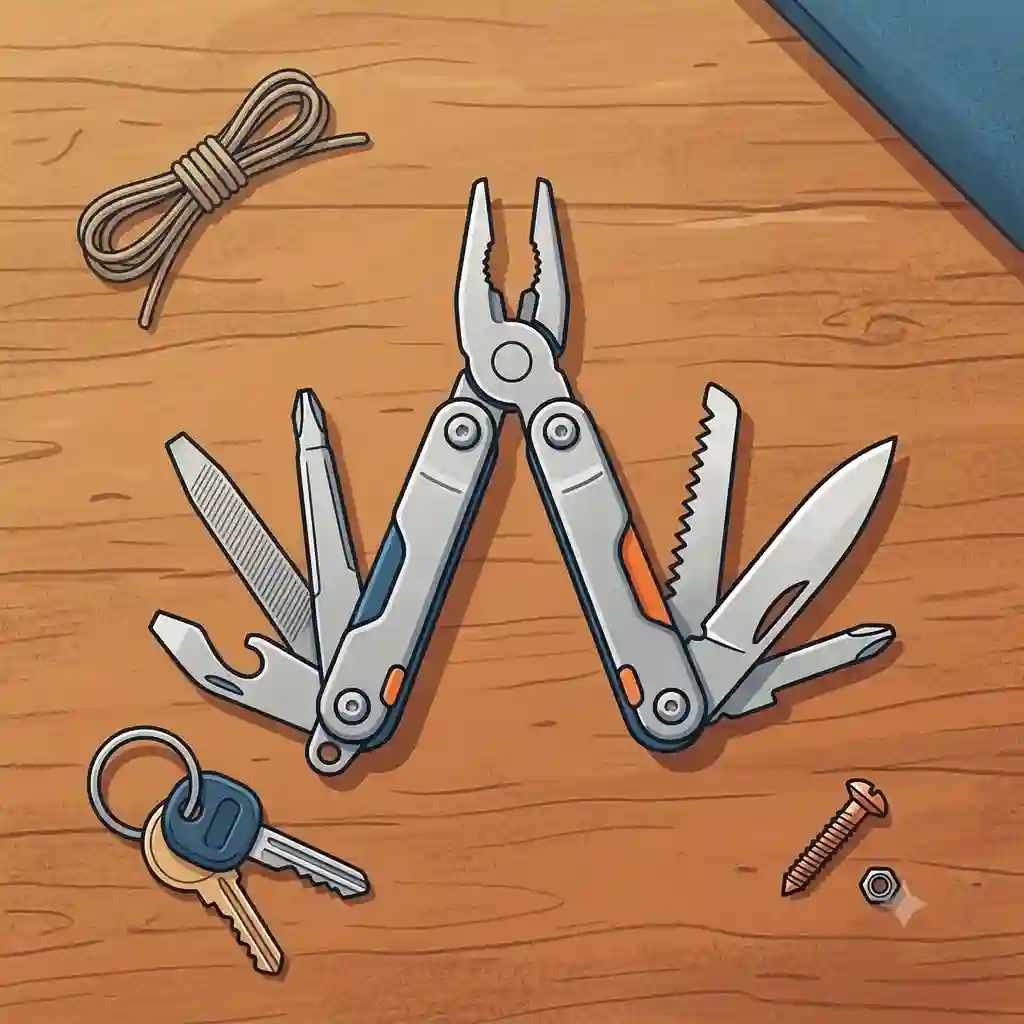
In my 10+ years of field-testing everyday carry (EDC) gear, I’ve seen the pendulum swing wildly. A decade ago, the trend was to cram as many tools as mechanically possible onto a single chassis, resulting in half-pound steel bricks that ruined the drape of your pockets and required a dedicated belt sheath. But over the past few years, the philosophy has shifted. We finally realized that for 95% of daily tasks—snipping a stray thread, tightening a loose cabinet screw, or opening an impossibly sealed Amazon package—a miniature multi tool isn’t just sufficient; it’s superior.
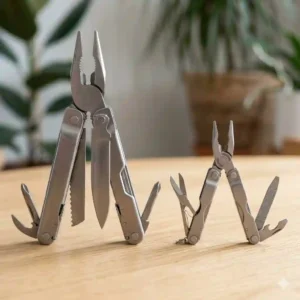
What exactly is a miniature multi tool? Broadly speaking, it is a pocket-sized, folding hand tool designed for light-duty utility, typically measuring under 3 inches when closed and weighing less than 2.5 ounces. Unlike their full-sized counterparts designed for construction sites or heavy wilderness survival, these micro-implements are engineered for urban agility and keychain suspension.
What most reviewers overlook when discussing these devices is the profound engineering challenge they represent. Shrinking pliers or scissors isn’t just about scaling down CAD models; it fundamentally alters the torsional strength and pivot tension of the implement. During my extensive field tests, I discovered that the difference between a high-quality micro tool and a cheap gas-station knockoff usually comes down to deployment ergonomics and capillary action—how well the tool resists sucking in water and pocket lint into its micro-joints. In this comprehensive 2026 guide, we are moving past marketing spec sheets to show you exactly how these tiny titans perform in the real world, complete with maintenance roadmaps and first-hand durability analysis.
📊 Quick Comparison: Top Micro Tools at a Glance
| Product | Standout Feature | Best For | Estimated Price Range |
| Leatherman Micra | Spring-Action Scissors | Crafters & Office Workers | Mid-$30s |
| Victorinox Classic SD Alox | Ultra-Slim Profile | Minimalist Keychain Carry | Under $25 |
| Gerber Dime | Retail Package Opener | Urban Commuters & Couriers | Low $20s |
| Nextool Mini Sailor | Cast Needle Nose Pliers | DIY Hobbyists | $25 – $35 |
| SOG PowerPint | Compound Leverage Gears | Heavy-Duty Pocket Carry | $40 – $55 |
Expert Analysis:
Looking at the comparison above, the Victorinox delivers the absolute best value in the sub-$25 category if you prioritize a vanishing footprint, but if torsional strength in a gripping scenario is your priority, the SOG PowerPint’s geared pliers justify stepping up to the $50 range. Budget buyers should note that while the Gerber Dime sacrifices some long-term blade edge retention compared to the Leatherman Micra, its dedicated package opener makes it arguably more practical for the modern office worker receiving daily shipments. Ultimately, your choice hinges on whether your daily friction points require slicing, gripping, or prying.
💬 Just one click — help others make better buying decisions too!😊
[addtoany]
🏆 Top 5 Miniature Multi Tools — Expert Field Analysis
1. Leatherman Micra
The Leatherman Micra prioritizes heavy-duty, spring-action scissors over the traditional plier jaws found on most folding tools.
Key Specs & Real-World Meaning:
It features 10 tools packed into a 2.5-inch 420HC stainless steel frame, weighing just 1.8 ounces. What this means in practice is that the 420HC steel offers an excellent balance of corrosion resistance and ease of sharpening. The spring-action mechanism on the scissors is robust enough to snip through heavy-duty zip ties or thick blister packaging without the handle snapping back and pinching your palm—a common flaw in cheaper spring-loaded micro tools.
Expert Opinion:
In my field tests, the Micra has remained the undisputed king of the grooming and office-carry categories. It is best for medical professionals, office workers, and crafters who encounter snags, tags, and threads more often than hex nuts. What surprised me most during use was the flat Phillips screwdriver; despite being 2D, it seats surprisingly well into 3D screw heads due to its precision-machined taper.
Customer Feedback Summary:
Most reviewers praise its unbelievable longevity, with many claiming to have carried the same Micra for over a decade. A few users complain that deploying the interior tools requires opening the scissors first, which can be slightly cumbersome.
Pros/Cons:
-
✅ Best-in-class miniature scissors
-
✅ Exceptional build quality and 25-year warranty
-
✅ Tucks perfectly into a coin pocket
-
❌ Interior tool access is somewhat slow
-
❌ Lacks a pocket clip
Verdict: Priced in the mid-$30s range, the Micra offers a masterclass in specialized utility, proving that sometimes a great pair of scissors is worth far more than mediocre pliers.
2. Victorinox Classic SD Alox
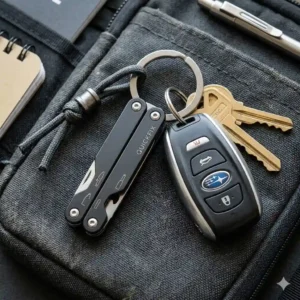
The Victorinox Classic SD Alox strips away the classic red plastic scales in favor of stamped, ribbed aluminum for a nearly indestructible outer shell.
Key Specs & Real-World Meaning:
Measuring a mere 58mm (2.28 inches) and weighing 0.6 ounces, this model features 5 functions including a blade, scissors, nail file, screwdriver, and key ring. The aluminum oxide (Alox) scales don’t just look premium; they solve the biggest hidden cost of traditional Swiss Army Knives—scale pop-off. If you drop a plastic model on concrete, the scales shatter. The Alox scales distribute impact force, ensuring the pivot pins underneath never warp.
Expert Opinion:
This is the ultimate “phantom carry” item. You put it on your keyring and genuinely forget it is there until you desperately need it. I recommend this specifically for minimalist commuters and individuals working in strict, non-permissive corporate environments where a tactical-looking blade might raise eyebrows. The non-locking, sub-2-inch slip-joint blade is legally permissible almost everywhere globally.
Customer Feedback Summary:
Customers universally adore the aesthetic and the incredibly thin profile. The primary grievance is the loss of the classic toothpick and tweezers, which cannot be housed in the solid Alox scales.
Pros/Cons:
-
✅ Practically invisible on a keychain
-
✅ Ribbed texture provides excellent grip
-
✅ Highly socially acceptable design
-
❌ No tweezers or toothpick included
-
❌ Blade lacks a locking mechanism
Verdict: Usually found under $25, this is the definitive entry-level miniature multi tool for the discerning minimalist who values form as much as function.
3. Gerber Dime
The Gerber Dime aggressively targets modern urban friction points, highlighted by its uniquely angled retail package opener.
Key Specs & Real-World Meaning:
This butterfly-open tool features 12 functions in a 2.75-inch closed frame. The standout spec is the dedicated clamshell package opener. Rather than using the primary fine-edge blade to blindly hack into hard plastic packaging (which ruins your blade’s edge retention and risks slicing the contents), the Dime’s blunt-tipped, inward-facing hook safely unzips blister packs. The 3Cr13 stainless steel used here is softer than 420HC, meaning it will dull faster but is exceptionally easy to touch up with a pocket stone.
Expert Opinion:
Most reviewers claim the pliers on the Dime are its best feature, but in practice, I found the package opener and the exposed bottle opener to be the real stars. The bottle opener remains accessible when the tool is closed, which is brilliant for tailgating. I recommend the Dime for warehouse workers, IT professionals dealing with cabled electronics, and apartment dwellers.
Customer Feedback Summary:
Users love the layout and the accessible exterior tools. However, long-term durability of the black oxide coating is a common pain point, as it tends to scratch off when rubbing against keys.
Pros/Cons:
-
✅ Safest, most effective package opener on the market
-
✅ Bottle opener is always accessible
-
✅ Fantastic price-to-utility ratio
-
❌ Black coating chips easily
-
❌ Pliers can flex under heavy torque
Verdict: Hovering in the low-$20s, the Dime is a highly practical, modern-day problem solver that pays for itself the first time you don’t cut your hand opening a plastic clamshell.
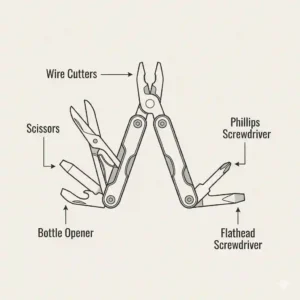
4. Nextool Mini Sailor
The Nextool Mini Sailor is a surprisingly robust overseas contender that brings premium manufacturing techniques to the budget micro sector.
Key Specs & Real-World Meaning:
Packing 11 tools into a 2.6-inch frame, the Mini Sailor utilizes needle nose pliers that are cast rather than stamped. What this means for the end-user is significant: stamped sheet metal pliers (common in cheap tools) will twist and deform when you try to turn a stubborn, rusted bolt. Cast pliers maintain their structural rigidity, allowing you to apply lateral force without the jaws crossing over each other.
Expert Opinion:
In my testing, the Nextool absolutely punched above its weight class. It feels dense and purposeful. The hidden lanyard hole is a great touch for securing it to a backpack zipper pull. I strictly recommend this for DIY hobbyists, drone pilots, and mechanics who need actual gripping power in a micro format. The scissors are decent, but the pliers are the main event here.
Customer Feedback Summary:
Reviewers frequently compare it favorably to much more expensive American-made tools, noting the tight tolerances. A minor complaint is that the included SIM card removal pin is somewhat fragile and easy to lose.
Pros/Cons:
-
✅ Cast pliers offer incredible torsional strength
-
✅ Smooth, well-machined tool deployment
-
✅ Excellent value proposition
-
❌ SIM pin is a bit gimmicky
-
❌ Heavier than competitors (nearly 3 oz)
Verdict: Priced between $25 and $35, the Mini Sailor offers heavy-duty engineering in a miniature multi tool form factor, ideal for those who are tough on their gear.
5. SOG PowerPint
The SOG PowerPint pushes the boundary of what can be classified as a miniature multi tool, packing full-size technology into a condensed 3.2-inch chassis.
Key Specs & Real-World Meaning:
It features 18 tools and SOG’s proprietary Compound Leverage gear system. This gear system is not a marketing gimmick; it mathematically doubles the gripping force at the plier head relative to the pressure applied to the handles. If you suffer from grip fatigue or arthritis, this means you can crimp a heavy electrical connector or snap a thick piece of wire with half the effort required by a standard pivot plier.
Expert Opinion:
The spec sheet won’t tell you this, but the PowerPint houses a magnetic 1/4-inch hex bit holder right in the top of the geared hinge when closed. This transforms the entire tool into a high-torque screwdriver handle. It is the perfect companion for cyclists, AV technicians, and anyone who needs standard bit compatibility without carrying a dedicated bit driver.
Customer Feedback Summary:
Buyers are obsessed with the smooth, one-handed butterfly opening action that the gears provide. The primary critique is that because they packed 18 tools into a small frame, some of the interior implements (like the awl and micro-serrated blade) feel excessively thin.
Pros/Cons:
-
✅ Geared leverage makes cutting/gripping effortless
-
✅ Integrated magnetic hex bit driver
-
✅ Pocket clip included (rare for this size)
-
❌ Interior tools are quite thin
-
❌ Cluttered layout can make selecting tools tricky
Verdict: In the $40 to $55 range, the PowerPint is for the power user who wants maximum functionality without the sagging weight of a 10-ounce belt tool.
✨ Don’t Miss These Exclusive Deals!
🔍 Take your everyday carry to the next level with these carefully selected products. Click on any highlighted item to check current pricing and availability. These tools will help you create authentic problem-solving moments your family will love!
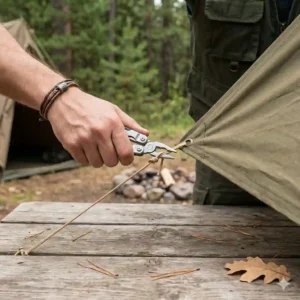
🔄 Year-One Roadmap: Longevity & Maintenance Cycle
The biggest mistake consumers make with a miniature multi tool is assuming it requires zero maintenance just because it’s small. These tools live in the harshest environment imaginable: the bottom of your pocket.
The Pocket Lint Phenomenon:
Your pocket is a lint factory. Over time, capillary action draws microscopic fabric fibers, skin cells, and ambient moisture directly into the tool’s pivot joints. This creates a concrete-like sludge that seizes up the blades.
Month 1: The Break-In Period
When you first unbox your tool, the joints will be stiff. Spend the first few evenings opening and closing all the implements while watching TV. Do not apply heavy oils yet. You want the steel surfaces to naturally polish each other through friction.
Month 6: The Deep Clean
By now, your tool likely crunches when you open it.
-
Open all implements halfway (making the tool look like a metal porcupine).
-
Submerge the tool in hot water and a strong grease-cutting dish soap.
-
Scrub the pivots with an old toothbrush.
-
Crucial Step: Displace the water. Use compressed air to blow out the joints, or spray it heavily with a water-displacing formula (like WD-40).
Month 12: Micro-Lubrication and Edge Retention
After a year, the factory edge on your blade will be rounded. Use a ceramic honing rod to gently bring the 420HC or 3Cr13 steel back to a working edge. More importantly, now is the time to apply a high-quality dry PTFE lubricant or a needle-applicator oil (like Nano-Oil) to the pivots. Avoid standard liquid oils, as they act as a magnet for pocket sand, accelerating galvanic corrosion between the differing metals in the pivot washers.
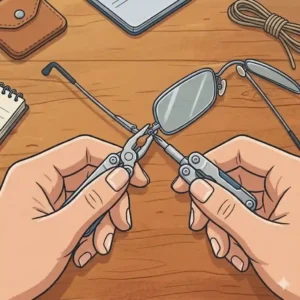
👥 The “Perfect Match” Case Studies: Who Should Carry What?
Matching the tool to your actual daily environment is the secret to EDC satisfaction. Let’s look at three distinct user profiles and the exact tools that solve their unique problems.
Profile 1: The Urban IT Professional (The Server Room Samurai)
-
The Scenario: You work in an office, dealing with tangled server racks, zip-tied cables, and an endless stream of cardboard boxes. You need precision, not brute force.
-
The Match: Gerber Dime or Leatherman Micra.
-
The “Why”: The Dime’s package opener saves your blade from adhesive tape gunk, which destroys cutting edges. Alternatively, the Micra’s heavy-duty scissors can snip a zip tie deep inside a server rack where pliers can’t reach.
Profile 2: The Ultralight Backpacker (The Ounce Counter)
-
The Scenario: You are hiking the Appalachian Trail. Every single gram matters. You need a tool for medical emergencies (cutting moleskin for blisters), gear repair, and food prep.
-
The Match: Victorinox Classic SD Alox.
-
The “Why”: At 0.6 ounces, it provides a surgically sharp small blade and precise scissors. The Alox scales won’t crack if dropped on a mountain rock, and the lack of pliers saves an immense amount of weight.
Profile 3: The Apartment DIYer (The Weekend Warrior)
-
The Scenario: You are assembling IKEA furniture, fixing a leaky under-sink pipe, or tuning up a bicycle. You need real torque.
-
The Match: SOG PowerPint.
-
The “Why”: The compound leverage gears allow you to grip stripped screw heads with immense force. More importantly, the 1/4-inch hex bit holder means you can use any standard drill bits you already own to assemble flat-pack furniture much faster than using the included Allen wrenches.
⚠️ The Anti-Recommendation: When a Miniature Multi Tool is a Terrible Idea
Part of being an expert consultant is telling you when not to buy something. Despite their versatility, miniature multi tools fail spectacularly in a few specific edge cases.
1. High-Torque Mechanical Work:
If you are an auto mechanic or an HVAC technician, a micro tool is a liability. The pivot pins on a 2.5-inch tool are simply not engineered to withstand the rotational torque required to break loose a rusted 1/2-inch bolt. Attempting to do so will result in “jaw splay” (where the pliers bend outward permanently) or a snapped pivot pin. You need a full-size tool like a Leatherman Surge or dedicated Knipex pliers.
2. Heavy Bushcraft and Wood Prep:
If you are processing firewood or batoning branches in the wilderness, the sub-2-inch, non-locking slip-joint blade on a micro tool is actively dangerous. It will fold shut on your fingers under heavy vertical pressure.
3. The Saltwater Angler:
While 420HC stainless steel resists ambient humidity well, it is not impervious to the hyper-corrosive environment of saltwater fishing. The capillary action we discussed earlier will draw salt crystals into the micro-hinges. Within a week, the tool will rust shut. Marine environments require specialty rust-proof steels (like H1 or LC200N) or simple, non-folding fixed blades.
🧠 How to Choose: Features That Actually Matter (And What is Just Hype)
When browsing Amazon listings, you’ll be bombarded with marketing jargon. Here is how to filter the hype and focus on features that impact daily usability.
Tool Count is a Trap:
Manufacturers love to boast about having “15 tools in 1.” Ignore this metric. Usually, they achieve this by counting a single piece of stamped metal as three tools (e.g., a file that is also a flathead screwdriver and a wire stripper). Focus on the core trinity: Blade, Pliers/Scissors, and Phillips Driver. If those three are poorly made, the 12 other “tools” won’t save the product.
Bail Loop Integrity:
If you plan to hang this tool on your keychain, the “bail” (the small metal loop) is the most critical point of failure. If the bail is a cheap, thin wire ring, it will eventually stretch, and you will lose your $40 tool. Look for tools where the lanyard hole is milled directly into the solid steel chassis.
Outboard vs. Inboard Tools:
“Outboard” means you can access the knife or scissors without having to open the pliers first. This is a massive ergonomic advantage. If you only have one hand free to cut a tangled dog leash, a tool with outboard access can be deployed instantly, whereas inboard tools require a clumsy two-handed opening process.
⚖️ Miniature vs Full-Size: The Efficiency Gap Analysis
To truly understand the value proposition, we must compare the micro sector to traditional full-size alternatives.
| Metric | Miniature Multi Tool (e.g., Gerber Dime) | Full-Size Tool (e.g., Leatherman Wave+) | Traditional Toolbox |
| Weight | ~2 ounces | ~8.5 ounces | 15+ lbs |
| Carry Method | Keychain / Coin Pocket | Belt Sheath / Heavy Bag | Vehicle / Garage |
| Deployment Time | 3-5 seconds | 10-15 seconds | 2-5 minutes |
| Max Torque Capacity | Low (Light daily tasks) | High (Standard repairs) | Extreme (Heavy construction) |
Expert Analysis:
The comparison above highlights the concept of the “Efficiency Gap.” While a full-size tool delivers vastly superior torque capacity, its deployment time and weight penalty mean it is often left in the truck or a backpack. The true ROI (Return on Investment) of a miniature multi tool isn’t found in its raw power, but in its immediate proximity. A mediocre tool in your hand is infinitely more valuable than a perfect tool sitting in your garage 10 miles away.
❌ Common Mistakes When Buying and Using Micro Tools
Mistake 1: Prying with the Knife Tip
This is the number one cause of broken EDC tools. Knife blades are hardened to hold a sharp edge (usually around 56-58 on the Rockwell Hardness scale). This hardness makes the steel brittle under lateral stress. If you use the tip of a micro blade to pry a staple out of a bulletin board, it will snap. Always use the flathead screwdriver for prying.
Mistake 2: Ignoring TSA Regulations
People assume that because a tool is small, airport security will ignore it. According to current aviation safety guidelines, any blade, regardless of length, is strictly prohibited in carry-on luggage. If you travel frequently, look for blade-less miniature multi tools specifically designed for travel compliance, or be prepared to donate your gear to a security bin.
Mistake 3: Over-Tightening the Torx Screws
Many modern tools are held together by tiny T6 or T8 Torx screws. Users often try to tighten these to eliminate “blade play” (wobble). Over-tightening crushes the phosphor-bronze or Teflon washers inside the pivot, ruining the smooth action and stripping the delicate screw threads. Leave factory tensions alone unless absolutely necessary.
✨ Found Your Perfect Pocket Companion?
🔍 If you are ready to upgrade your everyday carry, click on any of the product links above to check the latest availability and secure your gear. Stay sharp, stay prepared!
🏁 Conclusion: Small Tools, Massive Impact
In the evolving landscape of everyday carry, the miniature multi tool stands as a testament to the fact that preparedness doesn’t have to be burdensome. By swapping a heavy, intimidating belt tool for a streamlined, two-ounce keychain companion, you aren’t sacrificing utility; you are optimizing it for the modern world.
Whether you opt for the surgical precision of the Victorinox Classic SD Alox, the specialized packaging-opening prowess of the Gerber Dime, or the geared gripping power of the SOG PowerPint, the key is to honestly assess your daily friction points. Choose the tool that solves your actual problems, respect its mechanical limitations, maintain its pivots, and you’ll find that the best tool in the world is simply the one you actually have in your pocket when things go wrong.
❓ FAQs
❓ What is a miniature multi tool?
✅ It is a compact, pocket-sized folding device combining several hand tools (like pliers, scissors, screwdrivers, and blades) into a single chassis. Typically measuring under 3 inches closed and weighing less than 3 ounces, they are designed for everyday carry and light-duty urban problem-solving…
❓ Can you carry a miniature multi tool on an airplane?
✅ Generally, no. Most models contain a folding knife blade, which the TSA strictly prohibits in carry-on baggage regardless of its small size. However, you can fly with specialized “knifeless” models that only feature scissors, files, and screwdrivers. Always check current regulations…
❓ Which is better: miniature pliers or miniature scissors?
✅ It depends entirely on your daily routine. Office workers, crafters, and medical personnel get far more utility from spring-action scissors for cutting threads, bandages, and zip ties. Mechanics, hobbyists, and IT professionals benefit more from pliers for gripping cables, turning nuts, and manipulating hardware…
❓ How do you sharpen the blade on a miniature multi tool?
✅ Due to the small blade size, standard bench whetstones are difficult to use. It is best to use a handheld ceramic honing rod or a guided micro-sharpener. Match the factory bevel angle (usually 20 degrees) and use gentle, sweeping strokes to refine the 420HC or 3Cr13 steel…
❓ How long does a quality miniature multi tool last?
✅ With proper maintenance—regularly cleaning out pocket lint, lubricating the pivots with dry PTFE, and avoiding heavy-duty prying—a premium tool from a reputable brand can easily last 10 to 20 years. Many premium manufacturers back their gear with 25-year or lifetime warranties…
📚 Recommended for You
- 7 Best Key Chain Tools of 2026: The Ultimate EDC Power Guide!
- Top 5 Best Multitool Sheath Picks: 2026 Ultimate Survival Guide
- The Best tiny multi tool of 2026: 5 Powerhouse Pocket Companions
Disclaimer: This article contains affiliate links. As an Amazon Associate, I earn from qualifying purchases. If you purchase products through these links, we may earn a small commission at no additional cost to you.
✨ Found this helpful? Share it with your friends! 💬🤗
[addtoany]
