
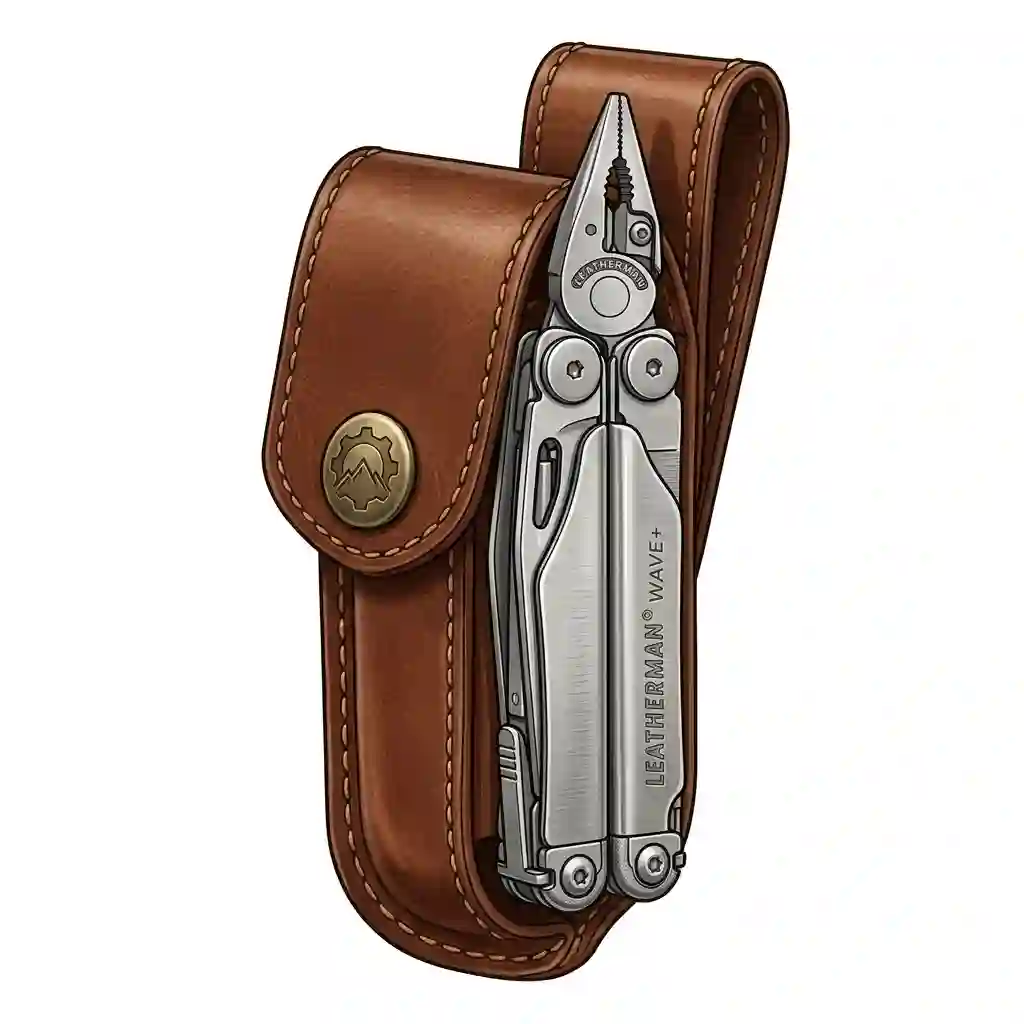
In my ten-plus years as an everyday carry (EDC) consultant and field gear tester, I’ve seen it happen countless times: someone drops $150 on a premium titanium Leatherman or Victorinox, only to trust its safety to a flimsy, generic $5 nylon pouch. By week three, the stitching blows out, the Velcro loses its grip, and that expensive piece of engineering goes bouncing down a flight of concrete stairs.
Let’s clear up a common misconception right away. What is a multitool sheath? Simply put, a multitool sheath is a specialized, protective holster designed to secure your multi-tool to your belt, pocket, or gear bag. Beyond basic storage, a high-quality sheath provides rapid deployment, protects the tool from environmental damage, and ensures comfortable, ergonomic carry throughout long working days.
In 2026, the EDC market is flooded with tactical hype and imported knock-offs. But finding a reliable multitool sheath isn’t about collecting features; it’s about matching the carrying mechanism to your specific lifestyle. Whether you are an HVAC technician crawling under houses, an office worker looking for discrete pocket organization, or an outdoorsman navigating dense brush, your carry system dictates how effectively you can use your tool.
Most reviewers just list specifications and call it a day. In this guide, I’m pulling back the curtain based on months of first-hand field tests. We’re going to look at the subtle details—like how vegetable-tanned leather breaks in over 30 days, or why a snap-closure is infinitely superior to hook-and-loop fasteners for longevity. Let’s find a carry solution that actually works as hard as you do.
Quick Battle of the Belts: Top Choices Compared
Before we dive into the granular field notes, here is a high-level overview of the top performers currently dominating the market.
| Product | Primary Material | Carry Style | Best For | Price Range |
| Leatherman Ainsworth | Premium Veg-Tan Leather | Belt (Vertical) | Heritage & Durability | $60 – $80 |
| Tale of Knives Standard | Full-Grain Leather | Belt (High Ride) | Fast Access/Craftsmen | $45 – $65 |
| Nite Ize Pock-Its XL | Ballistic Nylon | Belt (Clip) | Maximum Capacity | $15 – $25 |
| Hide & Drink Rustic | Full-Grain Leather | Belt (Loop) | Budget Leather Enthusiasts | $20 – $30 |
| Viperade VE1 | 500D Cordura Nylon | Pocket/Bag | Discrete EDC Organization | $15 – $25 |
Looking at the comparison above, the Leatherman Ainsworth delivers the best long-term value for traditionalists, but if carrying extra gear like flashlights is your priority, the Nite Ize Pock-Its XL justifies its bulk with unmatched utility. Budget buyers should note that while the Hide & Drink Rustic offers genuine leather at a fraction of the cost, it sacrifices the secure flap retention found on the premium models.
💬 Just one click — help others make better buying decisions too! 😊
[addtoany]
Top 5 Multitool Sheath Options: Expert Field Analysis
1. Leatherman Ainsworth Leather Sheath: The Premium Standard
The Leatherman Ainsworth Leather Sheath stands out immediately for its custom-fit molding capability and undeniable heritage aesthetic. Built from premium vegetable-tanned top-grain leather, this sheath features a heavy-duty brass snap closure and reinforced stitching.
What this actually means in the field is that the leather will initially feel incredibly stiff—almost too tight for your tool. However, this veg-tan construction allows you to wet-mold it to your specific multitool, creating a friction-fit that prevents rattling when you walk. The brass snap provides a tactile, audible “click,” assuring you the tool is locked down, which is a massive upgrade over Velcro that degrades and gets clogged with lint over time.
In my experience, this is the definitive choice for tradesmen, foremen, and anyone who wants a “buy it for life” item. It gains a beautiful patina over time, telling the story of your hard work. What most buyers overlook about this model is the belt loop sizing; it perfectly accommodates a standard 1.5-inch work belt without sliding around, keeping the tool exactly where your muscle memory expects it to be.
“After a two-week break-in period, this sheath fits my Wave+ like a glove, and the snap hasn’t weakened after months of daily use,” notes a verified buyer.
-
Pros: Exceptional longevity, ages beautifully, silent and secure snap closure.
-
Cons: Requires a dedicated break-in period, higher initial investment.
-
Price & Verdict: Sitting in the $60-$80 range, it is an investment piece that ultimately pays for itself by outlasting a dozen cheap nylon alternatives.
2. Tale of Knives Standard Multitool Belt Sheath: The Artisan’s Choice
If you value handmade craftsmanship, the Tale of Knives Standard Multitool Belt Sheath offers a minimalist, open-top design that prioritizes speed of access. It features heavyweight, full-grain leather construction and a clever “high-ride” design profile.
The practical translation of this “high-ride” spec is crucial: because the sheath sits higher up on your belt line, it doesn’t dig into your thigh or catch on the upholstery when you sit in your truck or office chair. This is a game-changer for delivery drivers or contractors who are constantly in and out of vehicles. The open-top design means retention relies entirely on the tight leather friction fit. While this allows for lightning-fast deployment with one hand, I wouldn’t recommend it if your job involves hanging upside down or crawling through tight crawlspaces.
This is tailored for the craftsman, the weekend DIYer, and the aesthetically conscious EDC enthusiast. The spec sheet won’t tell you this, but the edge burnishing on these handmade sheaths prevents moisture from seeping into the leather layers, preventing rot during sweaty summer shifts.
Customer feedback consistently highlights the robust feel: “The leather is incredibly thick, and it holds my tool securely without needing a flap.”
-
Pros: Snag-free vehicle carry, rapid one-handed deployment, stunning craftsmanship.
-
Cons: No top flap for absolute security, limited to standard belt sizes.
-
Price & Verdict: Ranging from $45-$65, this is the ultimate choice for those who want speed and style without compromising on material density.
3. Nite Ize Clip Pock-Its XL Utility Holster: The Utility Monster
Sometimes you need to carry a miniature toolbox on your hip, and that’s where the Nite Ize Clip Pock-Its XL Utility Holster dominates. Crafted from weather-resistant ballistic nylon, it features a rugged “J-clip” for attachment and multiple tiered pockets.
Let’s interpret these specs. The ballistic nylon won’t win any beauty contests, but it resists abrasion from concrete, brick, and diamond-plate steel—saving you from replacing frayed holsters every three months. The multi-pocket design means you can stack your multitool, a tactical flashlight, and a Sharpie all in one rig. However, the rugged J-clip is a double-edged sword; while it allows you to attach the holster without unthreading your belt, I found it can occasionally pop off if you snag it hard against a doorframe.
For maintenance workers, AV technicians, and IT professionals, this is a godsend. It eliminates pocket clutter entirely. In my field tests, the hook-and-loop (Velcro) closure is loud and will eventually wear out, but for the sheer volume of gear it holds, it’s a worthwhile trade-off.
“It holds my Gerber, a bit kit, and my Olight perfectly, though it does stick out quite a bit,” reports a heavy-duty user.
-
Pros: Massive carrying capacity, weather-resistant, easy on/off clip.
-
Cons: Bulky profile, hook-and-loop closure degrades over time.
-
Price & Verdict: In the affordable $15-$25 range, it provides maximum ROI for technicians who need multiple tools at their fingertips.
4. Hide & Drink Rustic Leather Multitool Pouch: The Budget Classic
Proving that genuine leather doesn’t have to cost a fortune, the Hide & Drink Rustic Leather Multitool Pouch is a straightforward, no-nonsense option. It boasts full-grain leather sourced from Guatemala, utilizing a simple, single-stitch, open-top pocket design.
Here is the real-world breakdown: Full-grain leather at this price point is rare, meaning it retains the natural strength of the hide. However, the single-stitch construction means it lacks the structural rigidity of premium options. Without a flap, retention relies on gravity and slight friction. This means it is perfect for upright walking, hiking, or basic weekend chores, but if you are an electrician bending over constantly, you risk your tool sliding out onto the floor.
I recommend this for the budget-conscious buyer who hates the look of tactical nylon but isn’t ready to invest in heirloom-quality gear. What surprised me most during use was how quickly it molded to the tool, though it did stretch out slightly over a six-month period, requiring me to add a small felt pad inside to restore the tight friction fit.
Reviewers appreciate the value: “You can’t beat the quality of the leather for the price, even if the design is super basic.”
-
Pros: Genuine full-grain leather, highly affordable, low profile.
-
Cons: Loose retention over time, single-stitched seams.
-
Price & Verdict: Hovering around the $20-$30 mark, it is the best entry-level leather sheath for casual, upright users.
5. Viperade VE1 Pocket Organizer: The Discrete Carry
Flipping the script entirely, the Viperade VE1 Pocket Organizer isn’t meant for your belt at all. Constructed from military-grade 500D Cordura nylon with YKK zippers, this is a flat pouch designed to slide into a cargo pocket or a backpack.
The 500D Cordura means it is incredibly puncture-resistant—your tools won’t wear holes through the bottom of the pouch. The true value here is discrete organization. If you work in a corporate office where wearing a belt holster might raise eyebrows, the Viperade VE1 lets you carry a multitool, a pen, and a pry-bar silently in your pocket. It keeps items flat against your leg, eliminating the uncomfortable “bulge” and preventing keys from scratching your phone screen.
In my daily use, I found this to be the perfect companion for travel. You can preload it with TSA-approved tools and toss it from bag to bag. Just know that deployment is inherently slower; you have to reach into your pocket, pull out the organizer, and extract the tool.
“Finally, my pockets aren’t a tangled mess of metal. Everything sits flat and organized,” shares an office-based EDC fan.
-
Pros: Completely discrete, highly organized slip pockets, extremely durable material.
-
Cons: Slower access time, requires large pockets or a bag.
-
Price & Verdict: At an accessible $15-$25 range, it solves the problem of pocket clutter brilliantly for the modern professional.
✨ Don’t Miss These Exclusive Deals!
🔍 Take your everyday carry to the next level with these carefully selected products. Click on any highlighted item to check current pricing and availability. These tools will help you create authentic reliability your daily workflow will love!
The 30-Day Protocol: Breaking In & Maintaining Leather Sheaths
One of the biggest mistakes newcomers make is returning a leather multitool sheath after two days because it feels “too tight.” High-quality leather is like a good pair of work boots; it requires a break-in period to achieve that perfect, custom fit.
The Wet-Molding Technique
If your tool is struggling to fit into a new leather sheath, do not force it to the point of tearing the stitching. Instead, try this field-tested method:
-
Wrap your multitool tightly in two layers of plastic kitchen wrap (this protects the metal from moisture).
-
Lightly spritz the inside of the leather sheath with warm water—do not soak it, just dampen it.
-
Push the wrapped tool firmly into the sheath.
-
Use your thumbs to massage the leather around the contours of the tool.
-
Leave it to dry naturally at room temperature for 24 hours. Never use a hairdryer, as heat cracks the leather.
The Long-Term Maintenance Cycle
Every three to four months, your sheath will dry out, especially if exposed to sunlight, sawdust, or sweat. I recommend applying a high-quality leather conditioner (like Obenauf’s or Bick 4). Work it into the grain with your fingers. This rehydrates the fibers, preventing the flex points—like the hinge of the top flap—from cracking and eventually snapping off. A well-maintained leather sheath won’t just last years; it will outlast the tool it holds.
Matching Your Grind: 3 User Case Studies
Not all tools belong in the same holster. Through my consulting work, I’ve categorized buyers into specific profiles. Let’s see which one you fit into.
Profile A: The Blue-Collar Tradesman
-
Environment: Construction sites, tight crawlspaces, heavy machinery.
-
Needs: Absolute retention, abrasion resistance, blind-reach capability.
-
The Match: The Leatherman Ainsworth. Why? Because when you are on a 12-foot ladder, you need to know with absolute certainty that your tool is secure. The brass snap provides tactile feedback, and the thick leather withstands scraping against scaffolding.
Profile B: The Urban Commuter / Office Professional
-
Environment: Subways, corporate offices, coffee shops.
-
Needs: Discretion, pocket protection, avoiding the “Batman utility belt” look.
-
The Match: The Viperade VE1. Dropping this slip into a laptop bag or a coat pocket keeps you prepared without alerting the entire boardroom to your heavy-duty hardware.
Profile C: The Weekend Woodsman
-
Environment: Hiking trails, campsites, varying weather conditions.
-
Needs: Element protection, snag-free movement, multi-item carry.
-
The Match: The Nite Ize Pock-Its XL. When you’re setting up a tent in the dark, having your multitool, a fire starter, and a flashlight all in one hip-mounted rig saves you from rummaging through a massive backpack.
How to Choose Your Perfect Multitool Sheath
If you decide to venture off this list, you need a framework for evaluating a multitool sheath. Do not just look at the star rating; look at the architecture of the product.
-
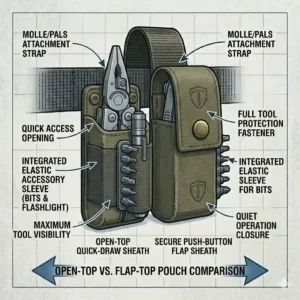
Evaluate the Ride Height: Does the belt loop position the sheath high above the beltline or let it dangle below? High-ride sheaths are better for sitting and driving, while mid-ride sheaths are easier to draw from while standing.
-
Assess the Retention Mechanism: Friction fit is fast but risky for active movement. Flaps with snaps are secure but require fine motor skills. Flaps with Velcro are easy but noisy and degrade over a year. Match the retention to your activity level.
-
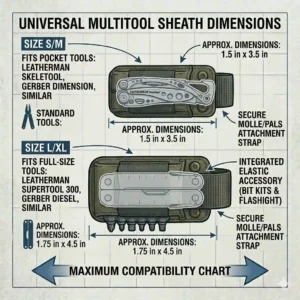
Check Belt Loop Sizing: The spec sheet won’t tell you this, but a 2-inch belt loop on a 1.25-inch dress belt will cause the sheath to slide horizontally along your waist. Ensure the loop closely matches your belt width for a stable draw.
Material Showdown: Leather vs. Nylon vs. Kydex
Let’s break down the primary materials. It’s not about which is “best,” but which is best for your specific environment.
| Material | Durability | Aesthetics | Maintenance Required | Best Environment |
| Veg-Tan Leather | Very High | Premium/Ages Well | Moderate (Conditioning) | Dry, abrasive work |
| Ballistic Nylon | Moderate | Tactical/Utilitarian | Low (Washable) | Wet, muddy, high-flex |
| Kydex (Plastic) | Extreme | Rigid/Modern | Zero | Tactical, maritime |
Looking at the table, Kydex offers unbeatable zero-maintenance rigidity for maritime or tactical environments, but it can scratch the finish of your tool. Ballistic nylon is the king of wet environments because it dries quickly and doesn’t rot, making it perfect for muddy conditions. Leather remains the top tier for dry, abrasive work because it self-heals minor scratches and molds ergonomically to your body over time.
The Great Debate: Belt Loops vs. Metal Clips
One of the most common mistakes buyers make is choosing the wrong attachment style.
Belt Loops are stitched directly into the back of the sheath. This means you must physically undo your belt, thread it through the sheath, and buckle up again. The practical meaning? Absolute security. A stitched belt loop will never accidentally detach from your body. The trade-off is inconvenience; if you want to take the sheath off during your lunch break, you have to undress slightly.
Metal Clips, usually made of spring steel, slide over your belt or waistband. This allows for rapid attachment and removal—perfect if you only need your tool for specific, short tasks. However, in my experience, clips are notorious for catching on seatbelts or door frames. If you rotate quickly, the clip can snag, violently popping the entire sheath off your belt and onto the concrete.
For dedicated, all-day professionals, I always mandate stitched belt loops to adhere to strict workplace safety protocols regarding dropped objects. Leave the clips for casual weekend wear.
Features That Actually Matter (And Those That Don’t)
Marketing departments love to add useless features to gear to justify a higher price point. Let’s filter the hype.
What Actually Matters:
-
Drainage Holes: A small hole at the bottom of a leather or Kydex sheath is vital. If you get caught in a rainstorm, water needs to escape. Otherwise, your multitool sits in a puddle, leading to rust on the hinges within 48 hours.
-
Reinforced Stitching/Rivets: Look for sheaths that use copper rivets at the stress points (the top corners of the pocket). Thread breaks; copper doesn’t.
What Doesn’t Matter:
-
Elastic Side Loops for Pens: Unless you buy a premium brand, these elastic loops lose their stretch in about two months. Your pen will fall out, guaranteed. If you need to carry a pen, buy a sheath with a dedicated, non-elastic pocket.
-
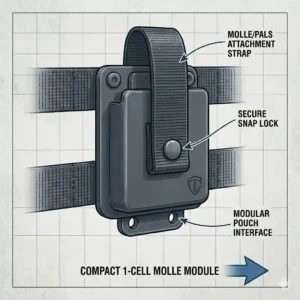
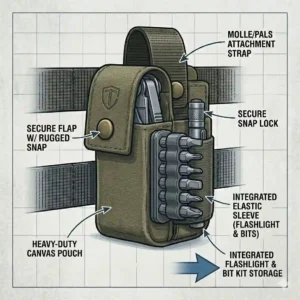
Excessive MOLLE Webbing: Unless you are actively attaching this sheath to a tactical plate carrier or a military backpack, MOLLE straps on a belt sheath just add unnecessary weight, bulk, and snag hazards.
Long-Term Cost & The “Efficiency Gap”
Let’s talk total cost of ownership. The “Efficiency Gap” is the hidden cost of buying cheap gear.
If you buy a $10 generic nylon sheath, the Velcro will fail or the belt loop will tear in roughly 6 to 8 months of daily use. Over five years, you will replace it 8 times, spending $80. Furthermore, during one of those failures, your tool might drop and break, costing you a $150 replacement or weeks waiting for a warranty repair.
Contrast this with spending $65 upfront on a full-grain, stitched-and-riveted leather sheath. With $5 worth of leather conditioner over those same five years, your total cost is $70. You actually save money, you save the frustration of gear failure, and you enjoy a superior, custom-fit user experience every single day.
Stop treating your carry system as an afterthought. The sheath is the bridge between your body and your tool; if the bridge is weak, the tool is useless.
✨ Don’t Miss These Exclusive Deals!
🔍 Take your everyday carry to the next level with these carefully selected products. Click on any highlighted item to check current pricing and availability. These tools will help you create authentic reliability your daily workflow will love!
Conclusion
Choosing the right multitool sheath transforms a heavy, cumbersome piece of metal into a seamless extension of your daily workflow. In 2026, we have moved past the era of “one size fits all” nylon bags. By analyzing your daily environment—whether that involves climbing scaffolding, sitting in a corporate office, or navigating the backcountry—you can select a carry method that genuinely enhances your efficiency.
Remember, the smartest investment you can make isn’t just buying the best tool; it’s securing it properly. Whether you opt for the heirloom quality of the Leatherman Ainsworth or the discrete organization of the Viperade VE1, prioritize strong retention, appropriate ride height, and materials that suit your climate. Protect your gear, and it will protect you when you need it most.
❓ FAQs
❓ What is the best material for a multitool sheath?
✅ For durability and a custom fit, vegetable-tanned full-grain leather is unmatched. For wet, muddy environments, ballistic nylon is preferred as it won’t rot. Kydex offers rigid, rapid-deployment protection but can scratch the tool’s finish over time…
❓ Can I carry a multitool sheath horizontally?
✅ Yes, many modern sheaths offer “scout carry” or horizontal belt loops. This orientation sits flat against your lower back or front waist, minimizing the vertical profile and preventing the sheath from digging into your ribs when sitting…
❓ How do I stop my multitool from falling out of its sheath?
✅ Ensure you are using a sheath specifically molded for your tool’s dimensions. For open-top leather sheaths, you can wet-mold the leather to increase friction. For high-activity jobs, always choose a sheath with a physical snap-closure flap…
❓ Are Leatherman sheaths interchangeable?
✅ Not always. While a Leatherman Wave might fit in a Surge sheath loosely, the lack of a tight fit causes rattling and wear. Always buy a sheath sized precisely for your multitool model’s length and thickness…
❓ How do I clean a nylon multitool sheath?
✅ Remove the tool, scrub the nylon with a stiff brush and mild dish soap to remove grease, and rinse with warm water. Let it air dry completely before reinserting the tool to prevent the metal from rusting in trapped humidity…
Recommended for You
- Gerber Leather Sheath: 7 Best Rugged Cases for Your Gear in 2026
- 7 Best Gerber Multitool Pouch Options to Secure Your Gear in 2026
- Leather Sheath Guide: 5 Best Field-Tested Options for 2026
Disclaimer: This article contains affiliate links. As an Amazon Associate, I earn from qualifying purchases. If you purchase products through these links, we may earn a small commission at no additional cost to you.
✨ Found this helpful? Share it with your friends! 💬🤗
[addtoany]
