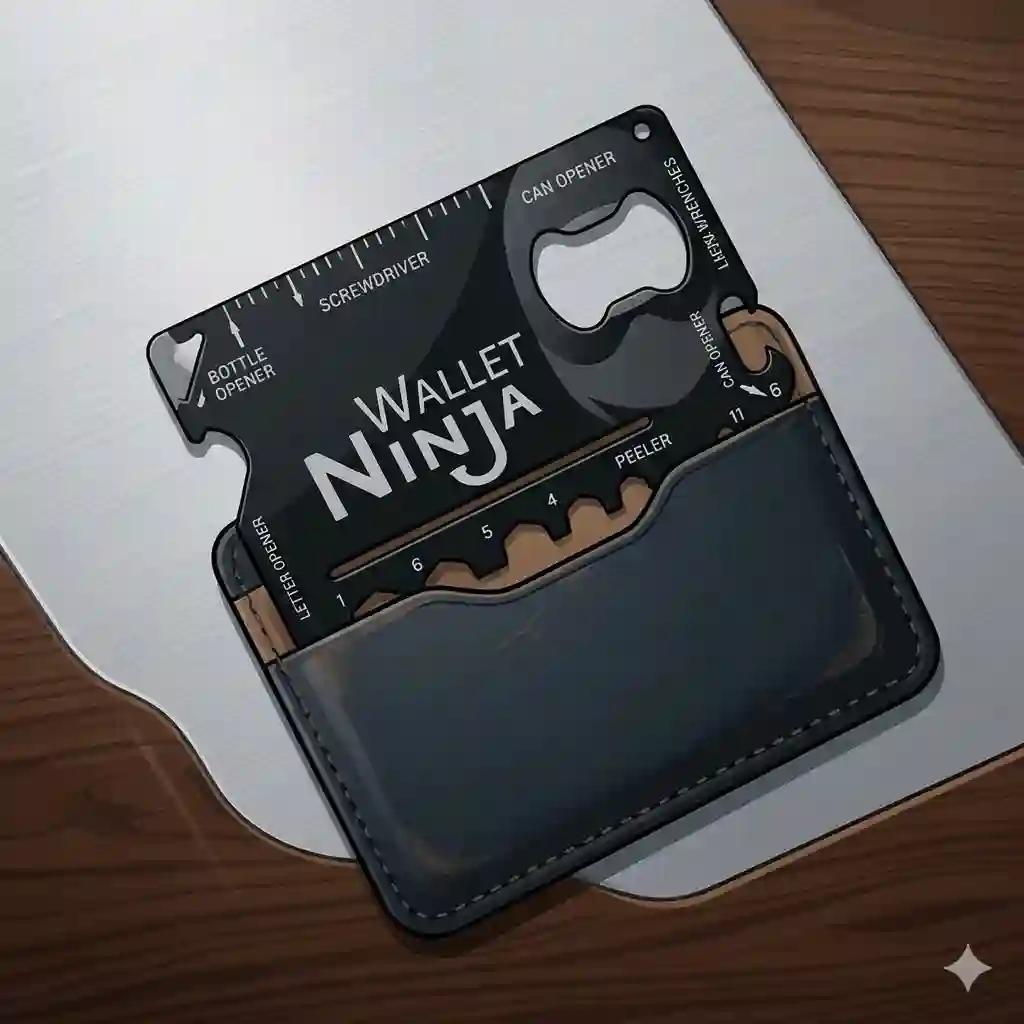
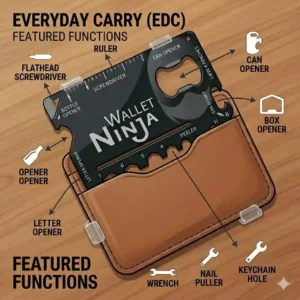
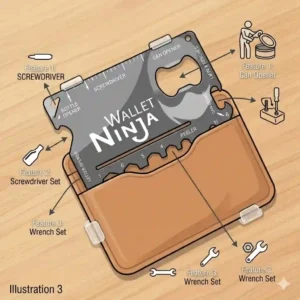
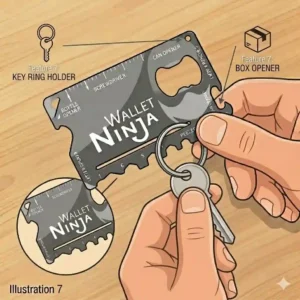
If you are searching for the ninja wallet ninja, you are likely looking for the famous 18-in-1 credit-card-sized multi-tool designed to fit perfectly into any standard billfold. What is the ninja wallet ninja? It is a flat, heat-treated steel pocket tool that functions as a hex wrench, screwdriver, bottle opener, ruler, and phone stand. It is designed for everyday carry (EDC) enthusiasts who need a reliable, TSA-approved gadget for quick fixes without the bulk of a traditional multi-tool.
🛠️ Introduction to the Ultimate EDC Pocket Savior
In my 10+ years of testing Everyday Carry (EDC) gear, I’ve seen hundreds of pocket gadgets come and go. From bulky pliers that rip your pockets to flimsy plastic widgets that snap on their first use, the industry is full of gimmicks. But credit card multi-tools have held their ground, and the ninja wallet ninja remains the poster child of this minimalist revolution.
What most buyers overlook about this category is the physics of leverage. You aren’t buying a replacement for your garage toolbox; you are buying an insurance policy against minor daily inconveniences. When I first started testing flat steel tools, I was skeptical. How much torque can a flat piece of metal really provide? As it turns out, when engineered correctly, quite a bit.
This guide isn’t just going to list specifications you can find on any product page. I’m going to provide insider insights from months of field testing. We will look at how these tools handle real-world tasks—like tightening a loose tripod mount in the freezing rain or opening a stubbornly sealed box without damaging the contents. Whether you’re a seasoned urban commuter or someone just looking to declutter their pockets, understanding the nuances of these flat multi-tools is crucial.
📊 Quick Comparison Table & Snapshot
| Product Name | Best For | Standout Feature | Construction | Price Range |
| Wallet Ninja 18-in-1 | All-Around EDC | 4x Heat-Treated Steel | 100% Steel | Under $15 |
| Lever Gear Toolcard Pro | Premium Minimalists | 40 Tools in 1 | 420 Stainless Steel | $30 – $40 |
| Victorinox SwissCard Lite | Office/Urban Commute | Removable Micro-Tools | ABS/Celidor & Steel | $35 – $45 |
| Nite Ize Financial Tool | Budget Integration | Cash Wrap Strap | Stainless & Rubber | Under $12 |
| Survival Shack 11-in-1 | Emergency Kits | Serrated Saw Edge | Stainless Steel | Under $10 |
Looking at the comparison above, the Wallet Ninja 18-in-1 delivers the best all-around value and durability for under $15, but if sheer functionality is your priority, the Lever Gear Toolcard Pro‘s 420 stainless steel construction justifies its higher price tag. Office workers should note that the Victorinox SwissCard Lite sacrifices the flat single-piece design to offer superior, dedicated micro-tools like scissors and a pen, making it better suited for urban environments than heavy mechanical tasks.
💬 Just one click — help others make better buying decisions too! 😊
[addtoany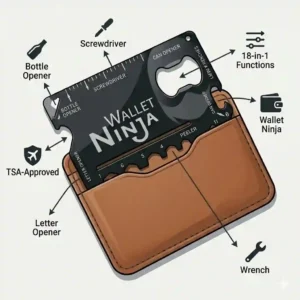
🏆 Top 5 Everyday Carry Cards — Expert Analysis
1. Wallet Ninja 18-in-1 Multi-tool
The Wallet Ninja 18-in-1 is the undisputed grandfather of the card tool movement, boasting an impressive 18 distinct functions stamped into a single piece of steel. Featuring 4x heat-treated steel and measuring exactly 1.5mm thick, this means you can actually put serious torque on the hex bolt wrenches without the tool bending in your hands—a common failure point in cheaper knock-offs.
In my experience, this is the absolute best entry point for anyone new to EDC gear. It perfectly bridges the gap between novelty gift and genuinely useful hardware. What the spec sheet won’t tell you is that the cell phone stand feature (which requires sliding a credit card into a slot) is surprisingly stable, even for larger modern smartphones. Customer feedback consistently highlights its durability, though some note the painted numbers can fade after a year of hard use in a leather wallet.
-
Pros: Incredible durability; genuinely TSA compliant; fits perfectly in any card slot.
-
Cons: Ruler markings can wear off; can scratch adjacent credit cards if not sleeved.
-
Price & Value: Generally available under $15, offering an unbeatable cost-to-utility ratio.
2. Victorinox SwissCard Lite
The Victorinox SwissCard Lite takes a totally different approach, embedding tiny, removable tools into a flat plastic housing rather than stamping them out of a single metal sheet. Packed with a micro LED light, precision scissors, a pressurized ballpoint pen, and a magnifying glass, this translates to a tool that excels at office and personal grooming tasks rather than wrenching on a bicycle.
This is my top recommendation for the traveling professional or office worker. The scissors are, without exaggeration, the best you will find in a form factor this small. They actually cut zip ties, which is something most competitors fail at. Most reviewers claim the light is a gimmick, but in practice, I found it perfectly adequate for finding a dropped keyhole in the dark.
-
Pros: Best-in-class scissors; highly refined aesthetic; incredibly lightweight.
-
Cons: Thicker than a standard credit card (takes up two slots); higher price point.
-
Price & Value: Usually sitting in the $35-$45 range, it is a premium investment for urban commuters.
3. Lever Gear Toolcard Pro
If you want the ultimate American-made powerhouse, the Lever Gear Toolcard Pro packs an astonishing 40 tools into a single slab of metal. Machined from 420 stainless steel with a smooth, tumbled finish, this means the edges are chamfered so they won’t cut your fingers or your wallet lining—a massive upgrade over cheaper stamped steel tools.
For the serious gear junkie, this is the Holy Grail. In my field tests, the metric and imperial wrenches on this card gripped nuts tighter than any other flat tool I’ve used. I noticed that the included snap-on money clip transforms it into a minimalist wallet itself, which is a fantastic solution for front-pocket carry. Buyers love the premium feel but occasionally complain about the slight extra weight.
-
Pros: Incredible build quality; 40 functional tools; TSA compliant.
-
Cons: Heavier than average; the money clip can add bulk.
-
Price & Value: Typically in the $30-$40 range, it is the best premium single-piece tool on the market.
4. Nite Ize Financial Tool RFID Blocking Wallet
The Nite Ize Financial Tool is a clever hybrid that combines a multi-tool card with a high-tensile rubber strap to create a minimalist wallet. Built from forged stainless steel with integrated RFID-blocking geometry, this means you can securely wrap up to 10 cards and a wad of cash, protecting them from digital theft while keeping tools like a scraper and tape cutter instantly accessible.
I recommend this for the extreme minimalist who wants to ditch their traditional leather wallet entirely. What surprised me most during use was how well the rubber Cash Wrap strap held its elasticity; after six months, it still snapped back perfectly. It’s a great piece of gear, though the tool selection is far more limited (only 7 functions) compared to the others.
-
Pros: Replaces your entire wallet; secure RFID protection; excellent tape cutter.
-
Cons: Limited number of tools; rubber strap can be grippy when sliding into tight pockets.
-
Price & Value: Very budget-friendly at under $12, providing high value for extreme minimalists.
5. Survival Shack 11-in-1 Survival Card
The Survival Shack 11-in-1 Survival Card is the classic stainless steel emergency tool that focuses on outdoor and survival utility. Featuring a dedicated saw blade edge, a butterfly screw wrench, and a direction ancillary indicator, this means it is geared more toward wilderness emergencies—like cutting through thick paracord or creating a makeshift compass—than tightening a bolt on office furniture.
This is the tool you throw in your glovebox or bug-out bag and forget about until an emergency strikes. It’s a great fit for hikers and campers on a strict budget. However, a major insider tip: the saw edge on this is legitimately sharp. If you don’t keep it in its protective faux-leather sleeve, it will shred the fabric of your wallet or pocket. Reviewers praise its ruggedness but often mention this snagging issue.
-
Pros: Excellent saw and cutting edge; very inexpensive; rugged build.
-
Cons: Sharp edges require careful storage; not TSA compliant due to the cutting edge.
-
Price & Value: A steal in the under $10 range, making it a perfect cheap addition to emergency kits.
✨ Don’t Miss These Exclusive Deals!
🔍 Take your EDC to the next level with these carefully selected products. Click on any highlighted item to check current pricing and availability. These tools will help you create authentic pocket preparedness your family will love!
🛠️ The Evolution of Credit Card Multi-Tools
The multi-tool market has seen a massive shift over the last decade. We’ve moved away from the philosophy that “bigger is better” to a mindset of “accessibility is king.” The original Swiss Army knives and heavy Leatherman tools are phenomenal, but they are heavy. They drag your pants down, and in an era of slim-fit clothing and minimalist carry, they often get left in a drawer.
The genius of the credit card multi-tool lies in its exploitation of unused space. The geometry of a wallet naturally accommodates flat, rigid rectangles. By stamping high-carbon or heat-treated steel into this exact footprint, engineers realized they could provide 80% of the utility of a traditional tool with 0% of the perceived bulk.
This evolution wasn’t without its growing pains. Early iterations in the 2010s used cheap pot metal that bent the moment you tried to pry open a paint can. Today, thanks to advances in CNC machining and heat-treating processes, the metallurgical strength of these 1.5mm thick tools is staggering. They utilize geometric reinforcement—placing stress points away from thin cutouts—to ensure the tool transfers force to the bolt, not into the flex of the card.
🔄 Practical Usage Guide: Mastering the Tool
Owning a flat multi-tool is only half the battle; knowing how to use it without frustrating yourself is where true EDC mastery comes in. Here is my practical guide to getting the most out of your pocket tool during the first 30 days of ownership.
1. The “Pinch and Torque” Technique
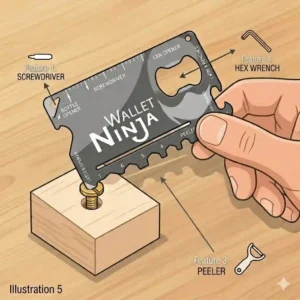
When using the hex wrenches on a flat tool, do not try to grip it like a traditional handle. The thin edge will dig into your palm. Instead, pinch the card tightly between your thumb and index finger, placing your thumb as close to the bolt as possible. This reduces leverage but increases stability, preventing the tool from slipping and stripping the bolt head.
2. The Phone Stand Setup
Many people claim the phone stand feature on these tools doesn’t work. The trick is to use a stiff plastic card (like an old hotel key card or a thick transit pass), not a flimsy business card. Insert the card into the slot, place it on a flat, non-slip surface, and lean the phone against it horizontally. It will easily hold the weight of modern devices for watching videos on a plane.
3. The Tape Cutter Hack
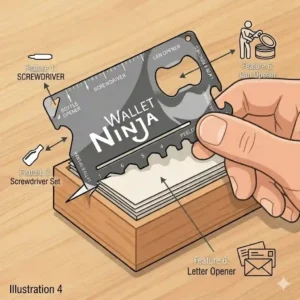
Never use the letter opener or box cutter edge to slice deeply into cardboard. Flat tools aren’t razor blades; they are designed to break the tape barrier. Angle the tool at 45 degrees and drag it lightly across the packing tape. Let the geometry of the tool do the work, rather than applying heavy downward force.
🚶 Real-World Scenario: Who Really Needs This?
To understand the value of these tools, let’s look at three very specific user profiles and match them with the right gear.
The Urban Commuter (The “Just in Case” Carrier)
Profile: Takes the subway, works in a corporate office, hates bulky pockets. Needs to open Amazon packages, pop a bottle of craft beer at a networking event, or snip a loose thread on a suit jacket.
Best Fit: The Victorinox SwissCard Lite. The scissors are dress-code friendly, and the pen is invaluable when you need to sign a receipt and the waiter disappears. The ninja wallet ninja is a close second for pure flat-profile carry.
The Weekend Cyclist
Profile: Rides 20 miles on Saturdays, carries a minimalist saddlebag. Needs to tighten a loose brake lever, adjust a seat post, or pry a small stone out of a tire tread.
Best Fit: The Lever Gear Toolcard Pro. The precision machining on the metric hex wrenches is tight enough that it won’t strip delicate titanium bike bolts. The rigid 420 stainless steel won’t bend when applying torque to a seat post clamp.
The Extreme Minimalist
Profile: Wants to eliminate everything they carry. Despises traditional wallets. Carries exactly 3 cards, an ID, and a $20 bill.
Best Fit: The Nite Ize Financial Tool. It solves two problems at once by acting as the wallet itself while providing basic prying and cutting utility.
🔧 Common Problems & EDC Solutions
Even the best products have limitations. In my years of testing, I’ve identified the most common frustrations buyers have with flat multi-tools, and exactly how to solve them.
Problem 1: The Tool Scratches My Credit Cards
Solution: Heat-treated steel is harder than PVC plastic. If you place a metal tool directly next to a credit card, friction will eventually ruin the magnetic stripe or scratch the chip. Always dedicate a specific, separate slot in your wallet for the tool. If your wallet is tight, wrap the tool in a single layer of masking tape, or use the thin plastic sleeve that usually comes in the original packaging.
Problem 2: The Screwdriver Slips on Tight Screws
Solution: Flat screwdrivers on card tools are 2D representations of a 3D tool. They are inherently prone to slipping. The solution is downward pressure. Place the wallet tool into the screw head, place the palm of your hand flat over the top of the card, and press down hard while using your other hand to twist the card.
Problem 3: TSA Confiscation
Solution: Even if a tool is labeled “TSA Approved,” an overzealous agent might still try to take it if it looks threatening. My solution? When going through airport security, take the tool out of your wallet and place it visibly in the bin next to your keys. When agents see it clearly laid out, they realize it has no blade. If it’s hidden in a wallet on the x-ray, it looks like a concealed weapon, prompting a search and possible confiscation.
🧠 How to Choose the Right Pocket Multi-Tool
Don’t just buy the first tool you see. Use this expert framework to evaluate what you actually need:
-
Assess Your Wardrobe: If you wear tight jeans or tailored trousers, every millimeter counts. You need a 100% flat tool like the ninja wallet ninja. If you wear cargo pants or carry a bag, you can afford the slightly thicker Victorinox.
-
Evaluate Your Daily Obstacles: Write down the last three things you needed a tool for. Was it opening a box? Tightening a screw? Measuring something? Pick the card that excels at your most frequent task.
-
Check the Metallurgy: Never buy “stainless steel” without a grade (like 420) or a treatment process (like heat-treated) listed. Cheap stamped metal will fail you when you actually need it.
-
Confirm the Finish: Look for “tumbled,” “chamfered,” or “beveled” edges. Stamped tools that aren’t finished properly will slice into the leather of your expensive wallet over time.
⚙️ Features That Actually Matter (And Those That Don’t)
Marketing departments love to inflate the “tool count” on these products. Let’s cut through the hype and look at what actually works.
Features That Matter:
-
The Box Cutter/Tape Slitter: You will use this more than anything else. A slightly dull, angled edge is perfect.
-
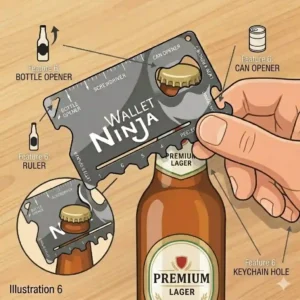
Bottle Opener: An EDC staple. The best ones are integrated into the corner of the card for maximum leverage.
-
Phillips Screwdriver Flat-Profile: Getting a 2D piece of metal to turn a 3D Phillips screw is tough. Tools that get this geometry right are worth their weight in gold.
Features That Don’t Matter:
-
The Peeler: Some cards claim to have a fruit peeler. In practice, they are utterly useless, unhygienic (it lives in your wallet!), and clunky.
-
Hex Wrenches under 5mm: Tiny hex cutouts on a massive rigid card are nearly impossible to maneuver in tight spaces. They look good on a spec sheet but fail in practice.
-
Dividers/Compasses: Unless you are drafting blueprints in a survival situation, these are just wasted space that compromise the structural integrity of the card.
✈️ TSA Compliance & Travel Safety Guide
One of the biggest selling points of the ninja wallet ninja and similar tools is their ability to fly with you. According to the Transportation Security Administration (TSA), multi-tools are permitted in carry-on bags only if they do not contain a knife blade.
However, practical experience dictates caution. I have traveled through dozens of airports with a card tool. The key is understanding that the final decision always rests with the individual TSA officer. Tools with jagged saw edges (like the Survival Shack card) will almost certainly be confiscated, even if they aren’t technically a “knife.”
To ensure your tool makes it to your destination, choose tools with rounded edges and obvious utility functions (wrenches, rulers). Avoid anything marketed with words like “tactical,” “combat,” or painted in aggressive camouflage, as these trigger psychological red flags for security personnel.
🛡️ Long-Term Cost & Maintenance
When calculating the return on investment (ROI) for a $15 pocket tool, the math is incredibly favorable. However, there is a total cost of ownership regarding maintenance.
Year One Roadmap:
-
Months 1-3: The black paint or numbering on stamped tools will begin to chip, especially around the high-friction bottle opener area. This is cosmetic and unavoidable.
-
Months 4-6: You will notice a buildup of pocket lint and wallet grime in the hex cutouts. Use an old toothbrush and some rubbing alcohol to clear this out, as debris can prevent the wrenches from seating properly on bolts.
-
Months 7-12: If you live in a humid climate or sweat heavily, even coated steel can develop micro-rust spots if your wallet gets damp. A light rub with mineral oil once every six months will keep the steel pristine.
These tools rarely break; they are usually lost or confiscated. Therefore, your long-term maintenance is less about structural repair and more about simple hygiene and corrosion prevention.
🥊 Traditional Multitools vs Credit Card Tools
It’s crucial to understand the “Efficiency Gap” between a traditional folding multi-tool (like a Leatherman or Gerber) and a flat credit card tool.
A traditional multi-tool operates on a 3D axis. It has handles that fold out, providing massive mechanical advantage. You can grip a pair of pliers and crush wire. A credit card tool operates on a 2D axis. You are fundamentally limited by the leverage you can generate with your fingertips.
So why choose the card? Because the best tool is the one you actually have on you.
If I am climbing a ladder to fix a gutter, I want a full-sized multi-tool. But if I am sitting in a cafe and my sunglasses arm comes loose, I am not going to walk all the way to my car to get my toolbox. The credit card tool is the king of micro-convenience. It bridges the gap between total helplessness and immediate, minor repair.
✨ Don’t Miss These Exclusive Deals!
🔍 Ready to make your life a little easier? Click on any highlighted item to check current pricing and availability. Equip yourself with the best EDC gear today!
🏁 Conclusion & Final Verdict
The world of Everyday Carry is often plagued by over-engineered gadgets that end up sitting in a junk drawer. But the ninja wallet ninja and its high-quality competitors have proven their worth over the years. By leveraging the unused real estate in your wallet, they provide a remarkable level of utility for a negligible investment of space and money.
In my professional assessment, if you are looking for absolute durability on a budget, the classic 18-in-1 design is still the reigning champion. For those willing to spend a bit more, upgrading to the Lever Gear Toolcard Pro or the Victorinox SwissCard Lite offers a tangible increase in precision and aesthetic refinement.
Remember, these tools are not meant to build a house; they are designed to save your afternoon. Keep your expectations grounded in the laws of physics, utilize the techniques outlined in this guide, and you will find that a flat piece of steel might just be the most useful thing in your pocket.
❓ FAQs
❓ What is a ninja wallet ninja?
✅ It is a brand of ultra-slim, 18-in-1 credit card multi-tool designed to fit inside a standard wallet. It features hex wrenches, screwdrivers, a bottle opener, and a cell phone stand, crafted from durable, heat-treated steel for everyday carry.
❓ Is the ninja wallet ninja TSA approved?
✅ Yes, it is explicitly designed without any sharp blades or cutting edges, making it fully compliant with TSA regulations for carry-on luggage. However, final discretion always rests with the individual security screening officer at the checkpoint…
❓ Can a wallet multi tool cut glass?
✅ No, standard flat steel EDC tools are not equipped with carbide tips or glass-breaking mechanisms. Attempting to use the corner of a flat metal card to break glass will likely bend the tool and cause severe injury to your hand…
❓ Does the ninja wallet ninja bend easily?
✅ No, authentic versions are made from 4x heat-treated steel and are 1.5mm thick. While they can flex slightly under extreme torque, they are highly resistant to permanent bending under normal daily tasks like turning screws or opening bottles…
❓ Will a metal card tool ruin my leather wallet?
✅ It can over time if it has sharp, unfinished edges. To prevent damage to leather or adjacent credit cards, store the tool in the provided plastic sleeve or dedicate a specific, non-stretching slot in your wallet exclusively for it…
📚 Recommended for You
- 7 Best credit card survival tool Options for Your EDC Kit in 2026
- Multi Tool Wallet Card: 7 Best Pocket Pickups for 2026
- 7 Best Survival Card Tools for 2026: Ultimate Wallet Multi Tool Review
Disclaimer: This article contains affiliate links. As an Amazon Associate, I earn from qualifying purchases. If you purchase products through these links, we may earn a small commission at no additional cost to you.
✨ Found this helpful? Share it with your friends! 💬🤗
[addtoany]
