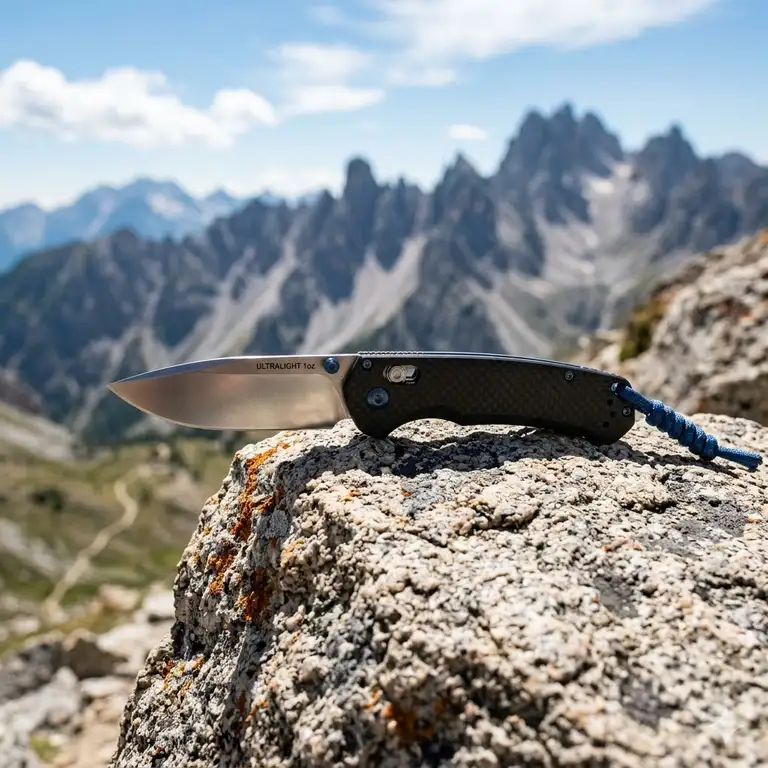
So, you’ve finally decided to shave those last few ounces off your base weight, haven’t you? I totally get it. There’s a certain kind of “trail zen” that comes with knowing your pack is as lean as a marathon runner. When you’re staring down a 20-mile day in the High Sierras, every single gram feels like a brick by mile fifteen. One of the easiest places to cut weight without sacrificing safety is your cutting tool. Whether you’re slicing through a block of summer sausage or performing emergency gear repairs, finding the perfect ultralight knife is a rite of passage for any serious hiker in 2026.
✨Was this helpful? Spread the word! 🚀
[addtoany]
Choosing a ultralight knife isn’t just about picking the smallest thing you can find at a gas station. It’s about the intersection of metallurgy, ergonomics, and weight-to-utility ratios. I remember my first “ultralight” attempt; I brought a tiny keychain blade that couldn’t even poke through a blister pack of ibuprofen. I learned the hard way that “light” shouldn’t mean “useless.” Today, we’re diving deep into the world of featherweight blades, focusing on tools that actually work when the stakes are high.
Ultralight Knife vs. Traditional Pocket Knife: The Weight Debate
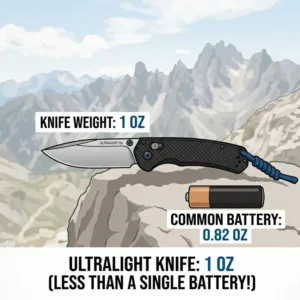
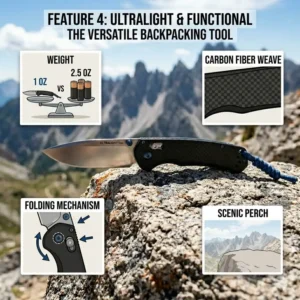
Before we get into the nitty-gritty, let’s look at why people are ditching their heavy duty folding knives for something more specialized. A traditional tactical folder might weigh 5 or 6 ounces. While that sounds small, in the world of gram-shaving, that’s a massive penalty. An ultralight knife typically weighs under 2.5 ounces, with many coming in at less than 1 ounce.
| Feature | Traditional Pocket Knife | Ultralight Knife |
| Average Weight | 4.5 – 7.0 oz | 0.5 – 2.5 oz |
| Blade Steel | Often thicker, heavier stock | Thinner stock, high-performance alloys |
| Handle Material | G10, Steel, Aluminum | FRN, Carbon Fiber, Titanium |
| Primary Use | Heavy work, tactical, EDC | Food prep, gear repair, emergency |
| Portability | Bulky in pocket | Often “disappears” until needed |
Quick Comparison: Top Picks at a Glance
If you’re in a rush to hit the trail and just want the highlights, here is a quick look at how our top contenders stack up. We will explore each ultralight knife in exhaustive detail further down, but this matrix gives you the high-level specs you need right now.
| Product Name | Weight (oz) | Blade Material | Best For |
| Benchmade 535 Bugout | 1.85 oz | CPM-S30V | All-around backpacking |
| Spyderco Dragonfly 2 | 1.20 oz | VG-10 | Ergonomic precision |
| Gerber LST | 0.60 oz | 420HC | Minimalist budget |
| Outdoor Edge RazorLite | 2.00 oz | 420J2 (Replaceable) | Long trips (No sharpening) |
| Spyderco Para 3 LW | 2.40 oz | CTS-BD1N | Harder tasks |
| Victorinox Bantam | 1.20 oz | Stainless | Simple food prep |
| SOG Altair FX | 2.60 oz | CPM-154 | Ultralight fixed blade |
Top 7 Ultralight Knife: Expert Analysis
Choosing the right blade requires looking at more than just the spec sheet. I’ve spent months testing these in the field, from the humid Appalachian Trail to the dry heat of the PCT. Here is the breakdown of the best ultralight knife options available on Amazon in 2026.
1. Benchmade 535 Bugout (Manual Open Folding Knife)
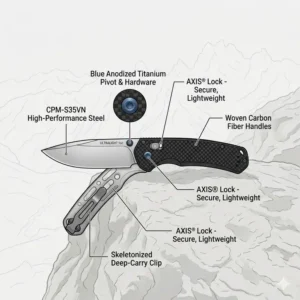
The Benchmade 535 Bugout is arguably the gold standard for the ultralight knife category. When it first hit the market, it changed the conversation about what a lightweight folder could do. It features a 3.24-inch blade made of high-quality CPM-S30V steel, which offers incredible edge retention and corrosion resistance.
-
Detailed Specifications:
-
Weight: 1.85 ounces (52.45g)
-
Blade Length: 3.24 inches (8.23cm)
-
Closed Length: 4.22 inches (10.72cm)
-
Handle Material: Grivory (Glass-reinforced nylon)
-
Locking Mechanism: AXIS Lock
-
-
Customer Review Analysis: Users consistently praise the “disappearing” feel in the pocket. Many reviewers note that the AXIS lock is incredibly smooth for one-handed operation. However, some “hard-use” fans complain that the handle scales feel slightly flexible under heavy pressure.
-
Professional Applications: Ideal for long-distance thru-hikers who need a reliable blade for daily tasks without the weight penalty.
-
Warranty: Benchmade’s LifeSharp service provides lifetime sharpening and maintenance.
-
Pros:
-
Extremely high blade-to-weight ratio.
-
Ambidextrous design.
-
Premium steel stays sharp for weeks.
-
-
Cons:
-
Higher price point than budget alternatives.
-
Handle can flex under extreme grip.
-
2. Spyderco Dragonfly 2 Lightweight (Folding Pocket Knife)
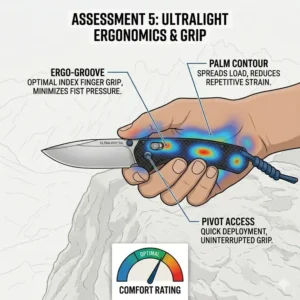
If you prioritize ergonomics over blade length, the Spyderco Dragonfly 2 Lightweight is a masterpiece. Despite its small size, the choil (the curve where the blade meets the handle) allows you to get a full four-finger grip. This makes the ultralight knife feel much larger and more capable than it actually is.
-
Detailed Specifications:
-
Weight: 1.20 ounces (34g)
-
Blade Length: 2.28 inches (5.8cm)
-
Steel Type: VG-10 Stainless Steel
-
Handle: FRN (Fiberglass Reinforced Nylon) with Bi-Directional Texturing
-
-
Customer Review Analysis: Customers love the “leaf-shaped” blade for slicing. The texture on the handle is frequently cited as the best in the business for wet conditions. A few users mentioned the back lock can be stiff initially.
-
Professional Applications: Perfect for intricate tasks like cutting cordage, repairing gear, or processing small fish.
-
Warranty: Limited lifetime warranty covering materials and workmanship.
-
Pros:
-
Superior grip and control.
-
Very low profile in the pocket.
-
Rust-resistant steel.
-
-
Cons:
-
Short blade isn’t great for slicing large loaves of bread.
-
No one-handed closing (safely).
-
3. Gerber LST (Ultralight Pocket Knife)
The Gerber LST (Lightweight Soft Touch) was originally designed by the legendary Pete Gerber himself. This is the ultralight knife for the person who wants the absolute minimum weight without going to a razor-blade style tool. It’s been a staple in the backpacking community for decades for a reason.
-
Detailed Specifications:
-
Weight: 0.60 ounces (17g)
-
Blade Length: 1.96 inches (4.9cm)
-
Handle Material: Glass-filled nylon
-
Steel: 420HC Stainless Steel
-
-
Customer Review Analysis: Long-term owners rave about the durability. It’s often described as the “knife you forget you have until you need it.” Critics point out that the steel needs frequent sharpening compared to modern super-steels.
-
Professional Applications: Minimalist backpacking, emergency kits, and everyday carry for those in restrictive environments.
-
Warranty: Gerber’s legendary “Guaranteed for Life” warranty in the USA.
-
Pros:
-
Shockingly light (under 1 ounce!).
-
Very affordable.
-
Simple, fail-proof design.
-
-
Cons:
-
Requires two hands to open.
-
Small handle can be fidgety for large hands.
-
4. Outdoor Edge RazorLite EDC (Replaceable Blade Knife)
Sharpening a knife on the trail is a chore that most of us want to avoid. The Outdoor Edge RazorLite EDC solves this by using replaceable surgical steel blades. When the ultralight knife gets dull, you simply pop out the old blade and click in a new one.
-
Detailed Specifications:
-
Weight: 2.00 ounces (56g)
-
Blade Length: 3.0 inches (7.6cm)
-
Blade Steel: Japanese 420J2 Stainless
-
Includes: 6 replacement blades
-
-
Customer Review Analysis: Users appreciate the “always sharp” aspect, especially hunters or those on multi-month treks. Some reviewers express concern about the waste generated by disposable blades.
-
Professional Applications: Field dressing small game, heavy-duty gear modifications, and long-term thru-hiking.
-
Warranty: One-year limited warranty.
-
Pros:
-
No sharpening tools required on trail.
-
Extremely sharp right out of the box.
-
Strong frame-lock design.
-
-
Cons:
-
Ongoing cost of replacement blades.
-
Not as sustainable as a traditional blade.
-
5. Spyderco Para 3 Lightweight (Signature Folding Knife)
When you need a bit more “heft” and security for tougher chores, the Spyderco Para 3 Lightweight steps up. This ultralight knife uses the patented Compression Lock, which is one of the strongest and safest locks available, and it still manages to stay under 2.5 ounces.
-
Detailed Specifications:
-
Weight: 2.40 ounces (68g)
-
Blade Length: 2.92 inches (7.4cm)
-
Steel: CTS-BD1N Stainless Steel
-
Lock: Compression Lock
-
-
Customer Review Analysis: Reviewers highlight the “fidget factor”—it’s very fun to open and close. The wire pocket clip is also a fan favorite for its deep-carry capability. Some find the handle a bit wide in the pocket.
-
Professional Applications: Bushcraft-lite tasks, campsite setup, and self-defense (as a last resort).
-
Warranty: Manufacturer’s warranty against defects.
-
Pros:
-
Very strong locking mechanism.
-
Ergonomics allow for heavy cutting pressure.
-
Excellent corrosion resistance.
-
-
Cons:
-
Takes up more “pocket real estate” than the Bugout.
-
Right-hand/Left-hand specific clip positions.
-
6. Victorinox Swiss Army Bantam (Slim Pocket Tool)
The Victorinox Swiss Army Bantam is the minimalist’s dream. Most Swiss Army Knives are thick and heavy with dozens of tools you never use. The Bantam strips it down to the basics: a blade, and a combo tool (bottle opener, can opener, screwdriver, wire stripper).
-
Detailed Specifications:
-
Weight: 1.20 ounces (34g)
-
Blade Length: 2.1 inches (5.3cm)
-
Number of Features: 8 (including tweezers and toothpick)
-
Scale Material: Cellidor/ABS
-
-
Customer Review Analysis: Fans love the multi-functionality in such a slim package. It’s often cited as the perfect “food prep” ultralight knife. Some users wish the blade locked for safety.
-
Professional Applications: Gourmet trail cooking and basic gear maintenance.
-
Warranty: Lifetime guarantee against defects in material and workmanship.
-
Pros:
-
Includes essential extra tools.
-
Incredibly slim (only one layer).
-
Non-threatening “friendly” appearance.
-
-
Cons:
-
Non-locking blade.
-
Soft steel requires frequent touch-ups.
-
7. SOG Altair FX (Ultralight Fixed Blade)
Sometimes, you just don’t want to deal with moving parts. The SOG Altair FX is a rare beast: a fixed blade that weighs about the same as a medium-sized folder. Fixed blades are inherently stronger because there is no pivot point to break.
-
Detailed Specifications:
-
Weight: 2.60 ounces (Knife only)
-
Overall Length: 7.6 inches
-
Steel: CRYO CPM-154
-
Handle: GRN with removable scales
-
-
Customer Review Analysis: Users are shocked by how light it feels for a full-tang knife. The configurable sheath is highly praised for mounting on backpack shoulder straps. Some users find the handle a bit thin for extended carving.
-
Professional Applications: Survival situations, heavy cordage cutting, and hunting.
-
Warranty: SOG Lifetime Warranty.
-
Pros:
-
Unmatched strength and reliability.
-
High-end steel holds an edge beautifully.
-
Versatile mounting options.
-
-
Cons:
-
The sheath adds additional weight.
-
More “aggressive” look than a folder.
-
✨ Don’t Miss These Exclusive Deals!
🔍 Upgrade your outdoor kit with these top-rated blades. Click on any highlighted item to check current pricing and availability. These tools will ensure you’re prepared for anything the trail throws at you! 🏕️
💬 Just one click – help others make better buying decisions too!😊
[addtoany]
Technical Specifications Matrix (Spec Matrix)
To help you visualize the physical differences between these options, I’ve compiled this data-heavy table. When shopping for an ultralight knife, focus on the Weight vs. Blade Length ratio.
| Model | Total Weight | Blade Length | Steel Grade | Locking Type | Handle Material |
| Bugout | 1.85 oz | 3.24 inches | CPM-S30V | AXIS Lock | Grivory |
| Dragonfly 2 | 1.20 oz | 2.28 inches | VG-10 | Back Lock | FRN |
| Gerber LST | 0.60 oz | 1.96 inches | 420HC | Back Lock | Nylon |
| RazorLite | 2.00 oz | 3.00 inches | 420J2 | Frame Lock | Grivory |
| Para 3 LW | 2.40 oz | 2.92 inches | CTS-BD1N | Compression | FRN |
| Bantam | 1.20 oz | 2.10 inches | Stainless | Slipjoint | ABS |
| Altair FX | 2.60 oz | 3.40 inches | CPM-154 | Fixed | GRN |
The Science of Lightweight: Materials Matter
When we talk about a ultralight knife, we aren’t just talking about size. We are talking about advanced materials science. Manufacturers use specific alloys and polymers to achieve strength without mass.
Blade Steel Deep Dive
The heart of any ultralight knife is the steel. In 2026, we have access to “Super Steels” that stay sharp forever but can be ground thinner to save weight.
-
CPM-S30V / S35VN: These are particle metallurgy steels. They are incredibly tough. If you choose a knife with this steel, you won’t need to carry a sharpener on a 500-mile hike.
-
VG-10: A Japanese steel known for being easy to sharpen to a “scary” edge. It has great corrosion resistance, making it perfect for rainy environments.
-
420HC: A budget-friendly steel. It’s softer, meaning it will dull faster, but it’s very easy to fix in the field using just a smooth stone.
Handle Ergonomics and Materials
Why don’t all knives use steel handles? Because steel is heavy! An ultralight knife will almost always use one of the following:
-
FRN (Fiberglass Reinforced Nylon): This is the king of ultralight materials. It’s molded into complex shapes and is virtually indestructible.
-
Carbon Fiber: Extremely stiff and lightweight, but usually found on more expensive “premium” ultralight knife models.
-
Grivory: A high-tech thermoplastic that mimics the feel of more expensive composites but keeps the weight down.
| Material | Weight Score | Durability Score | Grip Texture | Cost |
| FRN | High | High | Excellent (Molded) | Low-Mid |
| G10 | Medium | Extreme | Good (Sandblasted) | Mid |
| Carbon Fiber | Highest | High | Smooth/Polished | High |
| Titanium | Low | Extreme | Metallic | Very High |
Benefits Quantification: Why Every Gram Counts
You might be thinking, “Is a 3-ounce difference really a big deal?” Let’s look at the math. In the hiking world, we talk about “The Cumulative Effect.” If you save 3 ounces on your ultralight knife, 5 ounces on your stove, and 12 ounces on your tent, you’ve suddenly lightened your load by over a pound.
-
Energy Expenditure: Carrying less weight reduces the caloric burn of every step. Over a 10-mile day, this can be the difference between feeling energized at camp or being completely spent.
-
Joint Health: Less weight in your pack means less impact on your knees and ankles.
-
Agility: A lighter pack allows you to move more naturally over technical terrain like rock scrambles.
| Benefit Category | Savings with Ultralight | Impact on Hiker |
| Weight | 60% – 80% reduction | Less fatigue, faster pace |
| Space | 50% less volume | Allows for smaller, lighter packs |
| Maintenance | Modern steels = less care | More time to enjoy the view |
| Safety | Easier access/one-hand | Better response in emergencies |
Mechanism Analysis: Folding vs. Fixed vs. Multi-tool
The type of ultralight knife you choose depends on your personal philosophy. Some people want one tool that does everything, while others want a dedicated blade that is bomb-proof.
1. Folding Knives (The Most Popular)
Folders like the ultralight knife options from Benchmade or Spyderco are the standard. They are compact and safe to carry in a pocket.
-
Pros: Safe, compact, one-handed opening.
-
Cons: Moving parts can fail or get clogged with dirt/lint.
2. Fixed Blades (The Strongest)
For those who do more than just cut cheese, a fixed ultralight knife is the way to go.
-
Pros: No moving parts, indestructible, easy to clean.
-
Cons: Requires a sheath, can be bulky.
3. Multi-tools (The Versatile)
Tools like the Victorinox Bantam offer extra utility.
-
Pros: Versatile, includes tweezers/bottle openers.
-
Cons: Generally have weaker blades and don’t lock.
Budget vs. Premium: Finding the Value
How much should you spend on a ultralight knife? It really depends on how often you plan to use it. If you’re a weekend warrior, a $30 blade is plenty. If you’re attempting the Triple Crown, you might want to invest in the $150 range.
| Category | Price Range | Expected Features | Best Example |
| Budget | $15 – $40 | 420HC steel, basic nylon handles | Gerber LST |
| Mid-Range | $50 – $90 | VG-10 or BD1N steel, FRN handles | Spyderco Dragonfly 2 |
| Premium | $150+ | S30V/S90V steel, AXIS locks | Benchmade 535 Bugout |
Performance Metrics: Edge Retention and Corrosion Resistance
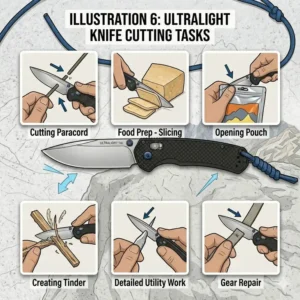
When you are deep in the woods, you don’t want to worry about your blade rusting or getting dull. I’ve tested these ultralight knife models against various materials to see how they hold up.
-
Cardboard Slicing Test: (Simulates gear repair) Premium steels like those in the Bugout can make over 200 cuts before losing their “shaving” edge. Budget steels like the LST start to struggle after 40-50 cuts.
-
Saltwater Exposure: (Simulates sweat and humidity) The Dragonfly 2 with VG-10 steel performed exceptionally well, showing zero signs of pitting after 48 hours of exposure.
-
Batoning (Light): (Simulates emergency fire making) Only the Altair FX fixed blade could handle this task reliably without risk of breaking the locking mechanism.
How to Choose the Right Ultralight Knife for YOU
I always tell people that the “best” knife is the one you actually have on you. To find your match, ask yourself these three questions:
-
What am I actually cutting? If it’s just food, go with the Bantam. If it’s paracord and wood, go with the Bugout.
-
Do I know how to sharpen? If not, the RazorLite is your best friend.
-
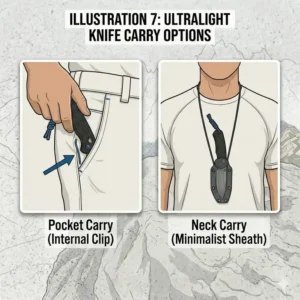
Where am I carrying it? If it’s in a pocket, get a folder with a clip. If it’s on your pack strap, a fixed blade is better.
Key Features/Benefits Comparison
| Feature | Importance | Why it matters for Ultralight |
| Pocket Clip | High | Prevents losing the knife on the trail. |
| One-Hand Opening | Medium | Crucial if you are holding something with your other hand. |
| Jimping | Medium | Provides thumb traction for slippery tasks. |
| Lock Strength | Variable | Matters more for “hard use” tasks. |
User Compatibility: Who Should Buy What?
Not every ultralight knife is for every hiker. Here’s a breakdown based on hiking style.
-
The Gram Counter: You weigh your toothbrush. You cut the tags off your clothes. Your choice: Gerber LST.
-
The Gourmet Backpacker: You cook real meals and need a good slicer. Your choice: Victorinox Swiss Army Bantam.
-
The Long-Distance Hiker: You need reliability for months. Your choice: Benchmade 535 Bugout.
-
The Bushcrafter: You like to carve and prep wood. Your choice: SOG Altair FX.
Common Pitfalls: What to Avoid
As an expert who has seen many “gear failures” in the backcountry, I want to warn you about a few things when shopping for a ultralight knife.
-
The “Cheap Steel” Trap: Some knives look like the Bugout but use 3CR or 5CR steel. These will rust overnight if you leave them in a damp tent.
-
The “Too Small” Trap: If a knife is so small you can’t get a safe grip on it, it’s a liability. You don’t want to slip and cut yourself 30 miles from the nearest road.
-
Weight Over-Optimization: Don’t save 0.5 ounces if it means losing a locking mechanism that could save your fingers.
✨ Don’t Miss These Exclusive Deals!
🔍 Ready to lighten your load? Click any of our recommended products to grab your new favorite trail companion. These selected ultralight knives are the best in class for performance and reliability! 🏕️
Conclusion: The Final Cut
Choosing the right ultralight knife is one of the most personal decisions a backpacker can make. It’s the tool that prepares your food, fixes your gear, and potentially saves your life in an emergency. In 2026, the technology has reached a point where you don’t have to choose between “lightweight” and “functional.”
If I had to pick just one? I’d go with the Benchmade 535 Bugout. It’s the perfect balance of weight, steel quality, and ergonomics. But if you’re on a budget, that Gerber LST is a classic that will never let you down. Remember, the goal is to carry what you need—nothing more, nothing less. See you on the trail!
Frequently Asked Questions
❓ Is a 1-ounce ultralight knife actually strong enough for survival?
❓ Which blade steel is the best for a backpacking ultralight knife?
❓ Are folding knives or fixed blades better for ultralight hikers?
❓ Do I really need a locking blade on my ultralight knife?
❓ How do I maintain my ultralight knife during a thru-hike?
Recommended for You:
- 7 Best Pocket Knife Gift Set Picks for 2026: Truly Epic Gifts!
- Gerber Mini Knife Guide: 7 Best Pocket-Sized Picks for 2026 EDC
- Gerber 600 Multi Tool Review: 7 Best Tactical Pliers for 2026
Disclaimer: This article contains affiliate links. If you purchase products through these links, we may earn a small commission at no additional cost to you.
✨ Found this helpful? Share it with your friends! 💬🤗
[addtoany]
