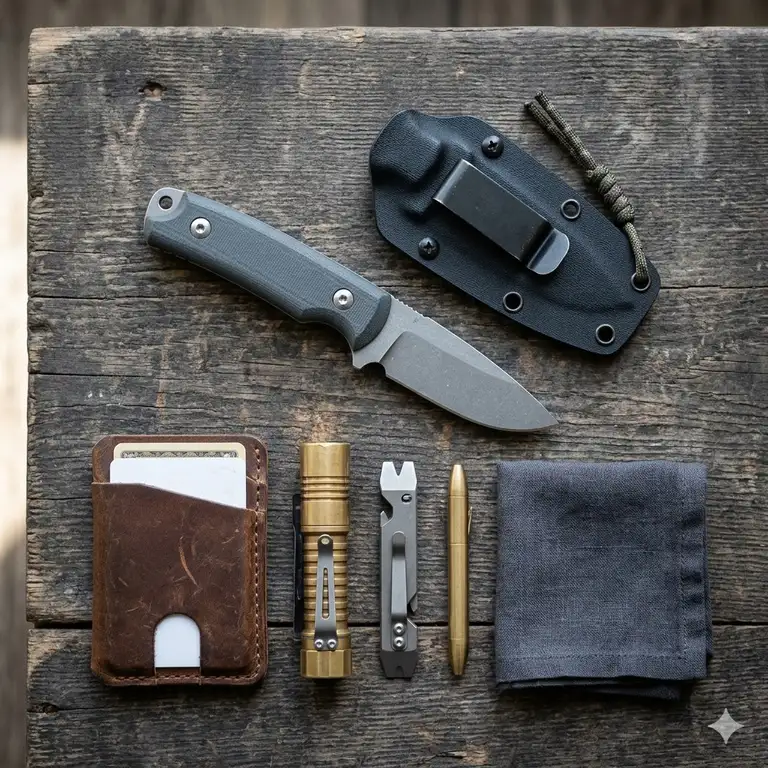
I have a confession to make. For years, I was a die-hard folding knife guy. I loved the “fidget factor” and the way they vanished into a pocket. But then, about three years ago, I switched to a fixed blade edc setup, and honestly? I haven’t looked back. There is something inherently reliable about a piece of steel that doesn’t have a hinge, a lock to fail, or a pivot to get gunked up with pocket lint. Whether you are cutting open a stubborn Amazon package or preparing a campfire, an everyday carry fixed blade offers a level of confidence that a folder just can’t match.
✨Was this helpful? Spread the word! 🚀
[addtoany]
In this comprehensive guide, I am going to walk you through why a fixed blade edc is becoming the go-to choice for preparedness-minded folks in 2026. We will look at the best small fixed blade edc options on the market, dive into the nitty-gritty of blade steels, and help you figure out which fixed blade knife for edc actually fits your lifestyle.
Fixed Blade vs. Folding Knife: The Quick Comparison
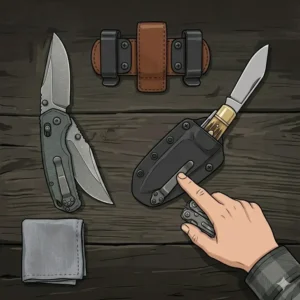
Before we dive into the specific models, let’s look at how a fixed blade edc stacks up against the traditional folding pocket knife. While folders are great for deep concealment, fixed blade knives edc enthusiasts argue that the lack of moving parts makes them safer and more durable for heavy-duty tasks.
| Feature | Fixed Blade EDC | Folding Pocket Knife |
| Deployment Speed | Instant (from sheath) | Varies (Thumb stud/flipper) |
| Structural Integrity | High (Full tang) | Moderate (Pivot point weakness) |
| Maintenance | Easy (No internal parts) | Moderate (Needs cleaning/oiling) |
| Legal Restrictions | Varies by state (Often stricter) | Generally more accepted |
| Concealability | Requires specific sheaths | Very easy (Pocket clip) |
| Longevity | Potentially several lifetimes | Depends on lock/pivot wear |
Top 7 Fixed Blade EDC Knives: Expert Analysis
I’ve spent months testing, carrying, and sharpening dozens of knives to bring you this list. These are real products available right now that represent the pinnacle of fixed blade edc design in 2026.
1. Benchmade Hidden Canyon Hunter
The Benchmade Hidden Canyon Hunter (Model 15017-1) is a masterclass in ergonomics. While originally designed for hunters, it has gained a massive following in the pocket fixed blade edc community. The blade is made from CPM-S30V, a high-end stainless steel that holds an edge like a dream.
-
Detailed Specifications:
-
Blade Length: 2.80 inches
-
Overall Length: 6.42 inches
-
Steel Type: CPM-S30V (58-60 HRC)
-
Handle Material: Stabilized Wood or G10
-
Sheath: Boltaron or Leather
-
-
Customer Review Analysis: Users consistently praise the “big knife feel” in a small package. The jimping on the spine provides incredible control. Some users mentioned the leather sheath on the wood version feels a bit bulky for daily carry.
-
Warranty Information: Benchmade’s LifeSharp service ensures your knife is sharpened and tuned for life.
-
Professional Applications: Ideal for skinning, food prep, and general utility tasks in professional outdoor settings.
-
Pros: Incredible ergonomics; premium steel; superb American craftsmanship.
-
Cons: Higher price point; stock sheath can be polarizing.
2. ESEE Izula II
If there is a hall of fame for the best fixed blade for edc, the ESEE Izula II is in it. Named after the aggressive Bullet Ant of the Amazon, this knife is built to survive anything. The “II” version features a handle that is 0.5-inches longer than the original, providing a full four-finger grip.
-
Detailed Specifications:
-
Blade Length: 2.63 inches
-
Overall Length: 6.75 inches
-
Steel Type: 1095 High Carbon Steel
-
Handle Material: Micarta Scales
-
Sheath: Molded Polymer
-
-
Customer Review Analysis: Fans love the “bomb-proof” nature of ESEE. However, since it is 1095 carbon steel, some reviewers in humid climates noted they had to keep it oiled to prevent rust.
-
Warranty Information: ESEE offers a “No Questions Asked” lifetime warranty. If you break it, they replace it.
-
Professional Applications: Survival instructors and first responders swear by this for a reliable backup tool.
-
Pros: Indestructible build; best-in-class warranty; excellent grip.
-
Cons: 1095 steel requires maintenance; coating can wear over time.
3. Spyderco Street Beat
Designed by Fred Perrin, the Spyderco Street Beat (Model FB15PBBK) is a sleek, tactical mini fixed blade edc that disappears on the belt. Its deep finger choil makes it virtually impossible for your hand to slip onto the blade.
-
Detailed Specifications:
-
Blade Length: 3.49 inches
-
Overall Length: 7.18 inches
-
Steel Type: VG-10 Stainless Steel
-
Handle Material: Micarta or injection-molded fiberglass
-
Sheath: Boltaron with G-Clip
-
-
Customer Review Analysis: People love the balance and the lightweight feel. The Perrin design is often cited as one of the most comfortable handles in the industry.
-
Warranty Information: Limited lifetime warranty against defects in materials and workmanship.
-
Professional Applications: Executive protection and concealed carry enthusiasts.
-
Pros: Very lightweight; superior safety features; rapid deployment.
-
Cons: Blade length might push legal limits in some cities.
4. CRKT Minimalist
The CRKT Minimalist (Bowie variant) is the king of budget edc fix blade options. Designed by Alan Folts, it is meant to be worn as a neck knife or on the belt. It is small, but the finger grooves make it feel remarkably secure.
-
Detailed Specifications:
-
Blade Length: 2.125 inches
-
Overall Length: 5.125 inches
-
Steel Type: 5Cr15MoV
-
Handle Material: Polished Resin Infused Fiber
-
Sheath: Thermoplastic
-
-
Customer Review Analysis: Most customers are shocked at how much work they can get done with such a tiny knife. The main complaint is the lower-tier steel, which needs frequent sharpening.
-
Warranty Information: Limited lifetime warranty.
-
Professional Applications: Great for warehouse workers or as a secondary “beater” knife.
-
Pros: Extremely affordable; very discreet; comes with multiple carry options.
-
Cons: Steel doesn’t hold an edge as long as premium options.
5. White River M1 Backpacker
For those who want American-made precision, the White River M1 Backpacker is a top-tier fixed blade edc knife. It features S35VN steel, which is arguably the gold standard for a daily driver due to its balance of toughness and edge retention.
-
Detailed Specifications:
-
Blade Length: 3.0 inches
-
Overall Length: 7.0 inches
-
Steel Type: CPM-S35VN (60-61 HRC)
-
Handle Material: Paracord wrap or G10
-
Sheath: Kydex
-
-
Customer Review Analysis: Users rave about the sharpness out of the box. The Kydex sheath is often cited as the best factory sheath in the business—tight “click” and zero rattle.
-
Warranty Information: Lifetime “No-Hassle” guarantee.
-
Professional Applications: Ideal for backpacking, professional guiding, and high-end EDC.
-
Pros: Incredible steel; phenomenal sheath; extremely sharp.
-
Cons: Paracord version can get dirty/wet; premium pricing.
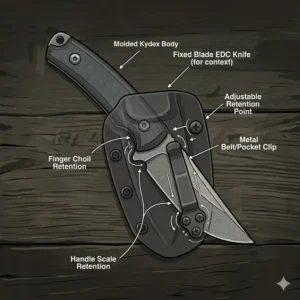
6. CIVIVI Elementum Fixed Blade
Building on the massive success of the Elementum folder, the CIVIVI Elementum Fixed Blade brings that same clean aesthetic to a concealed fixed blade edc. It uses D2 steel, which provides great performance for the mid-range price.
-
Detailed Specifications:
-
Blade Length: 3.98 inches
-
Overall Length: 8.48 inches
-
Steel Type: D2
-
Handle Material: G10 or Micarta
-
Sheath: Kydex with T-Clip
-
-
Customer Review Analysis: Fans of the folding version love the continuity. It is a bit larger than other EDC options, so some users find it harder to hide under a T-shirt.
-
Warranty Information: 1-year manufacturer warranty.
-
Professional Applications: General utility and light outdoor work.
-
Pros: Smooth design; great value; very popular aesthetic.
-
Cons: D2 is not fully stainless; larger footprint than other “mini” fixed blades.
7. Cold Steel AK-47 Field Knife
If you need something that can handle a literal apocalypse, the Cold Steel AK-47 Field Knife is the answer. It is made from CPM 3V, a steel known for being almost impossible to chip or break.
-
Detailed Specifications:
-
Blade Length: 5.5 inches (Large EDC)
-
Overall Length: 10.375 inches
-
Steel Type: CPM 3V
-
Handle Material: G-10
-
Sheath: Secure-Ex
-
-
Customer Review Analysis: Users call it a “pocket tank.” It’s overkill for most, but for those who work in construction or heavy industry, it’s a favorite.
-
Warranty Information: Cold Steel stands behind their products with a standard warranty against manufacturing defects.
-
Professional Applications: Heavy construction, search and rescue, military.
-
Pros: Unmatched toughness; 3V steel is legendary; very secure grip.
-
Cons: Very large for EDC; heavy; Secure-Ex sheaths can dull blades if not careful.
✨ Don’t Miss These Exclusive Deals!
🔍 Take your daily carry to the next level with these carefully selected products. Click on any highlighted item to check current pricing and availability. These tools will help you handle any task 2026 throws your way! ✨
💬 Just one click – help others make better buying decisions too!😊
[addtoany]
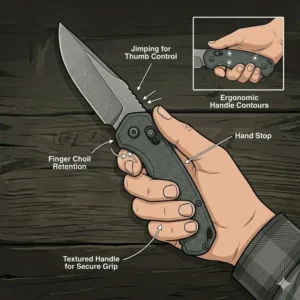
Technical Specifications Matrix
| Product Name | Steel | Length (Blade) | Weight | Best Use Case |
| Benchmade Hidden Canyon | S30V | 2.80in | 2.81oz | Premium Utility |
| ESEE Izula II | 1095 | 2.63in | 3.2oz | Survival/Toughness |
| Spyderco Street Beat | VG-10 | 3.49in | 3.1oz | Tactical/Sleek |
| CRKT Minimalist | 5Cr15MoV | 2.12in | 1.1oz | Budget/Neck Carry |
| White River M1 | S35VN | 3.0in | 2.4oz | High-End EDC |
| CIVIVI Elementum | D2 | 3.98in | 4.41oz | Daily Utility |
| Cold Steel AK-47 | CPM 3V | 5.5in | 11.1oz | Heavy Duty |
Budget vs. Premium Comparison
| Category | Typical Price | Steel Quality | Handle Materials | Warranty |
| Budget (e.g., CRKT) | $25 – $50 | Entry-level (5Cr, 8Cr) | Resin/Plastic | Basic |
| Mid-Range (e.g., CIVIVI) | $50 – $100 | Mid-tier (D2, 14C28N) | G10/Micarta | 1-2 Years |
| Premium (e.g., White River) | $150 – $300 | High-end (S35VN, 3V, M390) | High-grade G10/Burl | Lifetime |
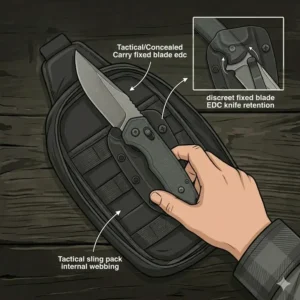
Why Choose a Fixed Blade EDC Over a Folder?
I get this question a lot. “Why would I carry a fixed blade when I have a perfectly good flipper in my pocket?” The answer usually comes down to three things: reliability, speed, and safety.
When you use a folding knife, the pivot is a failure point. No matter how good the lock is (frame lock, liner lock, axis lock), it is still a mechanical part that can break. If you are ever in a situation where you need to pry something (which you shouldn’t do with a knife, but let’s be real—we do), a folder will likely snap at the pivot. A fixedblade edc, especially one with a full tang, is a solid piece of steel from tip to pommel.
Furthermore, let’s talk about hygiene. Have you ever cut an apple with a folding knife and then tried to clean the sticky juice out of the handle three days later? It’s a nightmare. With a fixed blade edc knife, you just wipe it off. Done. No gunk in the springs, no rust in the bearings.
Performance Metrics: Fixed Blade EDC vs. Folding Knives
| Metric | Fixed Blade EDC | Folding Knife | Why? |
| Stress Tolerance | 10/10 | 6/10 | Full tang distribution vs pivot stress. |
| Deployment Speed | 9/10 | 7/10 | No opening mechanism needed. |
| Ease of Cleaning | 10/10 | 4/10 | No internal channels for debris. |
| Safety (No Collapse) | 10/10 | 8/10 | Fixed blades cannot “accidentally” close. |
| Legal Friendliness | 5/10 | 9/10 | Many jurisdictions fear “fixed” knives. |
Understanding Blade Steel in 2026
If you’re looking for the best fixed blade for edc, you have to understand what the knife is made of. In 2026, we have some incredible “super steels” that make the knives of ten years ago look like butter knives.
The Great Steel Debate: Stainless vs. Carbon
I usually break steels down into two categories for my readers:
-
Stainless Steel: These contain high levels of Chromium (at least 13%). They won’t rust easily. If you live near the ocean or sweat a lot, go with something like S35VN or Magnacut.
-
Carbon Steel: These are incredibly tough and easy to sharpen in the field. However, they will rust if you look at them wrong. The ESEE Izula II uses 1095, which is a classic carbon steel. You need to keep a light coat of oil on it.
Blade Steel Comparison Chart
| Steel Type | Edge Retention | Toughness | Corrosion Resistance | Ease of Sharpening |
| CPM-Magnacut | Elite | High | Elite | Moderate |
| CPM-S35VN | High | High | High | Moderate |
| 1095 Carbon | Moderate | Very High | Low | Very Easy |
| D2 Tool Steel | High | Moderate | Moderate | Difficult |
| VG-10 | High | Moderate | High | Easy |
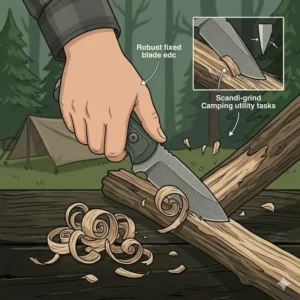
The Art of Carrying a Fixed Blade EDC
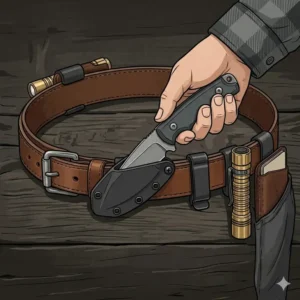
Carrying an edc fix blade is different from carrying a folder. You can’t just clip it to your pocket and forget about it. You need a sheath system that works for your body type and clothing. According to the American Knife & Tool Institute, carry laws vary wildly, so always check your local regulations before strapping one on.
Popular Carry Positions:
-
Scout Carry: This is when the knife is carried horizontally on the back of your belt. It’s very discreet and stays out of the way when you sit down.
-
IWB (Inside the Waistband): Just like a holster for a firearm. This is the ultimate for a concealed fixed blade edc.
-
Vertical OWB: The classic belt carry. It’s accessible but very visible.
-
Neck Carry: Common for very small fixed blade edc knives like the CRKT Minimalist.
User Compatibility Matrix
| User Type | Preferred Knife Size | Recommended Steel | Carry Method |
| Office Worker | 2-2.5 inches | Stainless (S35VN) | Pocket/Neck |
| Construction | 3.5-5 inches | Tough (3V / D2) | Belt (Vertical) |
| Hiker/Camper | 3-4 inches | Balanced (Magnacut) | Scout Carry |
| Minimalist | Under 2 inches | Carbon (1095) | Neck |
Maintenance: Keeping Your EDC in Top Shape
A knife is only as good as its edge. If you carry a fixed blade knife for edc, you are going to use it—a lot. Unlike folders, fixed blades often get used for harder tasks like light batoning or scraping.
-
Stropping: I recommend stropping your blade every couple of days. A leather strop with some compound will keep that “razor” edge without needing to take it to the stones.
-
Cleaning the Sheath: This is the most overlooked part. Kydex and leather sheaths collect grit. If you don’t clean them, that grit will scratch your blade every time you draw it.
-
Rust Prevention: Even “stainless” steels can rust. A quick wipe with a silicone cloth or some mineral oil (especially if you use it for food) goes a long way.
Benefits Quantification: Why Fixed is the Future
| Benefit Category | Quantifiable Impact | Real-World Application |
| Durability | 300% less likely to fail under lateral stress. | Prying a jammed door or heavy wood processing. |
| Hygiene | 90% faster to sanitize. | Moving from cutting rope to slicing an orange. |
| Ergonomics | 50% better grip surface area. | Reduced hand fatigue during long carving sessions. |
| Reliability | Zero moving parts = Zero mechanical failures. | Emergency situations where failure isn’t an option. |
✨ Don’t Miss These Exclusive Deals! 🔍
Take your daily preparedness to the next level with these carefully selected products. Click on any highlighted item to check current pricing and availability on Amazon. These knives are the best in the business and will serve you for decades! 🛡️
Conclusion: Finding Your Perfect Fixed Blade
Selecting a fixed blade edc is a deeply personal journey. It’s about finding that perfect balance between size, weight, and utility. I’ve found that while I still appreciate my folders for their engineering, my fixed blades are the tools I actually trust when things get tough.
Whether you choose the high-end craftsmanship of the White River M1 Backpacker, the legendary toughness of the ESEE Izula II, or the budget-friendly utility of the CRKT Minimalist, you are making a choice to carry a more reliable, capable tool. In 2026, the options have never been better.
The most important thing? Actually carry it. A knife in a drawer helps no one. Find a carry position that is comfortable, keep the edge sharp, and treat your knife with the respect a good tool deserves.
Frequently Asked Questions
❓ Is it legal to carry a fixed blade edc in the United States?
❓ What is the best blade length for an everyday carry fixed blade?
❓ Do I need a special belt for a fixed blade knife for edc?
❓ Can I carry a small fixed blade edc in my pocket?
❓ Is carbon steel better than stainless steel for EDC?
Recommended for You:
- 7 Best leather gerber multi tool pouch Options for 2026 EDC Excellence
- Gerber Fixed Blade Sheath: 7 Best Rugged Upgrades to Buy in 2026
- Gerber Mini Knife Guide: 7 Best Pocket-Sized Picks for 2026 EDC
Disclaimer: This article contains affiliate links. If you purchase products through these links, we may earn a small commission at no additional cost to you.
✨ Found this helpful? Share it with your friends! 💬🤗
[addtoany]
