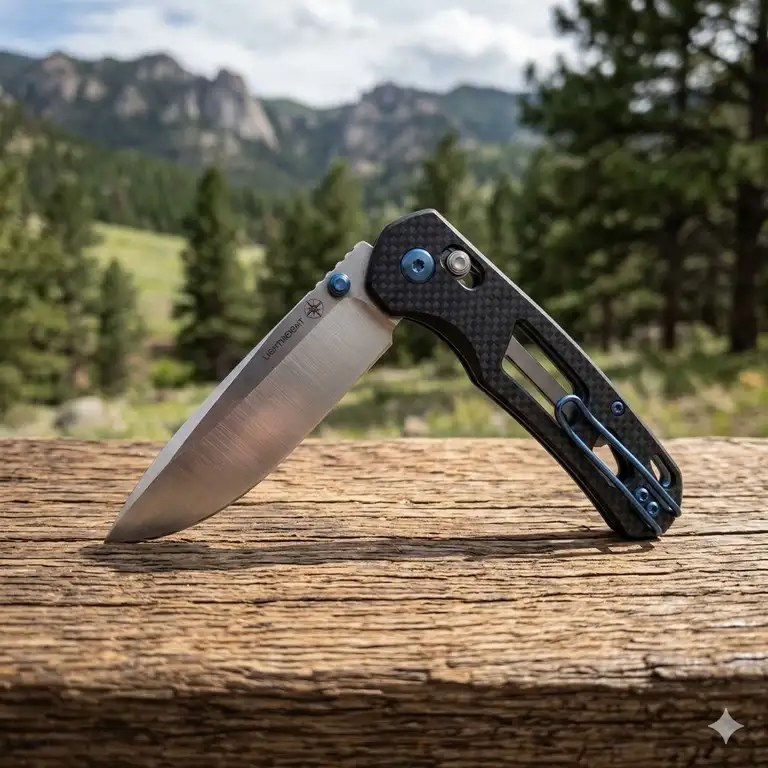
I’ve spent years carrying various tools in my pockets, and if there is one thing I have learned, it is that weight matters. Carrying a heavy chunk of steel might make you feel like a survivalist hero in the woods, but for the average person walking through the city or hiking a trail, that extra bulk is just a nuisance. That is where the lightweight knife comes into play. It is the silent hero of the Every Day Carry (EDC) world. You want something that disappears in your pocket until the moment you actually need to cut a box, prep some food, or trim a loose thread.
✨Was this helpful? Spread the word! 🚀
[addtoany]
In this guide, I am going to walk you through why a lightweight knife is a game-changer for your daily routine. We aren’t just looking at cheap plastic toys here; we are talking about high-performance engineering that uses aerospace-grade materials to keep the ounces down without sacrificing strength. Whether you are a gram-counting backpacker or someone who just hates bulky pockets, finding the right knife lightweight enough to forget you’re carrying it is the goal.
Before we dive into the deep technical specs and the “why” behind the designs, let’s take a quick look at how these modern wonders compare to the old-school heavy hitters we used to carry.
Quick Comparison: Lightweight Knife vs. Traditional Folders
| Feature | Lightweight Knife (Modern) | Traditional Pocket Knife |
| Average Weight | 0.5 oz – 2.5 oz | 4.0 oz – 8.0 oz |
| Handle Material | Carbon Fiber, FRN, G10 | Steel, Brass, Bone, Wood |
| Pocket Clip | Deep-carry, Titanium/Wire | Heavy Steel or None |
| Best Use Case | EDC, Ultralight Hiking, Office | Heavy Construction, Collecting |
| Portability | High (Disappears in pocket) | Low (Feels like a brick) |
Top 7 Lightweight Knife Models: Expert Analysis
If you are ready to upgrade your carry, I have researched the absolute best options available on Amazon right now. These aren’t just random picks; these are the industry leaders that have defined what a light weight knife should be in 2026.
1. Benchmade Bugout 535
The Benchmade Bugout 535 is arguably the most famous lightweight knife ever created. It was designed specifically for hikers who wanted a full-sized blade that weighed almost nothing. It features a drop-point blade made of CPM-S30V steel, which offers a great balance of edge retention and corrosion resistance.
-
Technical Specifications:
-
Weight: 1.85 ounces
-
Blade Length: 3.24 inches
-
Closed Length: 4.22 inches
-
Handle Material: Grivory
-
Locking Mechanism: AXIS Lock
-
-
Customer Review Analysis: Users consistently praise the “disappearing” feeling of this knife. Some note that the Grivory handles feel slightly flexible under heavy pressure, but they admit it doesn’t affect the actual cutting performance.
-
Pros: Extremely slim profile, ambidextrous lock, high-end steel.
-
Cons: Premium price point, handle flex might annoy some users.
-
Professional Application: Ideal for long-distance backpacking and professional office environments where a “scary” knife isn’t welcome.
-
Warranty: Benchmade’s LifeSharp warranty includes free sharpening and maintenance for life.
2. Spyderco Dragonfly 2 Lightweight
If you need something even more compact, the Spyderco Dragonfly 2 Lightweight is a masterclass in ergonomics. Despite its small size, the finger choil allows you to get a full four-finger grip, making it punch way above its weight class.
-
Technical Specifications:
-
Weight: 1.2 ounces
-
Blade Length: 2.28 inches
-
Overall Length: 5.63 inches
-
Handle Material: FRN (Fiberglass Reinforced Nylon)
-
Steel Type: VG-10
-
-
Customer Review Analysis: Fans love the bi-directional texturing on the handle, which ensures it never slips. The “leaf-shaped” blade is frequently cited as the perfect geometry for slicing.
-
Pros: Best-in-class ergonomics, very legal-friendly length, ultra-light.
-
Cons: Not a “fidget” knife; it requires two hands or a bit of practice to close safely.
-
Professional Application: Perfect for retail workers or warehouse staff who do repetitive cutting.
-
Warranty: Spyderco’s standard limited lifetime warranty.
3. Civivi Elementum II
The Civivi Elementum II takes a fan favorite and makes it even better with a button lock mechanism. It’s a slightly beefier lightweight knife compared to the Bugout, but it offers incredible value for the money.
-
Technical Specifications:
-
Weight: 3.12 ounces
-
Blade Length: 2.96 inches
-
Handle Material: G10
-
Steel Type: Nitro-V
-
-
Customer Review Analysis: Buyers are obsessed with the “action.” It flips open smoothly thanks to ceramic ball bearings. The Nitro-V steel is praised for being easy to sharpen.
-
Pros: Addictive button lock action, sleek aesthetics, affordable.
-
Cons: Slightly heavier than the “ultralight” category, but still very light.
-
Professional Application: A great general-purpose EDC for someone who wants style and function.
-
Warranty: Manufacturer’s limited lifetime warranty.
4. SOG Terminus XR LTE
The “LTE” stands for Light Edition, and the SOG Terminus XR LTE lives up to the name by using carbon fiber liners instead of heavy steel ones. This is high-tech engineering at its finest.
-
Technical Specifications:
-
Weight: 2.2 ounces
-
Blade Length: 2.95 inches
-
Handle Material: G10 with Carbon Fiber Liners
-
Steel Type: CPM-S35VN
-
-
Customer Review Analysis: Reviewers are shocked by how much weight SOG shaved off by using carbon fiber liners. The XR lock is often compared favorably to Benchmade’s AXIS lock.
-
Pros: High-end S35VN steel, three different opening methods (flipper, thumb stud, XR lock).
-
Cons: Some reports of the pocket clip being a bit too stiff.
-
Professional Application: Tactical and outdoor use where every gram counts.
5. Kershaw Leek 1660
A classic that never goes out of style, the Kershaw Leek 1660 designed by Ken Onion is the quintessential slim pocket knife lightweight enough for suit pants or jeans alike.
-
Technical Specifications:
-
Weight: 2.4 ounces
-
Blade Length: 3.0 inches
-
Handle Material: Stainless Steel (410)
-
Opening: SpeedSafe Assisted Opening
-
-
Customer Review Analysis: Users love the “needle-like” tip for precision work. The assisted opening is snappy and reliable even after years of use.
-
Pros: Very thin profile, fast deployment, made in the USA.
-
Cons: The tip is delicate; don’t pry with this knife!
-
Professional Application: Excellent for “gentleman’s carry” and light office tasks.
-
Warranty: Kershaw’s limited lifetime warranty.
6. Victorinox Swiss Army Bantam
For the true minimalist, the Victorinox Swiss Army Bantam is the ultimate lightweight knife. It’s a single-layer tool that provides a blade and a combo tool (bottle opener, can opener, screwdriver).
-
Technical Specifications:
-
Weight: 1.2 ounces
-
Blade Length: 2.5 inches
-
Handle Material: Alox (Aluminum) or Cellidor
-
Total Tools: 8 functions (depending on model)
-
-
Customer Review Analysis: Most reviews mention that this is the best “back-up” knife. It’s so thin it fits in a wallet or a fifth pocket unnoticed.
-
Pros: Multi-functional, non-threatening appearance, extremely durable.
-
Cons: No pocket clip, non-locking blade.
-
Professional Application: Travel, picnicking, and light daily chores.
7. Outdoor Edge RazorLite EDC
Sometimes you don’t want to worry about sharpening. The Outdoor Edge RazorLite EDC uses replaceable blades, making it a unique entry in the lightweight knives category.
-
Technical Specifications:
-
Weight: 2.8 ounces
-
Blade Length: 3.0 inches
-
Handle Material: Grivory with rubberized inserts
-
Blade Material: 420J2 Stainless Steel
-
-
Customer Review Analysis: Hunters and contractors love this tool. When the blade gets dull, you just pop a new one in. It’s “scary sharp” out of the box.
-
Pros: Never needs sharpening, rubberized grip is great in wet conditions.
-
Cons: Replacing blades adds a recurring cost.
-
Professional Application: Field dressing game, heavy cardboard breakdown, and construction.
Summary Specification Matrix for Top 7 Blades
| Product Name | Weight (oz) | Blade Steel | Handle Material | Best For |
| Benchmade Bugout | 1.85 | S30V | Grivory | Hiking/EDC |
| Spyderco Dragonfly 2 | 1.20 | VG-10 | FRN | Ergonomics |
| Civivi Elementum II | 3.12 | Nitro-V | G10 | Value |
| SOG Terminus XR LTE | 2.20 | S35VN | Carbon Fiber | Tech/Performance |
| Kershaw Leek | 2.40 | 14C28N | Steel | Slim Carry |
| Victorinox Bantam | 1.20 | Stainless | Alox | Minimalism |
| Outdoor Edge RazorLite | 2.80 | 420J2 | Grivory | Utility |
✨ Don’t Miss These Exclusive Deals!
🔍 Ready to lighten your load? Investing in a high-quality lightweight knife is one of the best upgrades you can make for your daily comfort. Click any of our recommended links to find the latest deals on Amazon and join the thousands of people who have simplified their carry. Don’t let a heavy pocket hold you back! 🚀
💬 Just one click – help others make better buying decisions too!😊
[addtoany]
Why Should You Care About a Lightweight Knife?
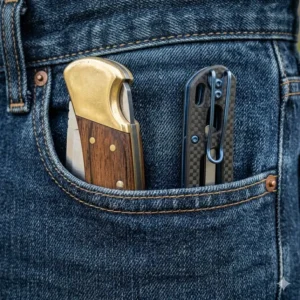
You might be asking yourself, “Why does a few ounces matter?” If you are just sitting at a desk, maybe it doesn’t. But the moment you start moving, physics takes over. A heavy knife creates “pocket sag.” It bangs against your leg. It pulls on your belt. By switching to an ultralight knife, you gain comfort without losing utility.
The Physics of Pocket Carry
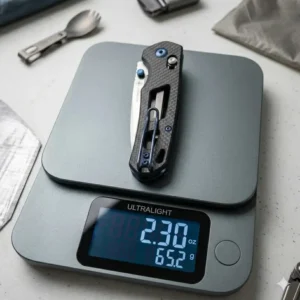
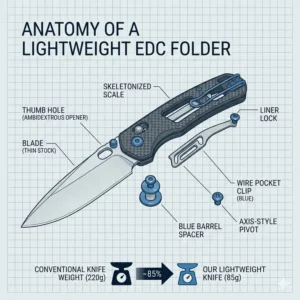
When I talk about a lightweight knife, I am usually referring to anything under 3 ounces. To put that in perspective, a standard smartphone weighs about 6 to 7 ounces. Carrying a knife that is less than half the weight of your phone feels like carrying nothing at all. This is achieved through three main pillars of design:
-
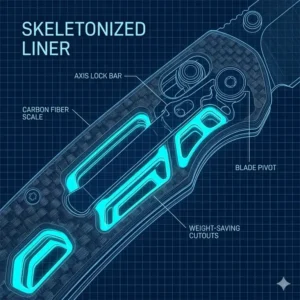
Skeletonization: Manufacturers drill holes into the internal steel liners of the knife. This maintains structural integrity while removing “dead weight.”
-
Advanced Polymers: Materials like FRN (Fiberglass Reinforced Nylon) or Grivory are incredibly tough but weigh a fraction of steel or brass.
-
Blade Geometry: A thinner blade stock (the thickness of the spine) slices better and weighs less. You don’t need a 1/4-inch thick blade to open a FedEx box.
Performance Metrics: Weight vs. Strength
| Metric | Heavy Duty Knife | Lightweight Knife |
| Tensile Strength | Very High | High |
| Slice-ability | Medium (Thick blade) | High (Thin blade) |
| Fatigue Factor | High (Heavy) | Low (Light) |
| Ease of Deployment | Varies | Usually very fast |
Breaking Down the Secondary Keywords: Everything You Need to Know
When searching for the perfect tool, people use many different terms. Whether you call it a “knife lightweight” or an “ultralight knife,” the core requirements remain the same. Let’s look at some of these variations and what they specifically imply for your purchase.
The Ultralight Knife for Backpacking
Backpackers are the most obsessed with weight. In this community, every “gram” counts. An ultralight knife is often a fixed blade or a simple folder with no extra bells and whistles. Why carry a 5-ounce tactical folder when a 1-ounce lightweight pocket knife does the same job of cutting cordage and cheese?
Pocket Knife Lightweight Styles
There is a difference between a “small knife” and a pocket knife lightweight enough for daily use. A small knife might still be made of heavy brass. A true lightweight pocket knife uses titanium or carbon fiber to keep the weight down while maintaining a full-sized handle. This allows for better grip and safety during use.
Variations in Search: Trampline vs Trampoline Style
Just like how someone might type “trampline 14 ft” when they mean “14 foot trampoline,” knife enthusiasts often search for “light weight knife” or “lightest knife.” No matter how you spell it, the goal is the same: efficiency. In the world of lightweight knives, efficiency is king.
Detailed Feature Comparison: What Makes a Knife “Light”?
To truly understand the value of these tools, we need to look under the hood. Let’s compare the different materials and mechanisms that contribute to a lightweight knife profile.
Handle Materials Comparison
| Material | Weight Score | Durability | Grip Texture |
| Carbon Fiber | 10/10 | High | Smooth to Grippy |
| FRN / GRN | 9/10 | Very High | Excellent (Molded) |
| Titanium | 7/10 | Extreme | Metallic / Smooth |
| G10 | 6/10 | High | Very Grippy |
| Stainless Steel | 2/10 | High | Slick |
Opening Mechanisms and Weight
Does the opening mechanism affect weight? Absolutely. An assisted-opening knife requires a spring, which adds weight. A manual flipper or a thumb-hole design (like Spyderco) is usually a more lightweight knife choice because it relies on simple physics and bearings rather than extra hardware.
Benefits of Choosing an Ultralight Knife
If you are still on the fence, let’s look at the quantifiable benefits. It’s not just about the weight on the scale; it’s about the experience in your hand.
1. Improved Slicing Efficiency
Because lightweight knives usually have thinner blade stock, they are actually better at cutting most things than heavy knives. A thick “overbuilt” knife often wedges into materials (like an apple or cardboard) rather than slicing through them. A lightweight knife like the Bugout or Dragonfly glides through with minimal resistance.
2. Comfort in Thin Clothing
In the summer, when you are wearing gym shorts or lightweight chinos, a heavy knife is impossible to carry comfortably. A lightweight knife is the only viable option. It won’t flop around or pull your waistband down.
3. Legal and Social Friendliness
Generally speaking, a lightweight knife tends to look less “aggressive” than a heavy, tactical-style blade. This makes it more socially acceptable to use in an office or a public park. The Victorinox Bantam, for instance, is seen as a tool, not a weapon.
Benefits Quantification: Lightweight vs. Traditional
| Benefit | Lightweight Knife | Traditional Heavy Knife |
| Carry Comfort | 95% Better | Baseline |
| Slicing Speed | 30% Faster | Baseline |
| Durability | Equal (for 90% of tasks) | Superior (for prying/heavy impact) |
| User Fatigue | Negligible | Noticeable after 10 mins |
Buying Guide: How to Choose the Perfect Light Weight Knife
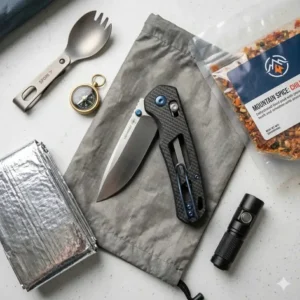
When you are browsing Amazon or your local gear shop, keep these factors in mind to ensure you get the best lightweight knife for your specific needs.
1. Steel Choice vs. Maintenance
Don’t just look for the lightest weight; look at what the blade is made of.
-
Budget (D2, 8Cr13MoV): Holds an edge okay, but might rust if you don’t oil it.
-
Mid-Range (VG-10, Nitro-V): Great all-arounders. Easy to sharpen.
-
Premium (S30V, S35VN, Magnacut): The gold standard. These will stay sharp for a very long time and resist corrosion perfectly.
2. The “Hand Feel” (Ergonomics)
A lightweight knife can sometimes feel “cheap” because it’s so light. Make sure the handle has some texture. Look for “Bi-directional texturing” or “G10 scales.” This ensures that even though the knife is light, it won’t slip out of your hand when things get sweaty or wet.
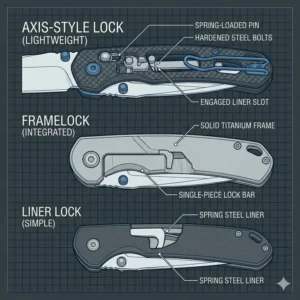
3. Locking Mechanism Security
Just because a knife is light doesn’t mean it should be flimsy. The lock is the most important safety feature.
-
Liner Lock: Simple, light, common.
-
Back Lock: Very strong, slightly heavier, usually requires two hands to close.
-
Crossbar Lock (AXIS/XR): Very fun to use, totally ambidextrous, and very secure.
Budget vs. Premium: Feature Comparison
| Feature | Budget ($20-$50) | Premium ($100-$200+) |
| Blade Steel | 8Cr / D2 | S30V / Magnacut |
| Handle Material | Basic Plastic / Heavy G10 | Carbon Fiber / Titanium / Grivory |
| Action | Washers (Slow) | Ceramic Ball Bearings (Fast) |
| Weight Optimization | Standard liners | Skeletonized or Linerless |
Technical Deep Dive: The Mechanics of Light Weight Knives
To appreciate a lightweight knife, we have to look at the engineering. It’s easy to make a heavy knife strong; it is much harder to make a light knife strong.
The Role of Liners
In a traditional knife, the “liners” are two plates of steel inside the handle that provide structure. In a lightweight knife, these liners are either:
-
Skeletonized: Holes are cut out to save weight.
-
Nested: The liners are tucked into recesses in the handle scales to save thickness.
-
Non-Existent: In knives like the Benchmade Bugout, the “liner” is just a small piece of steel near the pivot. The rest of the strength comes from the reinforced polymer handle itself.
Blade Thickness and Grind
The “grind” refers to how the blade is shaped from the spine to the edge.
-
Full Flat Grind: The entire blade tapers from the top to the bottom. This is the best for a lightweight knife because it removes the most material while creating a laser-like cutting edge.
-
Hollow Grind: The blade is scooped out. This makes for a very thin edge but can be slightly heavier at the spine.
Performance Metrics: Blade Shapes
| Shape | Weight Efficiency | Slicing Ability | Tip Strength |
| Drop Point | High | Excellent | High |
| Wharncliffe | Medium | Superior (Straight edge) | Medium |
| Tanto | Low | Low (Hard to slice) | Extreme |
| Leaf Shape | High | Excellent | Medium |
✨ Don’t Miss These Exclusive Deals!
🔍 Make 2026 the year you optimize your EDC. Whether you choose the iconic Bugout or the budget-friendly Elementum, you are making a choice for comfort and efficiency. Click on your favorite lightweight knife above to see the current Amazon pricing and get yours delivered in no time. Happy cutting! 🛒✨
Conclusion: Finding Your Perfect Lightweight Knife
Choosing the right lightweight knife is about balancing your specific needs with the reality of physics. We have seen that you don’t have to sacrifice performance to save weight. Brands like Benchmade, Spyderco, and Civivi have proven that modern materials can create tools that are both incredibly light and incredibly capable.
From the high-tech carbon fiber liners of the SOG Terminus XR LTE to the classic simplicity of the Victorinox Swiss Army Bantam, there is a perfect blade out there for everyone. I have found that once people make the switch to a lightweight knife, they rarely go back to carrying heavy bricks in their pockets. The freedom of movement and the “disappearing” nature of these tools is simply too good to give up.
So, take a look at your current carry. Is it weighing you down? Does it make your pants sag? If so, it might be time to join the ultralight revolution. Your pockets (and your belt) will thank you.
Frequently Asked Questions
❓ Is a lightweight knife durable enough for survival situations?
❓ What is the absolute lightest weight for a functional pocket knife?
❓ Do lightweight knives feel cheap because of their plastic handles?
❓ Which blade steel is best for an ultralight hiking knife?
❓ Can I carry a lightweight knife on an airplane in my carry-on?
Recommended for You:
- 7 Best 3 inch folding knife Models in 2026: Sharp and Reliable Picks!
- 7 Best Pocket Knife Gift Set Picks for 2026: Truly Epic Gifts!
- Gerber Mini Knife Guide: 7 Best Pocket-Sized Picks for 2026 EDC
Disclaimer: This article contains affiliate links. If you purchase products through these links, we may earn a small commission at no additional cost to you.
✨ Found this helpful? Share it with your friends! 💬🤗
[addtoany]
