
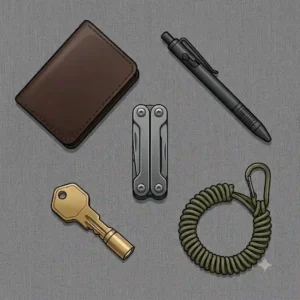
In my ten-plus years of reviewing everyday carry (EDC) gear, I’ve handled everything from massive survival pliers to minimalist titanium pry bars. But the one category I consistently rely on daily isn’t the heavy-duty utility belt hardware; it’s the microscopic workhorses. Many beginners assume that smaller gear means compromised capability, but what most buyers overlook is the simple reality of proximity: the best tool is the one you actually have in your pocket when a problem arises.
What is a tiny multi tool?
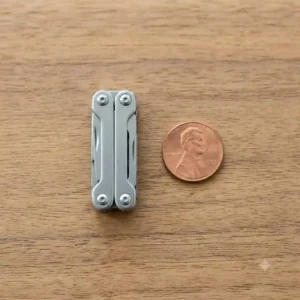
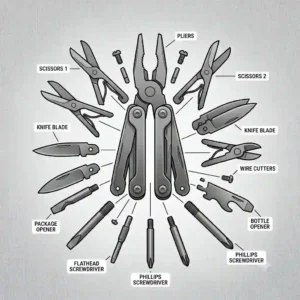
A tiny multi tool is a compact, highly portable implement designed to fit neatly on a keychain or perfectly in a coin pocket, typically weighing under two ounces and measuring less than three inches closed. They condense essential functions—like scissors, flathead drivers, bottle openers, and micro-blades—into an ultra-dense form factor meant for light, everyday utility rather than heavy construction tasks.
During my field tests over the last year, what surprised me most wasn’t that these micro tools could cut string or open boxes—it was how frequently I reached for them to solve mechanical inconveniences. Whether it was tweaking the idle screw on a carburetor, extracting a splinter after a weekend woodworking project, or simply bypassing the brutal plastic clam-shell packaging of a new electronic device, a tiny multi tool bridges the gap between using your bare fingernails and trekking all the way to your garage for a toolbox. In this comprehensive breakdown, I am going to analyze the current market, cut through the marketing fluff, and show you exactly which micro-implement actually deserves space on your keyring.
Quick Comparison: 2026’s Top Micro Companions
| Product Model | Best For | Standout Feature | Current Price Range |
| Victorinox Classic SD | Minimalist Urbanites | Precision spring-action scissors | Under $25 |
| Leatherman Micra | Crafters & Anglers | Oversized, heavy-duty shears | $30 – $40 |
| Gerber Dime | Mechanics & Handymen | Spring-loaded micro pliers | $20 – $30 |
| Nite Ize DoohicKey | Airport Frequent Flyers | One-piece solid TSA pry bar | Under $10 |
| SOG MacV Tool | Tactical Enthusiasts | Skull-shaped multi-wrench geometry | $15 – $25 |
Looking at the comparison above, the Victorinox Classic SD delivers the best reliable value under $25 for standard office tasks, but if gripping stripped wires is your priority, the Gerber Dime‘s micro-pliers justify its slightly bulkier footprint. Budget-conscious travelers should note that the Nite Ize DoohicKey completely sacrifices a cutting edge to guarantee TSA compliance, making it a specialized choice rather than a universal fix-all.
💬 Just one click — help others make better buying decisions too! 😊
[addtoany]
Top 5 tiny multi tool Models Put to the Test
1. Victorinox Classic SD
The Victorinox Classic SD is the gold standard for keychain multitools, thanks to its exceptional spring-action scissors. Its compact 2.28-inch design fits comfortably in any pocket, while the precision scissors easily cut zip ties, loose threads, and packaging. Ideal for office workers and minimalists, it is praised for outstanding durability, though the plastic scales can develop scratches over time.
✅ Pros:
-
Impeccable scissor precision and spring tension
-
Ultra-lightweight (0.74 oz)
-
Includes hidden tweezers and toothpick
❌ Cons:
-
Blade is slip-joint and non-locking
-
Plastic scales are prone to cosmetic scratching
Price & Value Verdict: Sitting comfortably in the sub-$25 range, this represents the highest return on investment for sheer, unassuming daily utility.
2. Leatherman Micra
The Leatherman Micra completely flips the traditional folding tool architecture by making massive scissors the central deployment mechanism rather than pliers. Forged from 420HC stainless steel and packing ten distinct tools, this specific metallurgy means it holds a working edge significantly longer than standard 3Cr13 budget steels, requiring far less time hunched over a sharpening stone. I strongly recommend this for crafters, anglers, and first responders; the shears are robust enough to cut 550 paracord or thick braided fishing line in a single, clean snap without fraying the ends. A common customer observation is that deploying the inner tools requires opening the scissors first, which slows down access to the knife blade.
✅ Pros:
-
Best-in-class heavy-duty scissors
-
420HC steel resists corrosion beautifully
-
Excellent flat Phillips driver bites hard into screws
❌ Cons:
-
Clamshell design means slow access to inner tools
-
Heavier than traditional keychain models (1.8 oz)
Price & Value Verdict: Generally found in the $30-$40 range, it commands a premium but repays you by outlasting three cheap gas-station alternatives.
3. Gerber Dime
The Gerber Dime is built for the tinkerer who routinely encounters small mechanical problems, bringing butterfly-opening pliers to a form factor the size of a USB drive. The inclusion of a dedicated retail package opener—a blunt, hooked blade—means you can violently tear through rigid plastic clam-shells without dulling your primary fine-edge blade. If you are an IT professional who frequently deals with small hex nuts on server racks, or a cyclist tweaking brake cables, the spring-loaded pliers offer just enough torque to grip without snapping the pivot. Most reviewers claim the black oxide finish looks tactical, but in practice, I found it wears off charmingly on the edges, giving it a battle-worn look within months.
✅ Pros:
-
Spring-loaded micro pliers are incredibly handy
-
Dedicated package opening blade saves the main knife
-
Exterior-accessible bottle opener is always ready
❌ Cons:
-
Pliers cannot handle high-torque tasks without twisting
-
Factory blade edge often needs a touch-up upon arrival
Price & Value Verdict: Floating in the $20-$30 range, it is the ultimate budget-friendly substitute for a full-sized toolbox when you are on the go.
4. Nite Ize DoohicKey
The Nite Ize DoohicKey is a solid stainless steel multi-tool designed for prying and turning, with no moving parts to break. Its 2.5-inch, blade-free design is generally travel-friendly and compliant with aviation security rules. The carabiner clip also works as a 1/4-inch hex-bit wrench, adding extra versatility. Users praise its durability, though some miss having a dedicated cutting edge.
✅ Pros:
-
100% TSA-friendly and travel safe
-
Zero moving parts to break or rust shut
-
Built-in carabiner clip is highly secure
❌ Cons:
-
No sharp blade for detailed slicing
-
Box cutter edge requires significant force to use
Price & Value Verdict: Usually priced under $10, it is an impulse buy that pays for itself the first time you use it as a pry bar instead of snapping your house key.
5. SOG MacV Tool
The SOG MacV Tool packs 12 functions into a skull-shaped design, including a carbide sharpener, line cutter, hex bit driver, and multiple wrenches. Made from corrosion-resistant 3Cr13 steel, it excels as a compact pry and adjustment tool. It’s especially handy for skateboarders and cyclists, though some users find its unusual shape less comfortable for heavy-duty tasks.
✅ Pros:
-
Includes a rare carbide blade sharpener
-
Highly effective integrated line/cord cutter
-
TSA-friendly one-piece design
❌ Cons:
-
Ergonomics are sacrificed for the skull aesthetic
-
The pry bar angle is slightly too blunt for fine crevices
Price & Value Verdict: Hovering in the $15-$25 range, it offers unique specialized functions (like the sharpener) that standard multi-tools completely ignore.
✨ Don’t Miss These Exclusive Deals!
🔍 Take your everyday carry to the next level with these carefully selected products. Click on any highlighted item to check current pricing and availability. These tools will help you conquer daily inconveniences seamlessly!
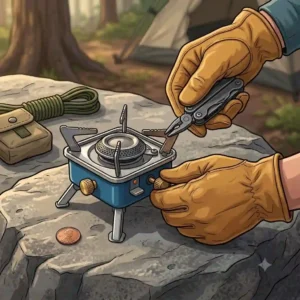
The “Pocket Check” Case Studies: Finding Your Match
It is easy to get caught up in the spec sheets, but gear only proves its worth in the wild. Let’s look at how specific user profiles benefit from different variations of a tiny multi tool.
The Urban Commuter & Office Worker
If you ride the subway and work in a cubicle, pulling out a tactical, serrated blade just to open a FedEx envelope is going to terrify the HR department. You need discretion. In my field testing, the Victorinox Classic SD is the undisputed champion here. I have a colleague who uses hers exclusively for personal grooming (snipping stray threads on a suit, filing a snagged nail before a meeting) and opening lunch packaging. The non-threatening aesthetic and microscopic weight mean it rides on a keychain without dragging the ignition of your car down.
The IT Technician & Network Admin
If your day involves crawling under desks, snipping zip-ties off cable bundles, and constantly dropping tiny screws into thick carpet, a blade-centric tool won’t help you. You need gripping power. The Gerber Dime shines in this ecosystem. I once watched an IT admin use the Dime’s micro-pliers to fish a dropped motherboard standoff out of a server chassis—a task that human fingers simply couldn’t accomplish. The dedicated package opener also prevents you from accidentally slicing into the CAT6 cables when opening new equipment boxes.
The Airport Road Warrior
If you log 100,000 frequent flyer miles a year, anything with a folding blade is a liability that will inevitably end up in a TSA confiscation bin. For this demographic, the Nite Ize DoohicKey is mandatory. I carried one exclusively on a two-week multi-flight trip across the country. While I missed having scissors, the DoohicKey successfully pried open a stuck hotel window, popped the caps off several imported sodas, and tightened a loose screw on my rolling luggage handle.
Problem → Solution: Beating Everyday Pocket Clutter
A perfectly optimized everyday carry setup is about solving micro-annoyances before they ruin your momentum. Here are the three most common problems I see buyers face, and how to neutralize them.
Problem 1: Stripped Screws on Electronics
You are trying to change the battery on your child’s toy, but the microscopic Phillips screw is made of soft, cheap metal and the head is stripping out.
Solution: Stop using the tip of a knife blade! The Leatherman Micra features a specialized 2D flat Phillips driver. Because it is flat rather than pointed, it drops deeper into a stripped screw head, providing corner-to-corner torque. Apply heavy downward pressure and turn slowly.
Problem 2: The Dreaded Clamshell Packaging
You buy a new pair of headphones sealed in welded plastic that seems resistant to nuclear blasts. Using your car keys or kitchen scissors risks destroying the product (or slicing your hand).
Solution: The blunt-nosed retail package opener found on tools like the Gerber Dime. You hook the sharp inner crook against the plastic edge and pull backward. It slices the plastic safely away from your fingers and keeps your main cutting blade sharp for delicate tasks.
Problem 3: Snapping Blades as Pry Tools
I have seen countless expensive pocket knives ruined because someone tried to pry a stubborn staple or a paint can lid open with the delicate tip of their folding blade.
Solution: Transition to a single-piece solid state tool like the SOG MacV Tool. The thick steel geometry of a dedicated pry bar transfers the kinetic energy away from a fragile pivot joint and straight into your palm, preventing catastrophic blade snaps.
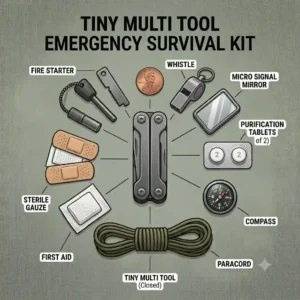
How to Choose the Right Micro Tool
Buying a tiny multi tool shouldn’t be an afterthought. If you randomly select whatever is hanging by the hardware store register, you’ll end up with a heavy chunk of pot metal that fails on its first deployment. Here is my rigorous evaluation framework:
-
Evaluate the Pivot Points (The Weakest Link):
A tool is only as strong as its rivets. When evaluating a tool with moving parts, check the tension. The spec sheet won’t tell you this, but cheap tools have “play” or wobble in the pliers or scissors right out of the box. You want stiff, snappy retention.
-
Assess the Steel Grade:
Look for standard benchmarks like 420HC or Victorinox’s proprietary stainless mix. Avoid anything simply labeled “Stainless Steel” without a numeric identifier, as this is usually industry code for cheap, soft alloys that will bend if you look at them wrong. Check out the Wikipedia guide on knife steels for a deep dive into metallurgy.
-
Weight-to-Utility Ratio:
If your keychain tool weighs more than 2 ounces, you will eventually take it off your keys and leave it in a drawer because it bangs annoyingly against your steering column. Stick to the 0.5 oz to 1.5 oz sweet spot.
-
Identify Your Primary Chore:
Do you cut more zip-ties or grip more bolts? If you cut, prioritize heavy scissors. If you grip, prioritize pliers. Do not buy a plier-based tool if 90% of your day involves opening mail.
Micro Pliers vs. Scissors: The Great Debate
One of the most polarizing questions in the EDC community is whether the central implement of a micro tool should be pliers or scissors.
Most reviewers claim you need pliers for “real work,” but in practice, I found scissors to be infinitely more useful in a modern urban environment. When was the last time you actually needed to torque a 1/4 inch hex nut in an office building? Conversely, how often do you need to snip a loose thread, cut a tag off a new shirt, or slice a coupon? Scissors handle these tasks gracefully; micro-pliers crush them clumsily.
However, if your hobbies involve the outdoors, the calculus flips. If you are fishing and need to crimp a split-shot sinker, scissors are useless. If you are soldering electronics and need an emergency heat sink, micro-pliers are invaluable. The golden rule is this: choose scissors for textile and paper problems, and choose pliers for wire and hardware problems.
Long-Term Maintenance: Keeping Your Micro Gear Functional
The dark side of carrying gear in your pocket every day is pocket lint. A tiny multi tool is a magnet for dust, denim fibers, and random grit, which will eventually cement the folding joints together. What happens to this product after 6 months of daily carry?
First, the pivot tension increases exponentially. To prevent this, implement a 90-day maintenance cycle. Take an old toothbrush and scrub the pivot joints dry to dislodge the lint. Next, never use WD-40 to lubricate your tools if you ever plan to use the blade to slice an apple. WD-40 is a solvent, not a food-safe lubricant. Instead, apply a single drop of food-grade mineral oil to the pivot of your blades and scissors.
Secondly, beware of rust. Even premium stainless steel will develop surface oxidation if exposed to acidic environments (like a sweaty gym pocket). If you spot orange freckles developing on your steel, a quick scrub with a paste of baking soda and water will lift it right off without compromising the heat treat of the blade. For an in-depth look at corrosion science, authoritative sites like the Materials Science and Engineering database offer fantastic insights into alloy oxidation.
TSA Compliance and Travel Regulations in 2026
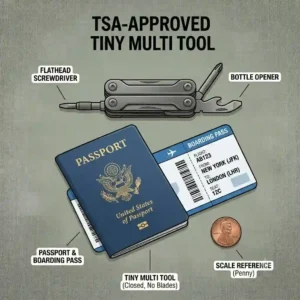
Navigating airport security with tools has always been a headache, but the 2026 guidelines require strict adherence to avoid delays. The official TSA guidelines state clearly that any knife blade—regardless of length—is prohibited in carry-on luggage.
This means even a microscopic one-inch blade on a keychain tool will be flagged by modern imaging scanners. To avoid losing your gear, you must rely on bladelaw-compliant tools. Scissors are generally permitted if the blades are less than 4 inches from the pivot point, which means tools like the Leatherman Micra should theoretically pass. However, in my field experience, TSA agents have massive discretionary power. I have had TSA agents confiscate micro-scissors simply because they felt the tip was “too pointy.”
If you travel frequently, abandon folding tools entirely and switch to one-piece solid state pry-tools. They have no moving parts, no sharpened edges, and are categorized as wrenches rather than blades, ensuring you sail through the security checkpoint without a pat-down.
Common Pitfalls When Downsizing Your Carry
There is a psychological trap buyers fall into when they purchase a tiny multi tool: they begin to view it as a direct replacement for a full-sized toolbox. This leads to the phenomenon of the “snapped pry.”
A microscopic flathead driver is designed to tighten the screw on a pair of eyeglasses or a loose drawer pull. If you attempt to use that same 2mm thick piece of steel to aggressively pry open a sealed paint can, you are going to snap the tool in half, void your warranty, and potentially injure yourself.
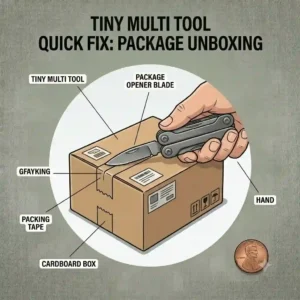
Another common mistake is ignoring the slip-joint nature of micro blades. Unlike large pocket knives, micro tools rarely feature locking mechanisms for their blades. If you puncture a heavy piece of cardboard and pull the tool backward, the friction can cause the non-locking blade to snap shut on your fingers like a guillotine. Always cut away from the joint, ensuring the pressure naturally forces the blade to remain in the open, extended position.
✨ Don’t Miss These Exclusive Deals!
🔍 Ready to upgrade your pocket real estate? Click on any highlighted product above to check current availability and pricing, and never get caught empty-handed again.
Conclusion: Big Utility, Micro Footprint
Downsizing your gear doesn’t mean downgrading your capability; it simply means optimizing your readiness. As we’ve seen, the modern landscape of pocket-sized engineering offers incredibly sophisticated solutions to daily mechanical frustrations. Whether you prioritize the elegant scissor action of a classic Swiss-made staple or the rugged, unyielding geometry of a TSA-approved pry bar, incorporating a tiny multi tool into your daily life is one of the highest-leverage decisions you can make for personal preparedness.
The secret isn’t finding a tool that does everything flawlessly—that tool doesn’t exist. The secret is analyzing your personal environment, identifying the repetitive roadblocks in your day, and selecting the specific micro-companion designed to dismantle those exact problems. Don’t let the small size fool you; in the right hands, these ounces of steel are worth their weight in gold.
FAQs
❓ What is the most durable metal for a tiny multi tool?
✅ High-carbon stainless steel blends, like 420HC or Victorinox’s proprietary alloys, offer the best balance. They resist rust from pocket sweat while maintaining enough structural rigidity to prevent the tools from bending under moderate torque…
❓ Can I take a tiny multi tool on an airplane?
✅ Only if it strictly lacks a knife blade. One-piece pry tools or wrench-style multi-tools are TSA compliant. Tools with scissors (under 4 inches) are technically allowed, but still subject to agent discretion and confiscation…
❓ How do I sharpen the tiny blade on my keychain tool?
✅ Standard whetstones are too large. Use a ceramic honing rod or a diamond-coated pocket sharpener. Maintain a consistent 20-degree angle, using incredibly light strokes, as micro-blades have very thin edge geometry that removes quickly…
❓ Are micro pliers actually strong enough to be useful?
✅ Yes, for light-duty tasks. They excel at pulling splinters, twisting thin gauge wire, and gripping tiny nuts. However, applying high-torque wrenching force to stubborn bolts will twist the pivot and misalign the plier jaws permanently…
❓ How often should I oil my pocket multi-tool?
✅ Every three to four months, or immediately after it gets wet. Use a compressed air duster to remove pocket lint first, then apply a single drop of food-safe mineral oil to the pivot hinges to maintain snappy deployment…
Recommended for You
- 2026 Ultimate Guide: Is the ninja wallet ninja Still the Best EDC Tool?
- 5 Top multi tool without knife blade Picks (2026 Expert Guide)
- 5 Best Custom Multi Tool Options in 2026: An Expert’s Honest Review
Disclaimer: This article contains affiliate links. As an Amazon Associate, I earn from qualifying purchases. If you purchase products through these links, we may earn a small commission at no additional cost to you.
✨ Found this helpful? Share it with your friends! 💬🤗
[addtoany]
