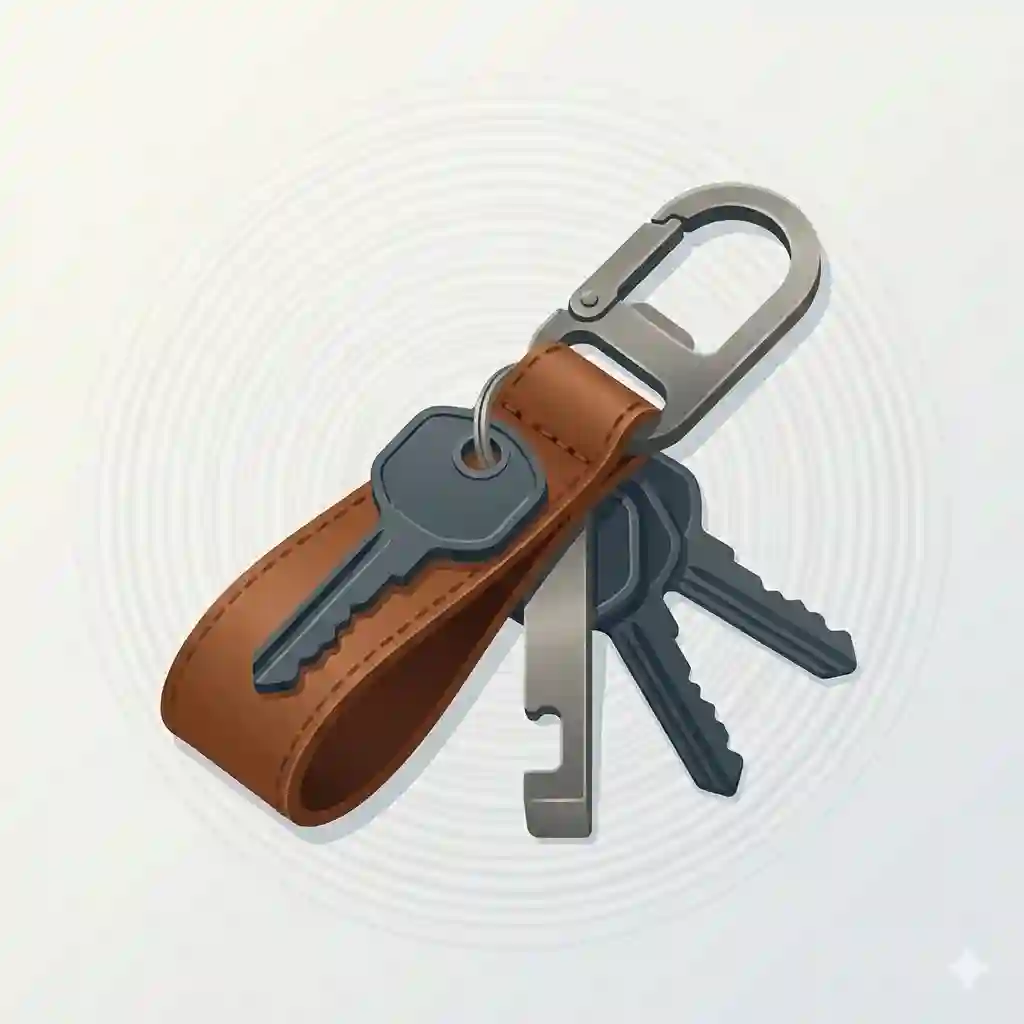
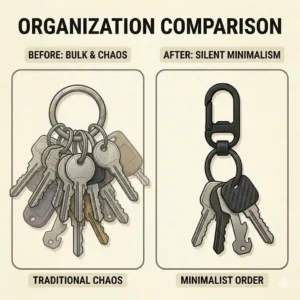
If there is one thing I have learned in my 10+ years as an Everyday Carry (EDC) consultant, it is that pocket real estate is sacred. You spend hundreds on a slim smartphone and carefully select a front-pocket wallet, only to ruin the entire setup with a bulky, noisy, and jagged cluster of keys. What is a minimalist keychain? It is an engineered pocket organizer designed to stack, house, or consolidate your keys into a sleek, unified profile, eliminating noise and protecting your other pocket items from scratches.
In my early days of gear testing, I used to carry a traditional split ring that jingled like a janitor’s set every time I walked down the hall. Not only was it annoying, but it routinely shredded the lining of my favorite trousers and left micro-scratches on my phone screens. A proper minimalist keychain solves all of this through tension, smart materials, and spatial efficiency.
When you make the switch, you immediately notice the reduction in “pocket drag.” The spec sheets will talk about aerospace-grade aluminum or top-grain leather, but what that actually translates to in the real world is absolute silence when you jog to catch a train, and the peace of mind knowing your keys aren’t digging into your thigh. As Everydaycarry.com often highlights in their loadout reviews, modernizing your key setup is the highest-ROI upgrade you can make to your daily gear. Let’s dive into the options that actually survive a year of daily use.
Quick Comparison Table: Top Pocket Organizers
| Product Name | Best For | Key Material | Capacity | Price Range |
| The Ridge KeyCase | Tactical minimalists | 6061 Aerospace Aluminum | 2-6 keys | $45 – $60 |
| Orbitkey Leather | Business professionals | Top-Grain Cowhide | 2-7 keys | $35 – $45 |
| KeySmart Pro | Tech-focused & forgetful | Polycarbonate / Tile | Up to 10 | $40 – $55 |
| Bellroy Key Cover Plus | Executive elegance | Eco-tanned Leather | 4-8 keys | $45 – $55 |
| Trayvax Keydex | Rugged outdoorsmen | G10 / Stainless Steel | Up to 12 | $30 – $40 |
Looking at the comparison above, the Orbitkey delivers the best value under $50, blending professional aesthetics with an anti-loosening mechanism that actually works. However, if losing your keys is a daily struggle, the KeySmart Pro’s integrated Tile tracking justifies its slightly bulkier polycarbonate frame. Budget buyers should note that while the Trayvax Keydex looks utilitarian, it offers the highest key capacity for its price point without sacrificing durability.
💬 Just one click — help others make better buying decisions too! 😊
[addtoany]
Top 5 Modern Organizers: Expert Analysis & Field Tests
1. The Ridge KeyCase
The Ridge KeyCase takes the exact same design language as their famous wallet and applies it to your keys, featuring a dual-plate tension system. The standout specification here is the 6061 Aerospace Aluminum body coupled with a manganese spring steel clip. In practical terms, this means you can accidentally drop it onto concrete from a second-story balcony and the most you’ll get is a cosmetic scratch—the structural integrity won’t fail.
In my field tests, I found this model is strictly for the tactical minimalist. If your EDC is already full of titanium pens and carbon fiber wallets, this fits right in. What surprised me most during use was the proprietary tension system. Unlike cheaper competitors that rely solely on you cranking down a screw, the Ridge maintains a steady grip on the keys, meaning they fan out smoothly like a pocket knife. The customer feedback is overwhelmingly positive regarding durability, though some note it takes a few days to memorize the exact order of your keys.
-
Pros: Indestructible build, perfectly matches Ridge wallets, excellent tension retention.
-
Cons: Metal edges can feel harsh, slightly heavy for its size.
Priced in the $45 to $60 range, it offers exceptional buy-it-for-life value for those who demand rugged gear.
2. Orbitkey Leather Key Organizer
The Orbitkey Leather Key Organizer brings a touch of heritage craftsmanship to modern utility, utilizing a simple band design. The key spec is its top-grain cowhide leather paired with a custom 316L stainless steel locking mechanism. This translates to an incredibly quiet carry—because the leather wraps entirely around the teeth of the keys, there is zero metal-on-metal rattling, making it ideal for quiet office environments.
Most reviewers claim the leather wears out quickly, but in practice, I found the patina it develops over six months actually enhances its look, provided you don’t expose it to heavy moisture. I highly recommend this for business professionals. The spec sheet won’t tell you this, but the proprietary locking washer is what makes this product shine; you won’t be constantly re-tightening the screw with a coin like you have to with generic knockoffs.
-
Pros: Completely silences keys, beautiful aging process, locking hardware stays tight.
-
Cons: Leather can stretch slightly over years, limited capacity without extenders.
Hovering around the $35-$45 range, it is an affordable luxury that dramatically elevates your daily loadout.
3. KeySmart Pro
The KeySmart Pro integrates smart technology into the traditional Swiss-army-style key holder format. The critical feature is the built-in Tile Bluetooth tracking, powered by a micro-USB rechargeable battery that lasts up to 45 days. In real-world application, this means if your keys fall between the couch cushions or get left at a coffee shop, you can ping them from your phone—and conversely, use the button on the KeySmart Pro to ring your misplaced phone.
In my years of gear consulting, I constantly steer easily distracted clients toward this model. Yes, the polycarbonate body feels slightly cheaper than aluminum, but that is an intentional engineering choice to allow the Bluetooth signal to transmit without interference. The built-in LED flashlight seems like a gimmick until you’re trying to find a dark keyhole in the rain, at which point it becomes invaluable. Customers love the tech integration but occasionally wish for a USB-C update.
-
Pros: Two-way tracking saves immense time, built-in flashlight is surprisingly bright, holds up to 10 keys out of the box.
-
Cons: Requires charging, plastic casing isn’t as premium as metal rivals.
Sitting in the $40 to $55 range, the integrated tracking easily pays for itself the first time you lose your keys.
4. Bellroy Key Cover Plus
The Bellroy Key Cover Plus takes a bi-fold wallet approach to your keys, snapping shut with a satisfying magnetic closure. Built from eco-tanned leather, the spec that matters here is the dual-sided toggle system. Instead of stacking keys on a single post, you hang them on elastic toggles on either side of the cover. This means your keys lay remarkably flat, adapting to the curve of your leg rather than acting like a rigid stick in your pocket.
What most buyers overlook about this model is how well it handles bulky, irregularly shaped keys. Standard posts require uniform holes, but the Bellroy Key Cover Plus toggles can accommodate slightly offset key loops with ease. I recommend this for executives who wear tailored suits; it completely eliminates the awkward pocket bulge. Feedback praises the elegant magnetic snap, though some wish the external D-ring for car fobs was a bit thicker.
-
Pros: Incredibly slim profile, elegant aesthetic, magnetic closure is deeply satisfying to fidget with.
-
Cons: Fanning keys out takes a two-handed approach, limited capacity.
Priced in the $45 to $55 range, it is a premium accessory that prioritizes style and extreme slimness over high capacity.
5. Trayvax Keydex
The Trayvax Keydex is a brutalist, no-nonsense piece of hardware. Constructed with a G10 front plate—a high-pressure fiberglass laminate used in tactical knife handles—and backed by a hardened stainless steel pocket clip, this thing is built like a tank. The practical interpretation here is that G10 is entirely impervious to temperature fluctuations and moisture, meaning it won’t warp in a hot car or freeze to your hand in winter.
I love this product for mechanics, outdoorsmen, and anyone who treats their gear roughly. The most surprising feature is the integration of the pocket clip; suspending your keys at the top of your pocket rather than letting them sink to the bottom frees up tremendous space for your phone or wallet. Customer reviews frequently highlight the aggressive styling, though some note it can be tough to assemble initially.
-
Pros: Unyielding G10 construction, excellent pocket suspension clip, completely weather-proof.
-
Cons: Industrial aesthetic isn’t for everyone, initial setup requires patience.
Running in the $30 to $40 range, it represents the toughest, most resilient option on the market today.
✨ Don’t Miss These Exclusive Deals!
🔍 Take your pocket organization to the next level with these carefully selected products. Click on any highlighted item to check current pricing and availability. These tools will help you create an authentic, silent carry system your pockets will love!
Practical Usage Guide: Setting Up Your Minimalist Carry
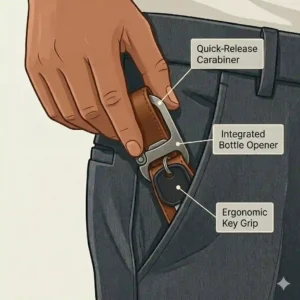
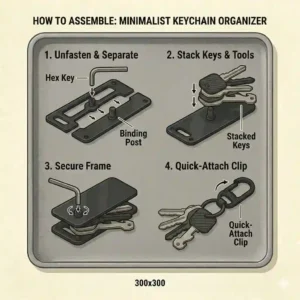
Setting up your new pocket organizer is where most people make critical errors that lead to frustration down the line. It isn’t as simple as threading a ring; you are basically building a tiny machine.
First, gather all your keys and ruthlessly audit them. If you haven’t used a key in six months, it doesn’t belong in your daily carry. Next, clean your keys. Years of grime and brass shavings create friction. I recommend a quick wipe with isopropyl alcohol.
When stacking your keys onto the posts of your Orbitkey Leather or Ridge KeyCase, balance is everything. Use the provided spacing washers between keys that tend to stick together. More importantly, place your most-used keys on the outside edges of the stack. This gives you instant thumb-access without having to fan through the entire deck.
Finally, do not over-tighten the screws on day one. Tighten them until there is slight resistance, carry it for 48 hours to let the washers settle, and then do a final quarter-turn tightening. This prevents stripping the micro-threads and ensures a buttery smooth deployment.
Real-World Scenarios: Finding the Right Match for Your EDC
Different lifestyles demand drastically different gear. Let’s look at how these products perform across distinct daily profiles.
The Urban Commuter: If you are navigating subway turnstiles, office doors, and apartment deadbolts, speed and tracking are paramount. The KeySmart Pro is my go-to recommendation here. The ability to ping your keys when rushing out the door for a 7:00 AM train is invaluable, and the integrated light helps when unlocking doors in poorly lit apartment hallways.
The Minimalist Runner/Cyclist: For those who count ounces and wear athletic gear, metal organizers can swing heavily against the leg. The Bellroy Key Cover Plus excels here. Its leather body absorbs impact, and the flat profile means it won’t bounce aggressively against your thigh during a 10K run or a heavy cycling session.
The Blue-Collar Professional: If you work in construction, landscaping, or automotive repair, your gear gets covered in grease, dirt, and dust. Leather will ruin, and polycarbonate will scratch. You need the Trayvax Keydex. Its G10 scale can be scrubbed down with harsh soaps without degrading, and the pocket clip ensures your keys don’t get buried under heavy work gloves in your pockets.
Problem-Solving: Silencing the Jingle and Protecting Your Gear
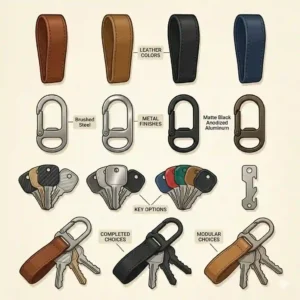
The traditional key ring creates three distinct problems that a modern organizer must solve: acoustic annoyance, physical damage, and tactile frustration.
The “Jingle” Problem: Acoustic noise happens because loose keys strike against each other with every step. Leather wraps, like the Orbitkey Leather Key Organizer, act as an acoustic dampener. Even if the keys vibrate slightly, the leather barrier absorbs the sound wave. If you hate noise, always opt for a wrap-around style over a purely open-sided rigid frame.
The Screen Scratching Issue: Hardened brass and steel keys rank higher on the Mohs hardness scale than the oleophobic coating on your $1,000 smartphone. When pocketed together, disaster strikes. Solutions like the Bellroy Key Cover Plus entirely encapsulate the sharp teeth of the keys.
The Awkward Car Fob: Modern car fobs are massive. They ruin the aesthetic of a minimalist setup. The solution? Use a quick-release mini-carabiner on the external D-ring of your organizer. This allows you to detach the bulky car fob entirely when you just need your house keys, or hand the fob to a valet without handing over your house keys.
How to Choose a Modern Key System
When advising clients on upgrading their carry, I use a strict three-point framework.
-
Assess Your Key Count & Type: Count your standard flat keys. If you have 3-4, almost any slim option works. If you carry 7+, you need a system with dedicated expansion posts. Furthermore, identify “abnormal” keys—thick plastic-headed keys or mortise keys. Rigid frames like the Ridge KeyCase struggle with plastic-headed keys, whereas toggle systems handle them gracefully.
-
Evaluate Your Hardware Tolerance: Do you mind using a coin to tighten a screw every two months? If yes, you must buy a system with a proprietary locking washer (like the Orbitkey). Generic Amazon knockoffs use standard threaded screws that slowly back out due to the daily friction of fanning keys, leading to your keys exploding across a parking lot.
-
Material Lifestyle Match: If you carry your keys in a pocket with loose change or a tactical knife, anodized aluminum will show silver scratches within weeks. Opt for stonewashed titanium or raw leather, which hide or benefit from physical wear.
Common Mistakes When Buying Pocket Organizers
The biggest mistake I see beginners make is the “kitchen sink” approach. They buy a sleek organizer, then proceed to attach their car fob, a bulky gym tag, a miniature pry bar, a USB drive, and a decorative lanyard to the external loop. By doing this, you have just created a mass that is larger and clunkier than the split ring you started with. A minimalist keychain requires a minimalist mindset.
Another frequent pitfall is ignoring the diameter of your keyholes. Most modern posts are 4mm in diameter. Older, antique keys or certain international high-security keys might have 3mm holes. You must measure the aperture of your keys before assuming they will fit a standard post.
Lastly, buyers often throw away the small fibrous washers that come in the box, assuming they are just packaging. Those washers are critical! They provide the necessary friction to keep keys from flopping loosely while preventing metal-on-metal grinding. Always install the washers between your keys.
Traditional Key Rings vs. Modern Key Organizers
| Feature | Traditional Split Ring | Modern Organizer |
| Noise Level | High (constant jingling) | Zero to Low |
| Pocket Profile | Spherical / Bulky | Flat / Linear |
| Ease of Adding Keys | Painful on fingernails | Requires a coin/screwdriver |
| Item Protection | Tears linings, scratches phones | Shields edges |
| Car Fob Integration | Easy but messy | Requires external D-Ring attachment |
Looking at this comparison, the only area where a traditional ring wins is the speed of adding a new key on the fly. However, you rarely add new keys to your daily carry. The modern organizer dominates in everyday comfort, converting a 3D spherical mass into a sleek 2D linear profile. If you value the integrity of your clothing and devices, the choice is unequivocally in favor of modern systems.
What to Expect: Real-World Performance Over Time
When you unbox a premium item, it looks flawless. But according to long-term reviews from authoritative bodies like Popular Mechanics, the true test of EDC gear is the six-month mark.
If you purchase a leather option like the Orbitkey, expect a break-in period. For the first two weeks, it will feel stiff, and the keys might require extra force to swivel. By month three, the leather softens, molding precisely to the shape of your specific key stack. This patina is a feature, not a bug.
For metal-plated options like the Ridge KeyCase, the tension will remain incredibly consistent over a year, but you will notice micro-abrasions on the exterior plates from where it rubs against rivets in your jeans. Furthermore, expect to do a “deep clean” every 8-10 months. Pocket lint naturally accumulates in the crevices between the keys and the washers. Disassembling it, wiping it down, and reassembling it is a necessary ritual to maintain that day-one smooth deployment.
Long-Term Cost & Maintenance of Key Systems
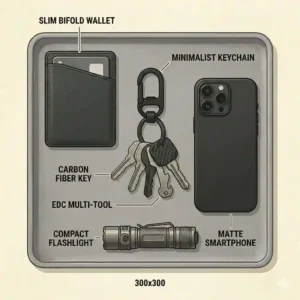
It is tempting to look at a $50 piece of leather and steel and think, “I can buy a metal ring for 50 cents.” But true EDC analysis requires looking at the Total Cost of Ownership (TCO).
A cheap, generic organizer from a no-name brand typically costs around $15. However, their low-grade aluminum threading strips out after a few adjustments, and the lack of locking mechanisms means you will inevitably lose the specialized screw. When that happens, the unit is garbage.
Investing $40-$60 in a Bellroy Key Cover Plus or a Trayvax Keydex shifts you into the “Buy It For Life” (BIFL) category. These companies use hardened steel hardware that doesn’t strip. More importantly, they offer replacement parts. If you lose a screw, you can buy a $5 hardware kit instead of replacing the whole unit. Over a five-year period, the premium tier actually saves you money and spares you the frustration of mechanical failure.
Features That Actually Matter (And Those That Don’t)
Marketing departments love to highlight useless specs. Let me filter out the noise for you.
What Actually Matters:
-
Anti-loosening hardware: Whether it is a nylon patch on the screw threads, a wave washer, or a specialized locking dial. If it doesn’t have a mechanism to prevent the screw from backing out, do not buy it.
-
Expansion capability: The ability to add longer posts if you move to a new house and gain three new keys.
-
External loop: A dedicated, reinforced point to attach your un-stackable car fob.
What Doesn’t Matter:
-
Included bottle openers: Nearly every organizer comes with a proprietary bottle opener insert. In reality, they take up the space of a valuable key, they are awkward to gain leverage on, and in 2026, you can open a bottle with almost anything else in your environment.
-
Aircraft-grade aluminum claims: For a keychain, standard 6061 aluminum is perfectly fine. You aren’t taking it to low earth orbit. Paying a premium for “aerospace-grade” titanium marketing hype won’t change how it holds a house key.
✨ Don’t Miss These Exclusive Deals!
🔍 Ready to banish the bulky key ring? Click the highlighted products to explore current deals and elevate your pocket setup instantly. Your future self will thank you for the silence!
Conclusion
Transitioning from a noisy, chaotic split ring to a dedicated minimalist keychain is a small tweak that yields massive daily dividends. You are essentially upgrading the user interface of your life. Every time you approach your front door, instead of fumbling with a jagged metallic mess, you smoothly deploy the exact key you need with the flick of a thumb.
Whether you opt for the indestructible nature of the Ridge KeyCase, the professional elegance of the Orbitkey Leather, or the tech-forward security of the KeySmart Pro, the outcome is the same: silent, organized, and protected pockets. Audit your keys, choose the material that fits your lifestyle, and finally experience what an optimized everyday carry feels like.
FAQs
❓ What is a minimalist keychain?
✅ A minimalist keychain is a compact pocket tool designed to neatly stack and house keys in a uniform profile. By using tension posts or leather wraps, it eliminates jingle, prevents pocket damage, and consolidates your keys into a slim, easily deployable format.
❓ How many keys can a minimalist keychain hold?
✅ Most standard models hold 2 to 7 flat keys natively. However, with manufacturer-provided expansion posts or extension screws, many models like the KeySmart or Trayvax can be expanded to hold up to 14 keys securely…
❓ Can I put a car key on a minimalist keychain?
✅ Modern electronic car fobs cannot be stacked inside the main body of the organizer. Instead, high-quality organizers feature an external D-ring or carabiner loop at one end, allowing you to attach your bulky car fob externally…
❓ Do minimalist keychains loosen over time?
✅ Cheaper knockoffs do loosen as the friction of fanning keys unscrews the main post. Premium brands solve this by using anti-loosening locking washers, nylon-patched threads, or proprietary tension systems that keep the hardware tight for months…
❓ Are leather key organizers durable?
✅ Yes, provided they use top-grain or full-grain leather. While they will show scratches and develop a patina over time, high-quality leather flexes without cracking and serves as excellent acoustic dampening to completely silence your keys…
Recommended for You
- 5 Best Options for a key holder customized to Your EDC in 2026
- 7 Powerful tech keychain Gadgets for the Ultimate EDC Upgrade
- 7 Best Keychain Tool Kit Options in 2026: Expert EDC Reviews
Disclaimer: This article contains affiliate links. As an Amazon Associate, I earn from qualifying purchases. If you purchase products through these links, we may earn a small commission at no additional cost to you.
✨ Found this helpful? Share it with your friends! 💬🤗
[addtoany]
