For most buyers, quick release key chains boil down to a $10 magnet pair, and the pricier titanium and carabiner versions only pay off if your keys come apart several times a day. Five picks follow for 2027, sorted into three price tiers, from the KeySmart MagConnect at the bottom to the Orbitkey Clip v2 at the top.
The findings draw on maker spec sheets and support pages, hardware-store listings, reviews from Gear Patrol, Pack Hacker and The Gadgeteer, owner reviews on Best Buy, and a federal recall letter. They keep landing on one rule: buy the release that matches how often your keys really split.
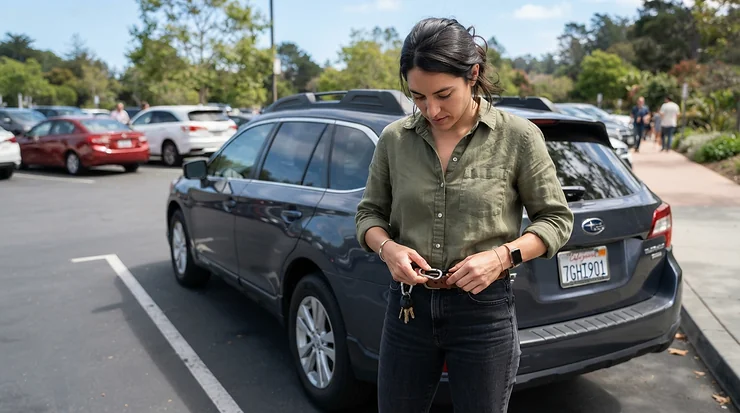
Who’s this for? Anyone who hands a fob to a valet, a mechanic or a teenager and wants the house keys to stay put. Anyone clipping their everyday carry keys to a belt loop, too. The right quick release key chains for each of them look different.
Price tiers, drawn against a $500 fob
The tiers aren’t arbitrary. They’re drawn as a share of what a bad day costs. Consumer Reports puts the cost of replacing the newest fobs anywhere from $50 to as high as $400. A Consumer Reports segment carried by NBC adds $20 to $130 for programming, which can total around $500 in some cases.
Assume that $500 worst case. Against it, a $10 connector is 2 percent of the bill, a $22 titanium swivel is 4.4 percent, and a $42 clip is 8.4 percent. (A connector can’t stop a pocket from emptying, so read those numbers as price context, not insurance.) Anything under $15 stays at 3 percent or less. The $42 clip is the only pick past 5 percent.
That gives three tiers:
Under $15: the KeySmart MagConnect and the Nite Ize KeyRack Locker.
Around $15 to $22: the OKNIFE Otacle R1 and the KeyUnity KA45.
Around $42: the Orbitkey Clip v2.
Ownership cost is mostly the sticker. Gear Patrol lists a two-year warranty for the Orbitkey Clip v2, which puts roughly $21 a year on a $42 purchase.
The floor for the whole idea is a brass pull-apart. Lucky Line’s 70701 runs between $3 and $8 across Zoro and Walmart listings and ships with two 7/8-inch split rings (about 22 mm across). Zoro’s page shows the United States as its country of origin. No magnet. No swivel. It does split.
Three ways a key chain lets go
Every release works one of three ways.
Magnets come first. Gear Diary describes the MagConnect as two pieces of metal joined by a strong magnet, and Orbitkey builds its Clip v2 around a Fidlock magnetic system. Magnets pull the halves back together, which helps at a dark car door.
Mechanical catches come second. Home Depot’s page for the Lucky Line 70701 says it separates keys with the press of a button. The OKNIFE Otacle R1 pairs magnets with a bead lock, and The Gadgeteer lists a button release on the KeyUnity KA45. A catch asks for a deliberate squeeze or pull, which suits people who don’t trust a magnet near a crowded pocket.
Gates come third. The Nite Ize KeyRack Locker doesn’t split into two halves at all. Each key rides on its own twist-lock mini carabiner, so you unclip one and leave the rest.
Then there’s the humble ring keyring. Technically it splits. You pry a gap with a thumbnail, walk the key around two full turns, and hope. It’s cheap and it’s slow, which is the entire reason this category exists.
The Gadgeteer’s buyer’s guide to keychain tools frames the purchase around how often keys come apart. If they never leave the ring, a connector adds little; if they separate twice a day, it earns its place. For everyday carry keys that stay bundled, a plain ring wins on cost and simplicity. Most quick release key chains are really a bet on a daily habit.
Titanium, rated, locking: listing words that hide a limit
Product titles carry adjectives that sound like specs. A few are worth decoding before you order.
“Titanium” doesn’t give a weight. The OKNIFE Otacle R1 comes in a TC4 titanium version at 7.1 g for the connector and a brass version at about 11 to 12 g, per The Gadgeteer. The KeyUnity KA45 is also titanium alloy, yet it weighs 20.3 g. Same metal, more than twice the mass.
“MagConnect” doesn’t give a metal. Ace Hardware lists a titanium version, a reseller’s sales copy describes an aluminum version, and the MagConnect Pro is a separate locking slide-release model in ABS and stainless steel. Treat them as three products.
“Rated to” is a maker’s number. OKNIFE rates its connector at 5 kg, and The Gadgeteer’s reviewer flags that as a manufacturer figure, not independent testing. KeyUnity’s 44.1 lb is a listing figure too. A hanging weight is also a different event from a bag swung off a chair.
“Locking” depends on the version. Nite Ize sells a KeyRack Locker with polycarbonate MicroLocks (KLKP-01-R3) and a steel version (KLK-11-R3), and an eBay buyer cautions that Nite Ize makes a non-locking type as well. The word “Locker” and the twist lever in the photos mark the locking version.
“Magnetic” doesn’t give a hold. KeySmart’s own help center gives the regular MagConnect a figure in pounds. A listing that says only “strong magnet” gives you nothing to compare.
Ignition weight, valet handoffs, and magnets near a chest pocket
Best car keychains aren’t about looks. They’re about what rides on the ignition.
A federal recall letter shows why. The NHTSA recall filing for GM campaign 14V355, dated December 2014, covers models such as the 2005 to 2009 Buick LaCrosse, 2006 to 2011 Buick Lucerne and 2006 to 2013 Chevrolet Impala. It warns that added weight on the key ring plus a jarring event may move the key out of the run position.
Until the dealer repair, the letter tells owners to remove everything from the ring except the vehicle key, fob included. That’s a recall for specific models, not a rule for every car. A connector does turn “strip the ring” into a five-second job.
Valets are the other classic use. A Lucky Line listing at Do it Best pitches its pull-apart for valets, mechanics, entry gates and mailboxes, and a Newegg listing for a magnetic connector makes the same car-service pitch. The pattern holds across the five picks: one half carries the car key and fob, the other holds the house and office keys.
Magnets raise one more question. The FDA recommends that people keep consumer electronics such as cell phones and smartwatches at least six inches from implanted medical devices, because their magnets can trigger a magnet mode. That advisory covers phones and watches, not key connectors. Anyone with a pacemaker or defibrillator should ask a clinician before clipping a magnet pair to a chest pocket or a lanyard.
Load ratings that disagree, plus a 90 g example
Ratings clash even inside one product line. KeySmart’s help center says the regular MagConnect supports items up to 2.5 pounds. A reseller’s sales copy for an aluminum MagConnect says up to 3 pounds. The maker’s support page is the safer of the two numbers, since it comes from the company that built the thing.
The other ratings sit far apart. OKNIFE says 5 kg, about 11 lb. KeyUnity says 44.1 lb, about 20 kg. For the Orbitkey, Gear Patrol’s reviewer calls the Fidlock release very hard to pull apart by accident, which is a judgment, not a number. Those are different kinds of evidence, so don’t line them up as if they were equal.
Here’s a worked example with a stated assumption. Say a hypothetical car-side half weighs 90 g, a fob plus two keys. Assume a bag yank multiplies that weight tenfold (an illustration, not a sourced figure), which makes a 900 g jolt. Convert the ratings: 2.5 lb is about 1,134 g, 5 kg is 5,000 g, and 44.1 lb is about 20,000 g.
Against 900 g, the regular MagConnect has a 1.26 times margin, the OKNIFE has 5.6 times, and the KeyUnity has 22 times. Now bump the bundle to 150 g, which makes a 1,500 g jolt. The MagConnect’s 1,134 g rating is now below the load. So how much rating is enough? For a light fob, 2.5 lb is workable. For a heavy fob with a flashlight and a multitool, the 5 kg and 44.1 lb parts give more room.
Weigh your car-side bundle on a kitchen scale before you pick a tier.
Keychain multiple keys: counting before you buy
A keychain for multiple keys has two jobs, holding them and letting one go. Ring size decides the first.
Best Buy owners of the MagConnect call the magnet strong but the rings tiny. OKNIFE’s rings measure about 10.8 mm across, per The Gadgeteer, and Lucky Line’s are 7/8 inch. Orbitkey’s open D-ring takes keys and fobs directly, according to its listings. For a thick bundle, leave the bulk on the clip side and give the connector only the fob.
Searches for a keychain multiple keys can fit tend to return organizers, racks and reels, and only some of those split on demand. A keyring for multiple keys can also mean a rack. The Nite Ize KeyRack Locker carries six biners, Ace says each holds up to three keys, and an eBay buyer says two or three fit, with three crowded. That’s 12 keys comfortably and 18 at a squeeze, going by those sources.
Wallet and key organizer shoppers have a separate checklist, and the best car keychains for them are the ones that pair with the stack they already own. KeySmart’s MagConnect lists compatibility with the KeySmart Original, Leather, Flex, Rugged and Pro, plus any standard keychain, per Swiss Knife Shop. The Orbitkey Clip v2 works with Orbitkey’s own key organizers, according to The Iconic. None of the five picks is a wallet. They’re connectors that sit between a stack and a fob.
Where quick release setups go wrong, and the fixes
Most quick release key chains fail in boring ways. None of them involves the magnet.
Ring size is the first. OKNIFE’s rings measure about 10.8 mm across, while Lucky Line’s 7/8-inch rings open to roughly 22 mm, twice as wide. A bulky fob loop or a thick key head that fits one won’t fit the other. The fix is a bigger split ring on the heavy side, or Orbitkey’s open D-ring, which takes keys directly.
Version mix-ups come next. A MagConnect Pro wants a slide, and KeySmart’s help center says to avoid pulling it straight apart. A Nite Ize rack with non-locking biners isn’t a Locker. A brass OKNIFE isn’t a titanium one. The model code and the photos carry the real version, not the title.
Loading the wrong side hurts too. Put the heavy fob on the half with the higher rating, and keep the light house keys on the half that stays clipped to a bag. The 90 g example above shows how quickly a 2.5 lb figure runs out.
The last one is the ignition. If your car is on a recall list like the one above, the dealer repair is the actual fix, and NHTSA’s recall lookup by VIN is the place to check. A connector only makes the interim instruction easier to follow.
The best car keychains, in short, are the ones that keep the ignition-side load small and the handoff side easy to open.
Setup time and the first week with a new release
Setup is quick for all five, though the learning curve differs.
The KeySmart MagConnect and the OKNIFE come as two halves with a ring on each side. You transfer your keys onto the rings, which is the fiddly part when the rings are small. The KeyUnity ships with two rings, per The Gadgeteer, so the same job applies.
The Nite Ize rack asks for more. Each key goes onto its own biner, and a twist locks the gate. Sorting six keys into six biners takes a few minutes the first time, then each unclip takes seconds.
The Orbitkey removes the ring step. Its open D-ring lets keys and fobs slide on without prying, and The Iconic’s description says that removes the need for an extra keyring. The Fidlock release has its own motion, a downward tug on the tab, and Gear Patrol’s reviewer says reattaching is just as simple.
A slide-release model such as the MagConnect Pro asks you to unlearn the pull. KeySmart’s help center says the sliding motion is what safely releases the magnetic lock, so give a new Pro a few tries before you tug.
After that, the first week is mostly habit: which half goes on the belt loop, which half goes in the pocket, and which pocket holds the fob.
The MagConnect is the cheapest sensible way into the category. Ace Hardware and a Lester Chan review put it around $10. It looks like two small rings joined by a short barrel, and per KeySmart’s help center the regular version carries up to 2.5 pounds, aimed at fobs and small keychain items.
Owners on Best Buy’s page mostly praise the magnet. One reviewer, owning it for a year, gave five stars. Another found the magnet plenty strong for separating keys, while noting the rings are pretty tiny. A three-star review sums it up as a little ring with a strong magnet, and lists size as the con.
Versions complicate things. Ace sells a titanium MagConnect, a reseller describes an aluminum one, and the Pro locks and wants a slide, not a straight pull, per KeySmart’s help center. Photos show which version is on offer.
Pros:
Around $10, the lowest price among the five picks
Works with KeySmart organizers or any standard keychain, per Swiss Knife Shop
Magnet strength is the feature Best Buy owners mention most
Cons:
Small rings, which Best Buy owners flag
Its 2.5 lb figure leaves less spare room for a heavy bundle
KeySmart MagConnectCheck the current price, sizes and reviews on Amazon.
Handing over one key out of six is a different problem from splitting a ring in two, and this rack solves it. A stainless steel carabiner clips to a belt loop or an existing ring. The bottom loop holds six S-Biner MicroLocks, and a twist of the lever locks each gate, per Lowe’s and Ace Hardware.
Prices run between $11 and $14 for the steel version across Sportsman’s Warehouse, Cops Plus and an eBay seller, and the colorful polycarbonate version drops to around $9 at Sportsman’s Warehouse. Evike lists the steel version at 1.31 oz (37 g), while LA Police Gear lists the polycarbonate version at 0.7 oz, about 20 g. So the steel rack is a lump on a belt loop, not a whisper, and nearly double its plastic sibling.
The reports are mixed. An eBay buyer loves it but says it gets bulky when full and heavy, and catches on belt loops. A Navy Exchange page for the polycarbonate-lock version shows 2.83 out of 5 from six reviews, a small sample worth reading with care. The release is also slower than a pull-apart, since each key needs a twist and an unclip.
Color-coded biners make identifying keys easier. When the keys belong to different people (a workshop, a rental, a house sitter), that’s the point, and no magnet pair does it.
Nite Ize KeyRack LockerCheck the current price, sizes and reviews on Amazon.
The OKNIFE Otacle R1 is built for people who count grams. The Gadgeteer lists it at $14.99 on Amazon, with a TC4 titanium connector at 7.1 g, 1 inch long, and stainless rings of about 0.43 inch each that add 0.8 g apiece.
You pull the halves apart and snap them back. Magnets help line them up, and a bead lock holds them together. A 360-degree swivel keeps the bundle from twisting. The reviewer likes it for splitting car keys from house keys.
The same review lists the downsides. The body is small, so wet or gloved hands get little grip. OKNIFE’s 5 kg rating is the maker’s figure. The reviewer says there isn’t enough evidence to recommend it on safety-critical gear. A plain split ring costs less if the keys never separate.
Pros:
7.1 g for the titanium connector, the lightest here
360-degree swivel
Titanium or brass versions
Cons:
Little grip when hands are wet or gloved
Tiny key rings, about 10.8 mm across
OKNIFE Otacle R1Check the current price, sizes and reviews on Amazon.
Weight is the price of the strongest rating. The KeyUnity KA45 weighs 20.3 g, about 2.9 times the OKNIFE titanium connector, and the Gadgeteer lists it at $21.99 with a link to Amazon. Spec for spec: titanium alloy, button release, two rings in the box, 360-degree swivel, and a 44.1 lb rating.
Is the swivel worth it? The reviewer says it stops keys from tangling, calls the magnet strong enough to trust, and says a pull separates house keys from the car key in one motion. The same guide advises leaving it off if your keys never come apart.
The guide also lists a sibling, the KeyUnity KM00 belt-loop clip, at the same $21.99, 0.35 oz and 2.28 inches long. Both sides of it release, and the reviewer calls its listing, with 937 ratings, the most heavily reviewed pick in that set. For a belt-loop release, that’s the cheaper road compared with the Orbitkey.
The 44.1 lb figure is 17.6 times the KeySmart’s 2.5 lb, though both are maker numbers, so treat the gap as headroom, not a lab result. For a heavy fob, that headroom matters. For a light one, you’re paying 20.3 g to carry margin you won’t use.
KeyUnity KA45 Magnetic Quick ReleaseCheck the current price, sizes and reviews on Amazon.
Pack Hacker’s verdict calls it pricey for the use case, and the price is the obvious limit. Pack Hacker shows it near $41 on Amazon, and Gear Patrol lists $42.90, so figure between $41 and $43.
The upside is the release. A Fidlock magnetic system joins a carabiner and an open D-ring. Gear Patrol’s reviewer says a downward tug on the tab detaches it, it’s very hard to separate by accident, and after a year or more of use it shows no visible wear. Gear Patrol also notes the quick release helps when you’re wearing something without belt loops.
Orbitkey lists zinc alloy, 105 mm (4.13 inches) overall, 57 mm for the clip alone, 35 mm wide and 11 mm tall. A wide gate is easier to hook onto bags, per Everyday Carry. Orbitkey’s own page shows 4.8 stars across 295 reviews, a maker-hosted signal rather than an independent one.
It’s a clip for belt loops and straps, not a connector that vanishes in a pocket, and the 4.13-inch length shows. Anyone who just wants two halves to split for a valet can spend a quarter of the money.
Orbitkey Clip v2Check the current price, sizes and reviews on Amazon.
Ratings are maker or listing figures, and prices are ranges from the sources named above.
Pick
Tier
Release type
Material
Weight
Maker rating
Price signal
Main limit
KeySmart MagConnect
Under $15
Magnet, pull apart
Aluminum or titanium, by version
–
2.5 lb (regular)
Around $10
Tiny rings
Nite Ize KeyRack Locker
Under $15
Twist-lock mini carabiners
Stainless steel with plastic lock levers
37 g (steel version)
–
$11 to $14 (steel)
Bulk, snags belt loops
OKNIFE Otacle R1
$15 to $22
Pull apart, magnets and bead lock
TC4 titanium or brass
7.1 g (titanium connector)
5 kg
Around $15
Little grip when wet
KeyUnity KA45
$15 to $22
Magnetic, button release
Titanium alloy
20.3 g
44.1 lb
Around $22
Heaviest of the titanium pair
Orbitkey Clip v2
Around $42
Fidlock magnet, downward tug
Zinc alloy
–
–
$41 to $43
Price; belt and bag use only
Each pick wins one column. The cheapest split is the KeySmart, the most keys sit on the Nite Ize, the lightest is the OKNIFE, the biggest rating margin is the KeyUnity, and the smoothest belt-loop release is the Orbitkey. The Orbitkey costs about four times the KeySmart, so it only earns that premium when a clip is the thing you want.
Here’s how situations map to picks:
A fob goes to valets or mechanics now and then while the house keys stay put: the KeySmart MagConnect, because the $10 split is the whole job.
Six keys, several owners: the Nite Ize rack, since each key unclips alone.
A light pocket matters most: the OKNIFE in titanium. A heavy fob with a flashlight on it: the KeyUnity, for the rating headroom.
Keys that live on a belt loop and split daily: the Orbitkey Clip v2.
Magnet hold, valet handoffs, titanium weight, and organizer pairing
What is the best keyring for multiple keys?
A rack that gives each key its own gate suits a crowd. The Nite Ize KeyRack Locker carries six twist-lock biners, and Ace says each holds up to three keys, though an eBay buyer finds three crowded.
Can a magnetic quick release keychain fall apart by itself?
Makers describe the hold as strong, and KeySmart rates the regular MagConnect to 2.5 pounds. Gear Patrol's reviewer calls the Orbitkey's Fidlock release very hard to pull apart by accident. A heavy bundle or a hard snag can still exceed a rating.
Which of these suits valet days best?
Any pair that sends the fob and car key off alone works. Ace calls the KeySmart MagConnect great for car key fobs, and a Do it Best listing for Lucky Line's pull-apart names valets, mechanics and entry gates.
Does a quick release work with a wallet and key organizer?
Yes, with the right model. KeySmart's MagConnect lists compatibility with the KeySmart Original, Leather, Flex, Rugged and Pro, plus standard keychains, and the Orbitkey Clip v2 works with Orbitkey's own organizers. None of the five is itself a wallet.
Is titanium worth it for everyday carry keys?
Only if grams matter. OKNIFE's titanium connector weighs 7.1 g against about 11 to 12 g for the brass version, while the KeyUnity KA45 weighs 20.3 g. Both cost more than the $10 magnet pair.
Choosing by how often the keys come apart
Count the splits in a typical week. Once or twice, a ring keyring or a $10 KeySmart MagConnect handles it. Daily, with a car fob going to valets or gyms, the titanium OKNIFE or KeyUnity gives a lighter or sturdier release. For a belt-loop clip that reattaches itself, the Orbitkey Clip v2 is the one that justifies its price. Whatever you choose, the best quick release key chains are the ones you’ll actually open at the door.