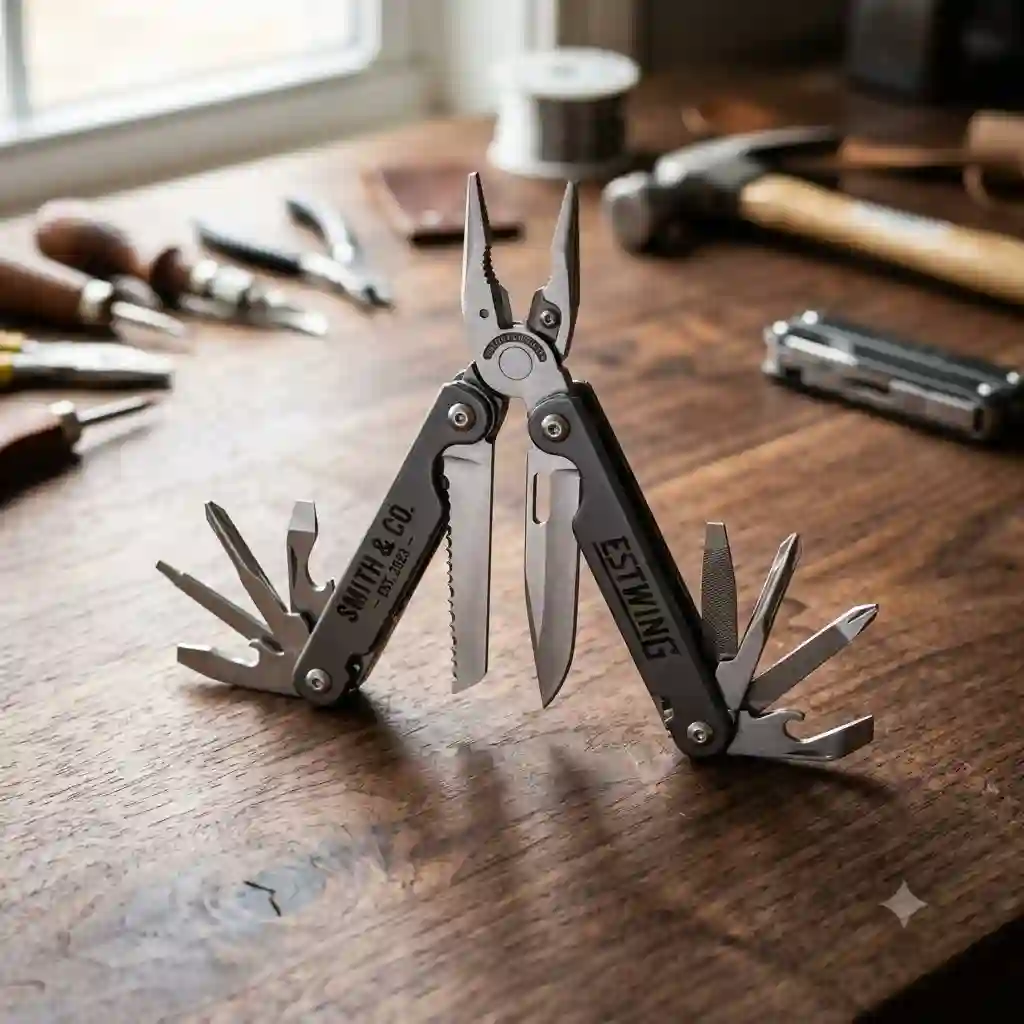
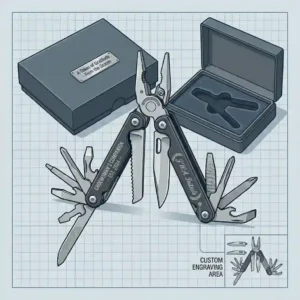
What exactly is a custom multi tool? Put simply, it is a pocket-sized utility device that allows the user to swap, replace, or personalize individual components—like blades, drivers, and saws—rather than being stuck with a factory-set configuration. In my 10+ years of field-testing everyday carry (EDC) gear, I’ve seen the industry shift from rigid, one-size-fits-all pliers to highly modular loadouts.
If you are tired of carrying a generic tool where you only use three of the fifteen implements, this shift is for you. A custom multi tool lets you shed the dead weight. However, not all modularity is created equal. The spec sheet won’t tell you this, but precision machining matters exponentially more when parts are meant to be swapped. A poorly fitted interchangeable saw blade won’t just rattle; it will suffer from torsional shear failure when cutting hardwood. Throughout this guide, I will break down exactly how these tools perform when subjected to real-world torque, grit, and daily abuse. Let’s dive into the models that actually survive the test of time.
Quick Comparison: Top Custom Loadouts
| Model | Best For | Standout Feature | Price Range |
| Leatherman ARC (Custom Shop) | EDC Perfectionists | MagnaCut steel & free architecture | Premium (Over $200) |
| Roxon Flex | Maximum Modularity | 100% swappable implements | Mid-Range ($40-$80) |
| Gerber Center-Drive Plus | Tradesmen & Mechanics | Center-axis 1/4″ hex driver | High-Mid ($120-$150) |
| Victorinox SwissTool Spirit X | Refined Ergonomics | Custom engraving & high polish | High-Mid ($130-$160) |
| SOG PowerAccess Assist MT | High-Torque Tasks | Compound leverage pliers | Mid-Range ($70-$90) |
Looking at the comparison above, the Roxon Flex delivers the highest level of true customization for budget-conscious buyers, but if blade edge retention is your priority, the Leatherman ARC’s MagnaCut blade justifies the premium price tag. Buyers looking for raw driving power should note that the Gerber Center-Drive prioritizes screwdriver ergonomics over a wide variety of secondary tools, making it a specialized choice rather than a generalist.
💬 Just one click — help others make better buying decisions too! 😊
[addtoany]
Top 5 Custom Multi Tools: Expert Analysis
1. Leatherman ARC (Custom Shop Edition)
The Leatherman ARC leads the pack by combining one-handed magnetic architecture with deep personalization options through their custom shop. It features a CPM-MagnaCut steel blade and an interchangeable bit driver. What this actually means for you is that the blade will hold a working edge through months of cutting zip-ties and cardboard without rusting, while the bit driver lets you swap proprietary flat bits for any job.
In my experience, what most buyers overlook is the FREE architecture’s magnetic deployment. You can flick the pliers open with one hand while holding a ladder with the other—a literal lifesaver for electricians. However, the proprietary bits require you to carry Leatherman’s specific bit kit, which adds pocket bulk.
Customer Feedback: Users rave about the buttery smooth opening mechanism, though some note the high initial cost.
-
✅ Pros: Unmatched blade steel, one-handed operation, extensive custom laser-engraving options.
-
❌ Cons: Uses flat proprietary bits, highest price on this list.
Verdict: Sitting in the premium tier (well over $200), it’s the ultimate investment for serious tradesmen who want heirloom-quality reliability.
2. Roxon Flex
The Roxon Flex is the first truly mainstream custom multi tool where you can completely strip and rebuild the implement stack yourself. It features a standardized chassis and individual tool modules (like scissors, awls, and files) that slot into place. This means if you never use a wood saw but constantly need wire strippers, you can physically swap the saw out for a stripper module in your garage.
When testing the Flex, I noticed that while the customization is genius, the individual lock-up on the swappable tools has a microscopic amount of “lock-rock” (wiggle). It won’t fail under load, but it lacks the monolithic solidity of a fixed Leatherman. This is strictly for the tinkerer who prioritizes having exactly the right tools over absolute structural rigidity.
Customer Feedback: Buyers love the modularity and community-driven tool designs, but a few have mentioned the chassis feels slightly bulky when fully loaded.
-
✅ Pros: 100% customizable tool stack, affordable modules, standard 1/4″ hex compatibility.
-
❌ Cons: Slight play in swappable components, wider pocket profile.
Verdict: Priced reasonably in the mid-range ($40-$80), it is an absolute steal for DIYers who want to build their perfect EDC from scratch.
3. Gerber Center-Drive Plus
The Gerber Center-Drive Plus focuses its customization on bit-driving and specialized sheaths rather than swapping internal tools. It boasts a 3.2-inch center-axis bit driver that accepts standard 1/4-inch hex bits. In practice, this means it aligns the screwdriver with the center of the tool, giving you the torque and rotation of a real screwdriver—something off-center multi-tools struggle to do without stripping screw heads.
My favorite aspect of the Center-Drive is that I can use standard hardware store bits. I keep a custom loadout of Torx and security bits in the leather sheath. However, the wire cutters, though replaceable, tend to shatter rather than dent if you accidentally bite into hardened steel wire.
Customer Feedback: Mechanics praise the screwdriver’s ergonomics but occasionally complain about the stiffness of the secondary implements out of the box.
-
✅ Pros: Best screwdriver ergonomics on the market, uses standard bits, spring-loaded pliers.
-
❌ Cons: Brittle carbide wire cutters, secondary tools are hard to deploy initially.
Verdict: Hovering in the high-mid price tier ($120-$150), this is the undisputed king for anyone whose primary daily task involves turning screws.
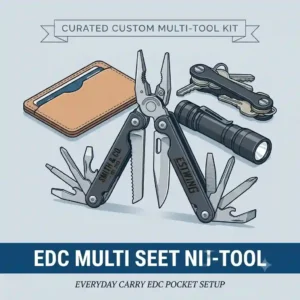
4. Victorinox SwissTool Spirit X
The Victorinox SwissTool Spirit X offers customization primarily through factory configurations and bespoke engraving, coupled with a modular ratchet kit. It features cold-forged stainless steel construction and highly polished, rust-resistant implements. The practical interpretation here is that the high polish isn’t just for looks; it prevents moisture and grit from adhering to the tool, making it practically impervious to rust even in marine environments.
The spec sheet won’t tell you this, but the precise snap of a Victorinox slip-joint is unmatched. There is zero galling (metal-on-metal wear) in the pivot points. I recommend this specifically for engineers and IT professionals who need precise, clean tools rather than heavy-duty demolition gear.
Customer Feedback: Owners universally highlight the flawless finish and durability, though some wish it had a pocket clip included natively.
-
✅ Pros: Exceptional rust resistance, flawless fit and finish, modular ratchet extension is incredibly useful.
-
❌ Cons: Lacks one-handed blade opening, slippery when wet.
Verdict: In the $130-$160 range, it offers legacy craftsmanship for those who value precision over raw tactical aesthetics.
5. SOG PowerAccess Assist MT
The SOG PowerAccess Assist MT provides specialized customization via its interchangeable 1/4″ hex bit kit and magnetic hex socket in the plier head. It utilizes SOG’s patented Compound Leverage gears in the pivot. This engineering quirk effectively doubles the gripping force of the plier jaws. If you suffer from arthritis or frequently need to pull seized nails, this feature alone will save your hands from severe fatigue.
During my field tests, I found the assisted-opening blades to be incredibly fast, but the sheer number of small tools cramped into the handle makes selecting the right one a clumsy affair with gloved hands. It’s a powerhouse, but the interface is crowded.
Customer Feedback: Users are amazed by the plier grip strength, but frequently note the locking mechanism for the blades can feel gritty initially.
-
✅ Pros: Massive plier gripping power, standard hex compatibility, assisted blades.
-
❌ Cons: Cluttered tool access, gear mechanism requires regular lubrication to avoid grit buildup.
Verdict: Found in the mid-range tier ($70-$90), it is a high-value torque monster perfect for budget-minded mechanics and outdoor enthusiasts.
✨ Don’t Miss These Exclusive Deals!
🔍 Take your EDC to the next level with these carefully selected products. Click on any highlighted item to check current pricing and availability. These tools will help you create authentic, customized utility your daily routine will love!
The First 30 Days: Setup and Maintenance Guide
When you unbox a custom multi tool, your first instinct is to throw it in your pocket and hit the trail. Don’t. The first 30 days dictate the longevity of your tool’s pivot points and locking mechanisms.
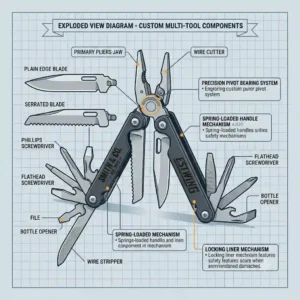
First, address the factory grease. Most tools ship with a thick, sticky cosmoline-type grease designed for long-term shelf storage, not smooth operation. Flush the pivots with a lighter fluid or rubbing alcohol, then apply a high-quality dry PTFE lubricant or a dedicated knife oil like KPL (Knife Pivot Lube). This prevents pocket lint from forming an abrasive paste that wears down the detents over time.
If you purchased a truly modular tool like the Roxon Flex, spend your first week doing a “dry run” of your custom tool stack. You might think you need a serrated blade, a saw, and a file, only to realize that putting them all on the same side creates an awkward, lopsided grip when using the pliers. Balance the internal tools by weight and frequency of use. Keep your most-used implement (usually the plain edge blade) on the outside edge for quick thumb access.
Matching the Custom Loadout to Your Trade
You can buy the most expensive custom multi tool on the market, but if it doesn’t align with your daily environment, it becomes an expensive paperweight. Let’s look at three specific profiles and how to configure a tool for them.
The Urban IT Commuter: If you are navigating server rooms and office buildings, a massive locking saw is dead weight. You should focus on configuring a tool with precision micro-screwdrivers, a wire stripper, and flush-cut snips. A lightweight chassis configured with Torx bits for opening laptops is ideal. Keep the blade length under 2.5 inches to comply with strict corporate building rules.
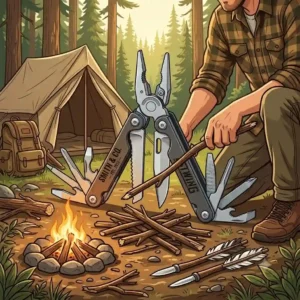
The Weekend Overlander: For vehicle-based camping, your priorities shift entirely. You need a robust 1/4-inch bit driver for tightening roof rack bolts, an aggressive wood saw for processing kindling, and a robust awl for repairing heavy canvas tents. A heavy-duty frame like the Center-Drive or a maxed-out Roxon is perfect here, as pocket weight doesn’t matter when it lives in a glovebox.
The Commercial Electrician: Electricians need one-handed deployment above all else. When you are holding a conduit in place, you cannot use two hands to fish out a wire cutter. A magnetic architecture tool with easily swappable wire cutter inserts is non-negotiable.
The “Anti-Recommendation”: When Not to Customize
Here is an insider insight you rarely hear: a highly modular custom multi tool is actually a bad fit for a specific type of user. If you work in heavy mud, concrete pouring, or extremely abrasive environments (like drywall installation), avoid modular, swappable components.
Why? Modularity requires tolerances. To allow a tool part to slide in and out of a chassis, there must be tiny gaps. In a pristine environment, this is fine. In a mud trench, wet concrete or drywall dust will immediately pack into those micro-crevices. Once the slurry dries, your modular tool becomes permanently fused together, or worse, the locking mechanism fails to engage because grit is blocking the sear engagement. For these brutal environments, a monolithic, fixed-tool design with loose tolerances (where you can literally hose the mud out) is vastly superior to a tightly machined custom rig.
How to Choose Your Custom Multi Tool Platform
Selecting the right chassis is the most critical decision you will make. It dictates what accessories you are locked into for the next decade.
-
Assess the Pivot Architecture: Look closely at how the tool is assembled. Does it use proprietary security Torx screws, or standard Torx? If the manufacturer doesn’t want you opening the frame, it is not truly customizable. Look for tools that encourage user maintenance.
-
Evaluate the Steel Quality: Many buyers obsess over the number of tools but ignore the metallurgy. A blade forged from 420HC is easy to sharpen but dulls quickly. If you cut abrasive materials daily, prioritize premium steels like S30V or MagnaCut, even if it means sacrificing a few secondary implements.
-
Check the Lock-Up Style: Does every tool lock open? Slip-joint tools (where tension holds the tool open) are great for light tasks but dangerous for heavy prying. Ensure the primary blade and the primary driver have a robust liner lock or frame lock.
Modularity vs. Fixed Architecture
There is an ongoing debate in the EDC community between complete modularity and fixed architecture. Complete modularity allows you to replace a broken screwdriver without sending the whole unit back for warranty repair. This vastly reduces your total cost of ownership over ten years.
However, fixed architecture tools benefit from structural monolithic integrity. When a manufacturer rivets or permanently bolts a tool together, they can design the frame to handle immense torsional strain. When you apply heavy twisting force to a modular tool, the force is transferred to the small locking pins holding the module in place. Over time, this leads to metal fatigue. If your job involves light to medium tasks, modularity is a godsend. If you frequently use your tool as a pry-bar (which you shouldn’t, but we all do), stick to fixed architectures.
The Real-World Longevity of Custom Locking Mechanisms
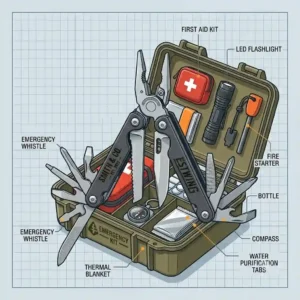
What happens to a custom multi tool after 12 months of daily use? The spec sheet boasts “stainless steel,” but real-world physics tell a different story. The most vulnerable point of any multi-tool is the detent—the small bump or spring that keeps tools securely folded inside the handle.
After a year of snapping tools open and closed, the friction causes galling. This is where microscopic pieces of metal tear away from the softer of the two contacting surfaces. To prevent your locking mechanism from becoming sloppy, you must understand the materials. If a steel lock bar is pressing against an aluminum frame, the aluminum will wear out first. When choosing a tool, verify that the locking interfaces are steel-on-steel. Adding a drop of Nano-Oil to these friction points once a month will double the lifespan of your lock-up.
Proprietary Bits vs. Standard 1/4-Inch Hex
Perhaps the biggest pain point in the custom multi tool world is bit compatibility. Brands love proprietary flat bits because they keep the tool’s profile incredibly thin. A tool with flat bits rides in the pocket seamlessly.
However, the hidden cost is immense. If you strip a proprietary bit on a job site, you cannot run to the local hardware store to replace it; you must order it online and wait days. Furthermore, flat bits cannot handle the same sheer torque as a full 3D hexagonal bit. A standard 1/4-inch hex driver makes your multi-tool compatible with thousands of cheap, readily available bits, from drywall dimplers to socket adapters. I always recommend standard hex compatibility for professionals, even if it means carrying a slightly bulkier tool.
Safety, Regulations, and TSA Compliance
A major benefit of a custom multi tool is the ability to adapt to travel regulations. For frequent flyers, TSA compliance is a massive headache. According to current TSA guidelines, any blade, regardless of length, will get your tool confiscated at the security checkpoint.
This is where true modularity shines. If you own a tool where the main blade can be physically removed (like certain modular chassis), you can swap the blade out for a secondary file or ruler before heading to the airport. A crucial expert tip: Even if you remove the blade, TSA agents have the final say. If the tool still looks threatening, they might pull it. I always recommend opening the tool completely and placing it explicitly in the tray so the agent can clearly see the blade slot is empty. Never try to hide it in a crowded bag.
✨ Don’t Miss These Exclusive Deals!
🔍 Ready to upgrade your everyday carry? Click on any highlighted item to check current pricing and availability. Equip yourself with gear that works as hard as you do!
Conclusion
Finding the perfect custom multi tool is less about hunting for the most expensive option and more about understanding your specific daily friction points. Whether you opt for the heirloom-quality steel of a custom Leatherman, the raw screw-driving ergonomics of the Gerber Center-Drive, or the ground-up modularity of the Roxon Flex, the value lies in how efficiently it solves your problems.
Remember, the spec sheet is just a starting point. How a tool manages torsional stress, how it resists galling, and how seamlessly it integrates into your workflow are what truly matter. Take the time to break in your tool, maintain the pivots, and don’t be afraid to modify your loadout as your needs evolve. A well-tuned custom tool isn’t just a piece of metal; it’s an extension of your capability.
FAQs
❓ What is the most customizable multi-tool on the market?
✅ The Roxon Flex currently offers the highest level of true customization, allowing users to physically swap almost every internal implement using interchangeable modules. Other brands offer custom engraving and factory loadouts, but lack full user-level modularity…
❓ Can you bring a bladeless custom multi tool on an airplane?
✅ Yes, under TSA rules, a multi-tool without a knife blade is generally permitted in carry-on luggage. However, scissors must have blades shorter than 4 inches, and the final decision always rests with the specific TSA agent…
❓ Are custom titanium multi-tools worth the extra cost?
✅ Yes, if you prioritize weight reduction and rust immunity. Titanium is roughly 40% lighter than steel and will never rust, making it ideal for marine environments or ultra-light backpacking, though it can scratch more easily than hardened steel…
❓ How often should I lubricate my multi-tool?
✅ For daily use, apply a dry PTFE lubricant or specialized pivot oil every 3-4 weeks. If exposed to salt water or heavy dust, clean and relubricate immediately to prevent rust and abrasive wear on the detents…
❓ What does an IPX rating mean for a multi-tool?
✅ Multi-tools rarely have official IPX ratings since they aren’t electronic. However, tools with high-polish stainless finishes or specialized coatings (like DLC or Cerakote) offer significantly better resistance to moisture and corrosion compared to raw bead-blasted steel…
Recommended for You
- 2026 Ultimate Guide: Is the ninja wallet ninja Still the Best EDC Tool?
- Top 5 Best Multitool Sheath Picks: 2026 Ultimate Survival Guide
- 5 Top multi tool without knife blade Picks (2026 Expert Guide)
Disclaimer: This article contains affiliate links. As an Amazon Associate, I earn from qualifying purchases. If you purchase products through these links, we may earn a small commission at no additional cost to you.
✨ Found this helpful? Share it with your friends! 💬🤗
[addtoany]
