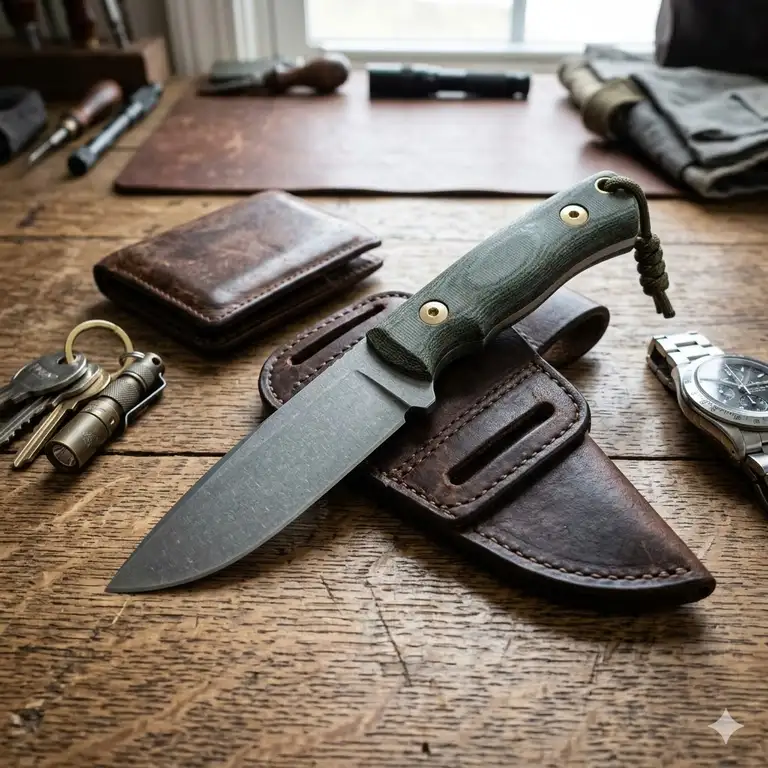
For decades, the folding knife was the undisputed king of the pocket. But as we move through 2026, a significant shift has occurred in the gear community. More enthusiasts are realizing that an everyday carry fixed blade knife offers a level of reliability and speed that even the most over-engineered flipper can’t match. When you strip away the pivot, the lock bar, and the thumb studs, you’re left with a singular, solid piece of steel that is ready to work the second it leaves the sheath.
What is an everyday carry fixed blade knife?
An everyday carry fixed blade knife is a compact, non-folding knife designed for daily utility tasks, typically featuring a blade length under 4 inches. Unlike folding knives, these tools have no moving parts, offering superior strength and ease of cleaning. They are often worn on the belt, inside the waistband, or as a neck knife, providing immediate access for cutting tasks ranging from opening boxes to emergency utility work.
Choosing to carry a fixed blade daily isn’t just about “toughness”; it’s about efficiency. There is a specific satisfaction in the “click” of a well-molded Kydex sheath and the immediate ergonomics of a full-tang handle. Whether you are a professional tradesman or a weekend hiker, the lack of mechanical failure points makes these knives the ultimate insurance policy in your pocket—or on your belt.
Quick Comparison: Top Daily Fixed Blades
| Product Name | Blade Material | Overall Length | Carry Style | Best For |
| ESEE Izula-II | 1095 Carbon | 6.75″ | Belt/Neck | Hard Use / Survival |
| Benchmade Hidden Canyon Hunter | CPM-S30V | 6.42″ | Horizontal Belt | Premium EDC / Skinning |
| Spyderco Street Beat | VG-10 | 7.18″ | Boltaron Sheath | Self-Defense / Ergonomics |
| CRKT Minimalist | 8Cr13MoV | 5.25″ | Neck / Pocket | Budget / Discreet Carry |
| Gerber Ghostrike | 420HC | 6.0″ | Ankle/Belt | Tactical / Concealment |
Looking at the comparison above, the ESEE Izula-II remains the champion for those who prioritize raw durability, while the CRKT Minimalist is the clear winner for users who want to forget they are even carrying a knife. If you work in an office environment, the Benchmade Hidden Canyon Hunter offers a more “civilized” aesthetic with its stabilized wood handles, justifying its higher price point through superior edge retention and style.
💬 Just one click — help others make better buying decisions too! 😊
[addtoany]
Top 5 everyday carry fixed blade knife: Expert Analysis
1. ESEE Izula-II — The Gold Standard of Compact Durability
The ESEE Izula-II is widely considered the quintessential everyday carry fixed blade knife for anyone who treats their tools with a “tough love” philosophy. Featuring a slightly longer handle than the original Izula, this version provides a full four-finger grip which is essential for safety during heavy cutting tasks.
The blade is crafted from 1095 carbon steel. In my experience, while 1095 requires a bit of oil to prevent rust, its ability to take a screaming sharp edge in the field with just a flat stone is unmatched by modern “super steels.” The full-tang construction means you can batoneer through small kindling without worrying about a pivot snapping. The textured powder coating provides an extra layer of protection, though it will wear over time, giving the knife a beautiful, “worked-in” patina.
-
Key Specs: 2.63″ blade length, 1095 Carbon Steel, Micarta handle scales.
-
Expert Opinion: This is the knife for the person who actually uses their gear. It’s not a “safe queen.” What most buyers overlook is the ESEE “No Questions Asked” warranty—if you break it, they replace it.
-
Customer Feedback: Users consistently praise the ergonomics of the added handle length compared to the original Izula.
-
Pros:
-
Virtually indestructible full-tang design.
-
Incredible manufacturer warranty.
-
Easy to sharpen in the field.
-
-
Cons:
-
Carbon steel requires regular maintenance.
-
The sheath is somewhat bulky for pocket carry.
-
-
Price Range: Around $75-$95.
2. Benchmade Hidden Canyon Hunter — Premium Performance in a Small Package
If you prefer your gear to have a bit of “soul” without sacrificing high-tech performance, the Benchmade Hidden Canyon Hunter is a top-tier contender. Designed originally for hunters, it has transitioned perfectly into the EDC world due to its deep belly and premium CPM-S30V steel.
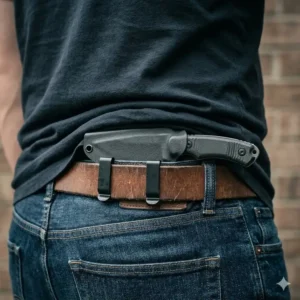
The CPM-S30V steel is a game-changer for daily carry. It holds an edge significantly longer than budget steels, meaning you won’t be reaching for the sharpener every time you break down a mountain of cardboard. The stabilized wood (Richlite) or G10 handles are impervious to moisture, making this a great companion for those living in humid climates. The horizontal leather sheath is a standout feature, allowing the knife to sit “scout style” on your belt, hidden under a t-shirt.
-
Key Specs: 2.67″ blade, CPM-S30V Stainless Steel, 3.53 oz weight.
-
Expert Opinion: This is the “gentleman’s” fixed blade. It looks as good as it performs. The jimping on the spine is particularly aggressive, providing excellent control for detail work.
-
Customer Feedback: Many buyers mention the horizontal carry sheath is the most comfortable way they’ve ever carried a fixed blade.
-
Pros:
-
Top-tier S30V steel for edge retention.
-
Excellent aesthetics for office or outdoor use.
-
Very lightweight for its capability.
-
-
Cons:
-
Significantly more expensive than budget options.
-
The leather sheath requires a “break-in” period.
-
-
Price Range: $160-$210 range.
3. Spyderco Street Beat — The Master of Ergonomics
The Spyderco Street Beat is a collaboration with legendary knifemaker Fred Perrin, and it shows in every curve. This knife is built around the “Perrin Choil,” a deep finger groove that ensures your hand cannot slip onto the blade, even when your hands are wet or cold.
The VG-10 stainless steel is a classic choice for Spyderco, offering a great balance of corrosion resistance and ease of sharpening. In a world of overbuilt “sharpened crowbars,” the Street Beat is a precision instrument. It’s thin, slicey, and incredibly fast in the hand. The Boltaron sheath is slim and features a G-Clip that allows for multiple carry angles, making it a favorite for those who value concealment and quick deployment.
-
Key Specs: 3.49″ blade, VG-10 Steel, Micarta or FRN handle options.
-
Expert Opinion: The ergonomics here are world-class. If you are concerned about safety and grip security, this is the knife to beat. The balance point is right at the index finger.
-
Customer Feedback: Reviewers love how “natural” the knife feels in the hand, often describing it as an extension of the arm.
-
Pros:
-
Best-in-class ergonomics and safety choil.
-
Excellent slicer due to the flat grind.
-
Highly versatile sheath system.
-
-
Cons:
-
Blade length may push legal limits in some cities.
-
Micarta version can be pricey.
-
-
Price Range: Around $110-$140.
4. CRKT Minimalist — The Ultimate “I Forgot I Had It” Knife
Sometimes, the best everyday carry fixed blade knife is the one you don’t even feel on your person. The CRKT Minimalist series, designed by Alan Folts, is famous for its diminutive size and incredible handle geometry. Despite its small stature, the three-finger choil design allows for a surprisingly secure grip.
The 8Cr13MoV steel is a budget-friendly option that gets the job done for light daily tasks like opening mail or cutting twine. While it won’t hold an edge as long as S30V, it’s incredibly easy to touch up. The real value here is the sheath; it’s designed primarily as a neck knife, but many users (including myself) prefer to use the included belt loop or even just toss it in a front pocket. At this price, it’s a low-risk entry into the world of fixed-blade carry.
-
Key Specs: 2.13″ blade, 8Cr13MoV Steel, 1.1 oz (knife only).
-
Expert Opinion: Don’t let the size fool you. For 90% of daily tasks, you don’t need a 4-inch blade. This is the perfect secondary blade or a primary for those in weight-sensitive environments.
-
Customer Feedback: Fans of this knife often own three or four variants (Bowie, Wharncliffe, Persian) because they are so affordable and useful.
-
Pros:
-
Incredibly lightweight and discreet.
-
Very affordable for beginners.
-
Comes with multiple carry hardware options.
-
-
Cons:
-
Steel is entry-level and requires frequent sharpening.
-
Too small for heavy-duty tasks or large hands.
-
-
Price Range: Under $40.
5. Gerber Ghostrike — Stealth and Utility Combined
The Gerber Ghostrike is designed for those who need a low-profile utility tool that can be carried in various non-traditional ways. It features a skeletal steel frame with a rubberized over-mold, providing a grip that is remarkably “sticky” even in the rain.
The 420HC steel is a workhorse—it’s highly corrosion-resistant and very tough. While it’s not a “super steel,” Gerber’s heat treat on 420HC is historically reliable. The standout feature is the modular sheath system. It can be worn horizontally on a belt, vertically, or even strapped to an ankle using the optional wrap. This makes it a favorite for hikers or cyclists who might find a traditional belt knife uncomfortable while in motion.
-
Key Specs: 3.3″ blade, 420HC Stainless Steel, Ceramic coating.
-
Expert Opinion: The rubberized grip is the hero here. If you’re using your knife in messy environments (fishing, gardening), this stays in your hand better than smooth wood or G10.
-
Customer Feedback: Most users appreciate the slim profile, noting that it doesn’t “print” or bulge under clothing.
-
Pros:
-
Excellent grip in wet conditions.
-
Highly modular sheath system.
-
Very slim profile for concealment.
-
-
Cons:
-
Rubber grip can wear down over years of hard use.
-
The sheath tension can be a bit tight out of the box.
-
-
Price Range: $45-$65 range.
✨ Don’t Miss These Exclusive Deals!
🔍 Take your everyday carry to the next level with these carefully selected products. Click on any highlighted item to check current pricing and availability. These tools will help you create authentic utility solutions your family will love!
Practical Usage Guide: Mastering the Fixed Blade Carry
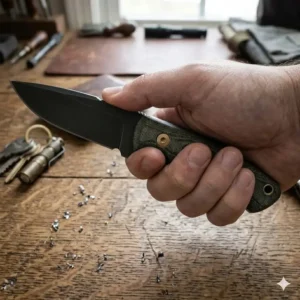
Transitioning from a folder to an everyday carry fixed blade knife requires a bit of a learning curve, primarily regarding carry positions. Unlike a folder with a pocket clip, a fixed blade depends entirely on its sheath.
Optimal Carry Positions
-
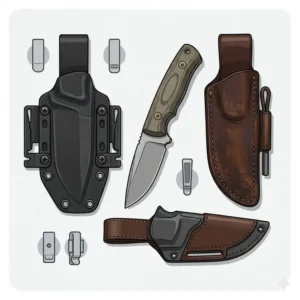
Scout Carry (Horizontal): Mounting the knife horizontally on the small of your back or at the 11 o’clock position. This is the most discreet method and prevents the knife from poking you in the ribs when sitting down.
-
Inside the Waistband (IWB): Using a clip to tuck the sheath inside your pants. This offers the best concealment but requires a slim knife like the Gerber Ghostrike.
-
Neck Carry: Suspending the knife from a paracord lanyard. This is perfect for the CRKT Minimalist, keeping the tool accessible even if your waistline is occupied by a backpack hip belt.
Maintenance Tips for 2026
Maintenance isn’t just about sharpening. For carbon steel knives like the ESEE Izula-II, I recommend a light coating of food-safe mineral oil. This prevents oxidation and ensures the knife is safe to use for an impromptu apple slice. Also, check your Kydex sheath for debris. A small grain of sand inside a sheath can scratch your blade finish faster than actual use. Give it a blast of compressed air once a month to keep things clean.
Buyer’s Decision Framework: Which Knife Fits Your Life?
Before you click “buy,” ask yourself these three questions to ensure you aren’t just buying a “cool” knife, but the right tool for your environment.
1. What is Your Local Law?
In many US jurisdictions, fixed blades are treated differently than folders. While a 3-inch folder might be fine, a 3-inch “concealed” fixed blade can sometimes be a legal gray area. Always check Knife Rights for the latest 2026 regulations in your specific state.
2. What is Your Primary Task?
-
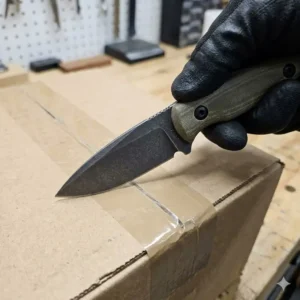
Box Buster: If you just open Amazon packages, go for the CRKT Minimalist. The Wharncliffe blade shape is a laser for tape and cardboard.
-
Outdoor Adventure: If you hike or camp, the ESEE Izula-II is the move. You need the durability of carbon steel and a full grip.
-
Office Professional: The Benchmade Hidden Canyon Hunter looks professional and won’t scare your coworkers when you use it to cut your lunch.
3. How Much Weight Can You Tolerate?
A heavy knife on a flimsy belt will cause your pants to sag. If you don’t wear a dedicated gun belt or a thick leather belt, stick to knives under 3 ounces. The Spyderco Street Beat in its FRN version offers a great balance of size-to-weight ratio.
Common Mistakes When Buying a Fixed Blade EDC
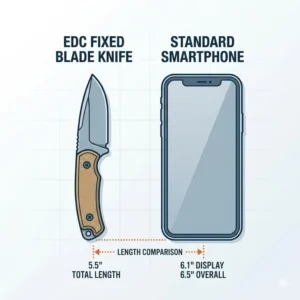
The most common mistake beginners make is buying a knife that is simply too large. In the store or online, a 5-inch blade looks impressive. On your belt at a grocery store, it feels like a sword. For a true everyday carry fixed blade knife, the sweet spot is an overall length between 5 and 7 inches. Anything larger becomes a chore to carry, and you’ll eventually leave it on your nightstand.
Another pitfall is ignoring the sheath quality. A great knife with a bad sheath is a bad knife. If the sheath doesn’t offer “active retention” (a click or a snap), you risk the knife falling out during physical activity. Always look for sheaths made of Kydex or Boltaron for daily use, as they don’t stretch or hold moisture like cheap nylon or untreated leather.
Lastly, don’t forget about blade geometry. A thick “tactical” blade might be great for prying open a crate, but it will be terrible at slicing an onion or sharpening a pencil. Look for a “full flat grind” if you want the best cutting performance for daily life.
Fixed Blade vs. Folding Knife: The 2026 Reality
Why carry a fixed blade when modern folders have such strong locks? It comes down to mechanical simplicity. I’ve seen $500 folding knives fail because a tiny piece of pocket lint got stuck in the lock-up mechanism. A fixed blade has no such weakness.
| Feature | Fixed Blade | Folding Knife |
| Deployment Speed | Instant | Requires action |
| Strength | Maximum (Full Tang) | Limited by Pivot |
| Maintenance | Low (Wipe down) | High (Oil/Clean Pivot) |
| Legal Acceptance | Moderate (Varies) | High (Most places) |
| Concealment | Challenging | Very Easy |
The table above highlights that while folders win on convenience, fixed blades dominate in reliability. If you are in a situation where your hands are muddy, gloved, or under stress, you will appreciate the lack of a opening mechanism. For the average user, a fixed blade represents a “set it and forget it” tool that is always ready.
Features That Actually Matter (And Those That Don’t)
When browsing an everyday carry fixed blade knife listing, you’ll see a lot of marketing fluff. Here is what actually impacts your daily life:
-
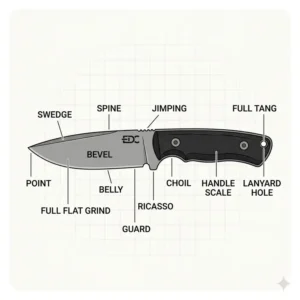
Jimping: These are the notches on the spine of the blade. They provide traction for your thumb. If they are too sharp, they’ll hurt; if they are absent, your hand might slip. Look for “functional” jimping like that on the Benchmade Hidden Canyon Hunter.
-
Tang Construction: You want “Full Tang,” meaning the steel of the blade runs the entire length and width of the handle. “Rat-tail” or “partial” tangs are for display pieces, not EDC.
-
Handle Material: G10 and Micarta are the kings of EDC handles. They provide grip even when bloody or oily and don’t crack like some natural woods or cheap plastics.
-
The “Vibe”: Don’t ignore aesthetics. If you love the way a knife looks, you’re more likely to carry it and maintain it.
Long-Term Cost & Maintenance Analysis
Buying a high-quality everyday carry fixed blade knife is a one-time investment that can literally last a lifetime. Unlike electronics or even some folding knives with springs that wear out, a fixed blade is a legacy tool.
The “Total Cost of Ownership” for an ESEE Izula-II over 10 years is essentially the purchase price plus a $5 bottle of mineral oil. Compare that to a cheap $20 folding knife you have to replace every year because the lock gets “mushy” or the blade develops play. By spending around $100 today, you are actually saving money in the long run.
For sharpening, I recommend a simple guided system or a ceramic rod. Fixed blades are generally easier to sharpen because you don’t have to worry about the handle or pocket clip getting in the way of your stones. Keeping the edge “topped off” with a leather strop once a week will prevent you from ever having to do a “major” sharpening session.
✨ Don’t Miss These Exclusive Deals!
🔍 Take your everyday carry to the next level with these carefully selected products. Click on any highlighted item to check current pricing and availability. These tools will help you create authentic utility solutions your family will love!
Conclusion
The shift toward the everyday carry fixed blade knife in 2026 isn’t just a trend; it’s a return to utility. While folding knives have their place, the sheer reliability, ease of maintenance, and ergonomic superiority of a fixed blade make it a compelling choice for anyone serious about their gear. From the budget-friendly CRKT Minimalist to the heirloom-quality Benchmade Hidden Canyon Hunter, there is a fixed blade that fits your lifestyle, your budget, and your belt.
Choosing the right tool is about more than just steel and handles; it’s about finding a companion that you can trust when things get difficult. Whether you’re cutting cordage on a job site or simply peeling an orange, a solid fixed blade is a testament to the idea that sometimes, the simplest design is the best one.
FAQs
❓ Is it legal to carry a fixed blade knife everyday?
✅ In most of the US, it is legal, but “concealment” is the sticking point. Many states allow open carry of any length but restrict concealed carry of fixed blades. Always check local city ordinances, as they are often stricter than state laws…
❓ What is the best steel for an everyday carry fixed blade?
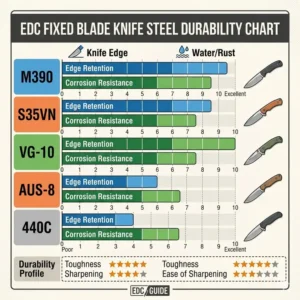
✅ For low maintenance, go with S30V or LC200N. If you want something easy to sharpen and don’t mind oiling it, 1095 carbon steel is a classic choice. In 2026, MagnaCut has also become a premier choice for its balance of all properties…
❓ Can I carry a fixed blade in my pocket?
✅ Yes, many people use “pocket fixed blades.” You just need a sheath with a “hook” or a clip that stays in the pocket when you pull the knife out. The CRKT Minimalist is particularly well-suited for this…
❓ Are fixed blades safer than folders?
✅ Generally, yes. There is no risk of the knife “closing” on your fingers if a lock fails. However, you must be careful when re-sheathing the knife, as that is when most accidents occur. Always look for the sheath opening…
❓ What is the ideal blade length for EDC?
✅ For most people, between 2.5 and 3.5 inches is the “Goldilocks” zone. It’s large enough for heavy tasks but small enough to remain discreet and legal in many jurisdictions. Anything under 2 inches is usually too small…
Recommended for You
- 5 Best Light Weight Folding Knife Options for Your 2026 EDC
- 7 Best Ultralight Knife Options for Backpacking: Unbeatable 2026 Guide
- 7 Best edc fixed blade pocket carry Knives for 2026: Expert Guide
Disclaimer: This article contains affiliate links. As an Amazon Associate, I earn from qualifying purchases. If you purchase products through these links, we may earn a small commission at no additional cost to you.
✨ Found this helpful? Share it with your friends! 💬🤗
[addtoany]
