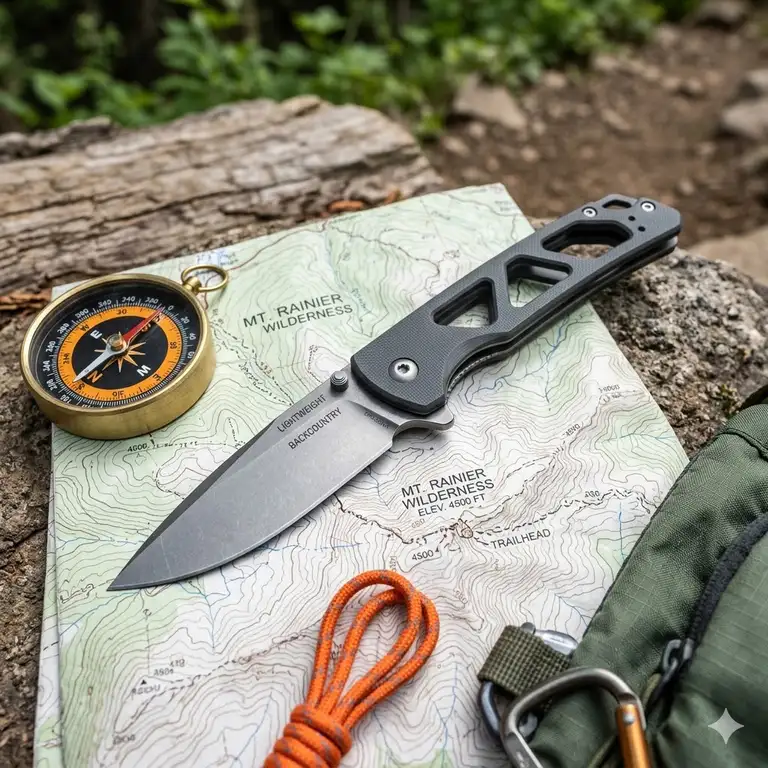
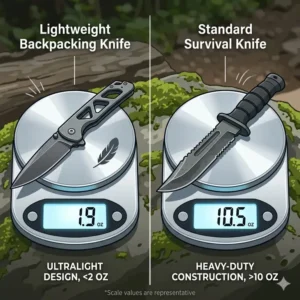
A lightweight backpacking knife is a specialized cutting tool designed specifically for the weight-conscious hiker or ultralight backpacker. Typically weighing between 0.5 and 3.0 ounces, these knives prioritize a high strength-to-weight ratio over heavy-duty durability. While a survival knife might be built to batoning through logs, a backpacking version is optimized for food preparation, cordage cutting, and minor gear repairs. In 2026, the trend has shifted toward “super steels” like CPM-Magnacut and recycled handle materials, ensuring that shedding grams doesn’t mean sacrificing the ability to perform crucial wilderness tasks safely and efficiently.
Quick Comparison: Top Lightweight Backpacking Knives
| Model | Weight | Blade Material | Best For | Price Range |
| Benchmade Bugout | 1.85 oz | CPM-S30V | All-around performance | Around $160-$180 |
| Spyderco Para 3 LW | 2.40 oz | CTS BD1N | Ergonomics & safety | Around $120-$140 |
| Opinel No. 8 | 1.60 oz | Carbon Steel | Budget & simplicity | Around $18-$25 |
| Petzl Spatha | 1.50 oz | Stainless Steel | Climbing & cordage | Around $30-$40 |
| Gerber Ultralight LST | 0.60 oz | 420HC | Minimalist gram-counting | Around $20-$30 |
Expert Analysis: Looking at the data above, the Benchmade Bugout remains the benchmark for weight-to-performance, though the Gerber Ultralight LST is the clear winner for those obsessed with the absolute minimum weight. If you’re frequently working with gloves or wet hands, the textured FRN handles on the Spyderco Para 3 LW offer a safety margin that justifies its slightly higher 2.4-ounce weight compared to the ultra-minimalist models.
💬 Just one click — help others make better buying decisions too! 😊
[addtoany]
Top 5 lightweight backpacking knife Options: Expert Analysis
1. The Versatile Legend: Benchmade Bugout 535
The Benchmade Bugout has effectively redefined what backpackers expect from a pocket knife. Weighing in at less than two ounces, it features a 3.24-inch blade that is long enough for slicing summer sausage but precise enough for removing splinters.
Key Specifications:
-
Blade Steel: CPM-S30V. This high-end steel offers incredible edge retention, meaning you won’t need to carry a sharpener on a week-long trek.
-
Handle Material: Grivory. It’s a reinforced thermoplastic that provides enough rigidity to prevent handle flex without the weight of steel liners.
Expert Commentary:
In my experience, the Bugout’s Axis-lock is its secret weapon. Unlike liner locks, it keeps your fingers away from the blade’s path when closing—a huge plus when your hands are cold and clumsy at 10,000 feet. What most buyers overlook is the deep-carry pocket clip; it sits so low in your hiking shorts that you’ll forget it’s there until you need it.
Customer Feedback:
Users consistently praise the “disappearing” nature of the knife, though a few mention that the Grivory handles can feel “plasticky” compared to heavier G10 options.
-
Pros: Incredible weight-to-blade ratio; ambidextrous lock; premium steel.
-
Cons: Handle flex under heavy pressure; premium price tag.
-
Price Range: Around $160-$180.
-
Value Verdict: The best investment for serious long-distance hikers.
2. The Ergonomic King: Spyderco Para 3 Lightweight
If you prioritize a secure grip and flick-of-the-wrist deployment, the Spyderco Para 3 Lightweight is the gold standard. It uses a unique compression lock that is significantly stronger than traditional folders.
Key Specifications:
-
Blade Steel: CTS BD1N. This is a nitrogen-enriched steel that resists corrosion exceptionally well—perfect for hikers in humid or rainy climates like the Pacific Northwest.
-
Weight: 2.4 oz. While slightly heavier than the Bugout, the ergonomics allow for much harder work without hand fatigue.
Expert Commentary:
The signature “Spydie Hole” is a game-changer for backpacking. You can open this knife easily with thick fleece gloves on, which is much harder to do with the small thumb studs found on other models. The wire clip is also much gentler on lightweight nylon hiking pants than standard flat steel clips.
Customer Feedback:
Hikers love the “fidget factor” and the secure lockup, though some find the blade shape a bit wide for delicate food prep.
-
Pros: Superior ergonomics; one-handed operation; high corrosion resistance.
-
Cons: Wider pocket footprint; slightly heavier than rivals.
-
Price Range: Around $120-$140.
-
Value Verdict: Ideal for those who use their knife for more than just opening freeze-dried meals.
3. The Classic Minimalist: Opinel No. 8 Carbon Steel
Sometimes, 19th-century technology is still the best. The Opinel No. 8 is a French classic that weighs next to nothing and costs even less.
Key Specifications:
-
Weight: 1.6 oz. It’s lighter than almost any modern “tactical” folder.
-
Lock Mechanism: Virobloc safety ring. A simple collar that twists to lock the blade open or closed.
Expert Commentary:
The thinness of the Opinel blade is its greatest asset. Most modern knives are built too thick “just in case,” but the Opinel slices through cheese and vegetables better than knives costing ten times as much. However, the carbon steel version requires maintenance; if you don’t wipe it dry, it will rust overnight in a damp tent.
Customer Feedback:
Long-time users appreciate the “soul” of the wooden handle, but beginners often forget to lock the ring, leading to safety concerns.
-
Pros: Ultra-lightweight; world-class slicing ability; very affordable.
-
Cons: Requires constant oiling; not one-handed; handle can swell when wet.
-
Price Range: Around $18-$25.
-
Value Verdict: The best choice for the budget-conscious traditionalist.
4. The Climber’s Choice: Petzl Spatha
The Petzl Spatha isn’t just a knife; it’s a piece of safety equipment designed for the vertical world, but its features translate perfectly to the trail.
Key Specifications:
-
Blade Style: Combo edge (serrated and smooth). The serrations make short work of stubborn accessory cord or climbing rope.
-
Carabiner Hole: Built-in. You can clip this directly to your pack strap or harness.
Expert Commentary:
The large textured wheel for opening is designed specifically for use with gloves. In a backpacking context, this is the knife you want if you frequently deal with heavy-duty cordage or need to cut through thick webbing. The blade isn’t as high-end as S30V, but it’s very easy to sharpen in the field with a simple whetstone.
Customer Feedback:
Users like the security of the carabiner attachment, though some complain the plastic handle feels a bit bulky.
-
Pros: Clips to gear easily; great for cordage; glove-friendly.
-
Cons: Serrations are hard to sharpen; basic blade steel.
-
Price Range: Around $30-$40.
-
Value Verdict: Perfect for those who mix backpacking with climbing or canyoneering.
5. The Gram-Counter’s Dream: Gerber Ultralight LST
Designed by the legendary Pete Gerber himself, the Gerber Ultralight LST is the ultimate “I don’t want to carry a knife” knife.
Key Specifications:
-
Weight: 0.6 oz. That is roughly the weight of three quarters.
-
Handle: Glass-filled nylon with a checkered texture for grip.
Expert Commentary:
This is the knife I carry when I’m doing an FKT (Fastest Known Time) attempt. It does the bare minimum—opens packages, cuts mole-skin, and trims gear—without adding any meaningful weight to your base weight. The spec sheet says 420HC steel, which is basic, but for a knife this light, you aren’t exactly going to be skinning an elk with it anyway.
Customer Feedback:
Minimalists swear by it, though many warn that the lock-back is quite stiff and requires two hands to close safely.
-
Pros: Almost weightless; incredibly compact; very low cost.
-
Cons: Very small handle; basic steel; two-handed operation.
-
Price Range: Around $20-$30.
-
Value Verdict: The undisputed champion for absolute ultralight enthusiasts.
✨ Don’t Miss These Exclusive Deals!
🔍 Take your backcountry kit to the next level with these carefully selected products. Click on any highlighted item to check current pricing and availability. These tools will help you create authentic trail experiences your family will love!
The Ultralight Knife Maintenance Playbook
Owning a lightweight backpacking knife is only half the battle; maintaining it in the backcountry is where many hikers fail. Because these knives use thinner blades and lighter handle materials, they require a specific care regimen to ensure they don’t fail when you’re miles from civilization.
Step-by-Step Field Maintenance
-
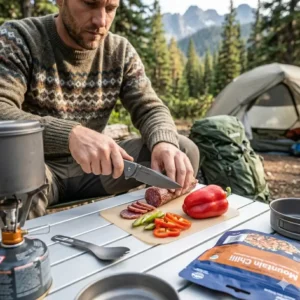
Cleaning: After every food prep session, wipe the blade with a small alcohol prep pad (standard in any first aid kit). This removes salts and acids that cause “pitting” or corrosion, even on stainless steels.
-
Pivot Lubrication: Lightweight folders often use bronze washers or plastic bushings. A single drop of mineral oil once a month keeps the action smooth. In a pinch on the trail, a tiny dab of lip balm can keep a sticky pivot moving.
-
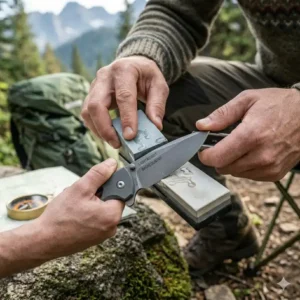
Honing vs. Sharpening: Don’t wait until the knife is dull. Use the ceramic bottom of a coffee mug or a smooth river stone to “strop” the edge. This aligns the microscopic teeth of the steel without removing metal.
Avoiding Common “Ultralight” Mistakes
The biggest mistake I see is using a lightweight knife as a pry bar. Because brands like Benchmade or Spyderco grind their blades thin to save weight, the tips are fragile. If you try to pry a stuck tent stake out of frozen ground, you will snap the tip. Use a rock or your trekking pole for prying; keep the knife for cutting.
Scenario-Based Selection Guide: Which Knife Suits You?
Selecting a lightweight backpacking knife isn’t about finding the “best” knife; it’s about finding the best knife for your specific trip profile.
The Thru-Hiker (PCT/AT/CDT)
If you’re walking for five months, you need a balance of weight and longevity.
-
Priority: Edge retention and weight.
-
Top Pick: Benchmade Bugout.
-
Reasoning: You don’t want to carry a sharpening stone for 2,000 miles. The S30V steel will likely last the entire trip with just a few strops on a leather belt.
The Weekend Gourmet
If your backpacking trips revolve around elaborate backcountry cooking.
-
Priority: Slicing geometry and ease of cleaning.
-
Top Pick: Opinel No. 8 Stainless.
-
Reasoning: The convex grind and thin blade stock make it the best onion-dicer in the woods. Choose the stainless version (Inox) over carbon steel to avoid a metallic taste in your food.
The Emergency Minimalist
If you only carry a knife “just in case” and rarely use it.
-
Priority: Weight and cost.
-
Top Pick: Gerber Ultralight LST.
-
Reasoning: At 0.6 ounces, there is no excuse to leave it at home. It provides the utility of a blade without the weight penalty of a luxury item.
How to Choose a Lightweight Backpacking Knife
When you’re browsing the aisles (or digital pages) for your next blade, don’t get distracted by “tactical” marketing. In 2026, the best gear is defined by efficiency. Here is how to filter the noise:
-
Target the “Golden Weight”: Aim for 1.0 to 2.5 ounces. Anything heavier is likely overbuilt for hiking; anything lighter often lacks a safe locking mechanism.
-
Steel Matters (A Lot): Look for S30V, S35VN, or Magnacut if you have the budget. These steels stay sharp longer. If you’re on a budget, 14C28N or BD1N are excellent “value” steels that resist rust.
-
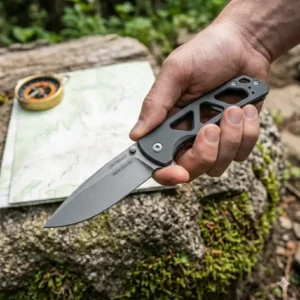
Handle Ergonomics: A “neutral” handle shape (like the Bugout) fits almost every hand size. Avoid “finger grooves,” which might not align with your grip when you’re wearing gloves or if you have larger hands.
-
Locking Mechanism Safety: For backpacking, I always recommend a locking blade. Friction folders (like some tiny Swiss Army Knives) can fold on your fingers if you’re trying to cut through a tough branch or thick plastic.
-
Ease of Cleaning: Open-back designs (where you can see through the handle) are superior to “closed” designs. They allow you to rinse out dirt, sand, and lint without taking the knife apart.
Common Mistakes When Buying a Backpacking Knife
One of the most frequent errors is buying a “survival” knife for a backpacking trip. I see beginners carrying a 10-ounce fixed blade with a 5-inch blade. Unless you are actively practicing bushcraft—building shelters from scratch and splitting wood—that knife is dead weight. According to the Outdoor Industry Association, the modern hiker stays on trail and uses a stove, meaning the “survival” aspect of the knife is rarely invoked.
Another pitfall is ignoring local regulations. Some national parks or state lands have restrictions on blade length or locking mechanisms. While a 3-inch lightweight backpacking knife is generally legal everywhere in the USA, it’s always worth checking the National Park Service guidelines for the specific area you’re visiting. Finally, don’t forget that a knife is a tool, not a weapon. Carrying a knife for “self-defense” against wildlife is a myth; bear spray is 99% more effective.
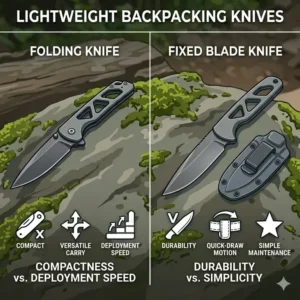
Fixed Blade vs. Folding Knife: The Great Debate
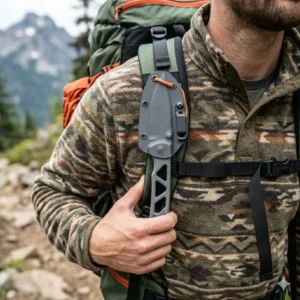
In the world of the lightweight backpacking knife, the folder is king, but the fixed blade is making a comeback in 2026 thanks to new skeletonized designs.
-
Folding Knives: These offer the best “storage-to-blade” ratio. They fit in a pocket and are socially acceptable. However, the hinge is a failure point. If it gets jammed with grit or the lock fails, the knife is useless or dangerous.
-
Fixed Blades: Knives like the Esee Izula or the Benchmade Altitude are essentially indestructible. There are no moving parts to break. The downside? You need a sheath, which adds weight and bulk.
Analysis: For 90% of backpackers, a folder is the correct choice. The convenience of clipping it to your pocket and the space saved outweighs the theoretical durability of a fixed blade. However, if you’re heading into extreme winter conditions where mechanical locks can freeze shut, a small fixed blade is a safer, more reliable companion.
Features That Actually Matter (And Those That Don’t)
Marketing departments love to talk about “tactical coatings” and “emergency glass breakers,” but when you’re 20 miles into the backcountry, those features are useless.
What Matters:
-
Deep Carry Clips: These keep the knife secure. Losing your knife because it snagged on a bush is a common trail tragedy.
-
Jimping: These are the small notches on the spine of the blade. They provide traction for your thumb, preventing your hand from slipping onto the edge when you’re applying pressure.
-
Washers: Phosphor bronze washers are the gold standard for folders. They are self-lubricating and handle dirt much better than ball bearings, which can seize up if they get sandy.
What Doesn’t Matter:
-
Black Coatings: Unless you are on a secret night mission, a black-coated blade just makes the knife harder to find if you drop it in the dirt. It also adds friction to your slices.
-
High Speed Bearings: While “flicky” and fun at home, bearings are prone to failure in the dusty, grimy environment of a backpacker’s pocket.
Long-Term Cost & Maintenance: The ROI of Quality
A $180 lightweight backpacking knife might seem like an indulgence, but let’s look at the Total Cost of Ownership (TCO). A cheap $20 “gas station” knife uses soft steel (like 3Cr13) that will need sharpening every single day of a trip. Over five years, you’ll spend more on sharpening gear and replacement knives than you would on a single Benchmade or Spyderco.
Furthermore, premium brands often offer “LifeSharp” services. Benchmade, for example, will sharpen and tune your knife for the cost of shipping. In 2026, sustainability is a major factor; buying one high-quality tool that lasts 20 years is far better for the environment than throwing away a cheap knife every two seasons. When you factor in the resale value—premium knives often retain 70-80% of their value—the “expensive” option is often the most fiscally responsible one.
✨ Don’t Miss These Exclusive Deals!
🔍 Take your backcountry kit to the next level with these carefully selected products. Click on any highlighted item to check current pricing and availability. These tools will help you create authentic trail experiences your family will love!
Conclusion
Choosing the right lightweight backpacking knife is a balancing act between the “what if” of survival and the reality of your base weight. In 2026, we are fortunate to have access to materials that allow a sub-2-ounce knife to perform like a heavy-duty tool. Whether you choose the refined engineering of the Benchmade Bugout, the ergonomic excellence of the Spyderco Para 3 LW, or the minimalist simplicity of the Gerber Ultralight LST, your choice should reflect your personal trail philosophy. Remember: the best knife is the one you actually have on you when the rope needs cutting or the dinner bag needs opening. Focus on quality steel, reliable locks, and a weight that doesn’t make you second-guess your gear list.
❓ FAQs
❓ Is a 2-inch blade enough for backpacking?
✅ Absolutely. For 95% of tasks, such as opening food, cutting cord, or repairing gear, a 2-inch blade is sufficient. Longer blades are only necessary if you are doing significant food prep or processing wood…
❓ Should I get a serrated or plain edge?
✅ For most hikers, a plain edge is better. It is easier to sharpen in the field and provides cleaner cuts. Serrations are only superior if you are constantly cutting through climbing rope or heavy nylon webbing…
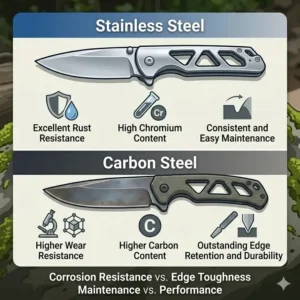
❓ Are carbon steel knives better than stainless for hiking?
✅ Carbon steel gets sharper and is tougher, but it rusts easily. In the damp environment of a backpack, stainless steel (like S30V or Magnacut) is generally preferred to avoid constant maintenance…
❓ Can I bring my backpacking knife on a plane?
✅ No. Even the smallest lightweight backpacking knife must be in your checked luggage. TSA regulations in 2026 still prohibit any knives in carry-on bags, regardless of size…
❓ Do I need a fixed blade for “survival” situations?
✅ While a fixed blade is tougher, a high-quality locking folder can handle most emergency tasks. If you are staying on established trails, a folder is more than enough for peace of mind…
Recommended for You
- Lightweight Knife Guide: 7 Best Ultralight EDC Blades for 2026
- 7 Best Ultralight Knife Options for Backpacking: Unbeatable 2026 Guide
- 7 Best fixed blade knife edc Options for 2026: Expert Guide
Disclaimer: This article contains affiliate links. As an Amazon Associate, I earn from qualifying purchases. If you purchase products through these links, we may earn a small commission at no additional cost to you.
✨ Found this helpful? Share it with your friends! 💬🤗
[addtoany]
