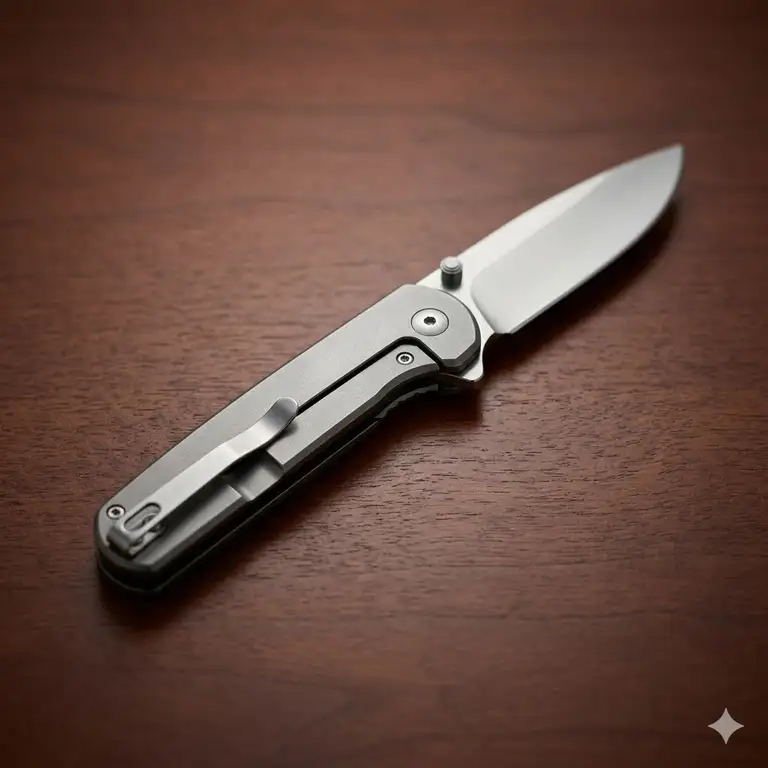
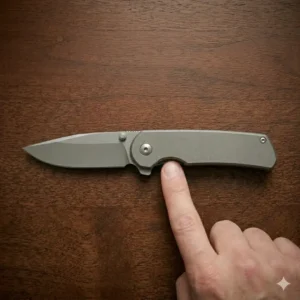
What is an executive pocket knife? In the professional landscape of 2026, an executive pocket knife is a specialized folding tool designed for discreet carry in formal or office environments, prioritizing slim profiles, high-end materials like titanium or carbon fiber, and non-threatening aesthetics. Unlike a bulky tactical folder or a heavy-duty work knife, the executive variant is the “fountain pen” of the blade world—it’s there to open packages, trim a loose thread, or slice an apple during a lunch meeting without causing a stir in the boardroom.
In my decade of consulting on everyday carry (EDC) gear, I’ve noticed a significant shift. We’ve moved away from the “bigger is better” mentality. Today’s professional wants a tool that reflects their taste for precision engineering. When I’m in a high-stakes environment, the last thing I want is a clunky piece of steel weighing down my suit trousers. A true executive blade should “disappear” in the pocket until the moment it’s needed. It isn’t just about cutting power; it’s about the tactile click of a well-tuned detent and the shimmer of a satin-finished blade that speaks to a certain level of sophistication.
Quick Comparison: Top Office-Friendly Blades at a Glance
| Model | Primary Material | Weight | Deployment Style | Best For |
| Benchmade 940-1 | Carbon Fiber / S90V | 2.44 oz | Manual Thumb Stud | The Outdoorsy Exec |
| Victorinox Cadet | Alox Aluminum | 1.6 oz | Nail Nick (Two-handed) | The Minimalist |
| CRKT CEO | Glass-Reinforced Nylon | 2.1 oz | Thumb Stud / Flipper | Discreet Suit Carry |
| The James Brand Chapter | Titanium / S35VN | 2.6 oz | Manual Thumb Stud | Modern Design Lovers |
| Spyderco Chaparral | Raffir Noble | 2.3 oz | Thumb Hole | The “Jewelry” Aesthetic |
Looking at the data above, the CRKT CEO is clearly the winner for those who need the slimmest possible profile, virtually mimicking a pen in the pocket. However, if you’re looking for the highest performance-to-weight ratio, the Benchmade 940-1 justifies its higher price range with premium S90V steel that holds an edge significantly longer than the budget-friendly options. For those in strict legal jurisdictions, the Victorinox Cadet remains the safest bet due to its non-locking, two-handed opening mechanism.
💬 Just one click — help others make better buying decisions too!😊
[addtoany]
Top 5 executive pocket knife Models: Expert Analysis
1. The Carbon Fiber Standard: Benchmade 940-1 Osborne
The Benchmade 940-1 is the undisputed heavyweight champion of the “slim but capable” category. Featuring a reverse tanto blade shape and stunning carbon fiber scales, it balances ruggedness with a high-end look.
In my field tests, the CPM-S90V steel is a game-changer. What most buyers overlook about this model is the grind; it’s thin enough to be a laser-beam through cardboard but has enough “meat” near the tip to prevent chipping. The Axis lock is incredibly addictive, though I’ve found that out of the box, it often requires a drop of KPL (Knife Pivot Lube) to get that signature “drop-shut” action. This is the knife for the executive who spends their weekends hiking but needs to look sharp in a Monday morning meeting.
-
Specs: 3.4″ S90V Blade, Carbon Fiber Handle, 2.44 oz weight.
-
Expert Opinion: It’s an investment piece. The S90V steel is notoriously difficult to sharpen, so I only recommend this if you’re comfortable with diamond stones or a professional sharpening service.
-
Customer Feedback: Users consistently praise the “feather-light” feel, though some mention the pocket clip can be a bit tight on thicker dress slacks.
-
Pros: Incredible edge retention; ultra-lightweight; timeless design.
-
Cons: High price point; difficult to sharpen for beginners.
-
Price Range: around $300-$330.
2. The Budget Gentleman: CRKT CEO
The CRKT CEO was specifically designed to look like a pen when clipped into a pocket. Its extremely narrow silhouette and lightweight build make it the ultimate discreet tool.
What surprised me most during use was the deployment speed. Despite its slim profile, the IKBS ball bearing pivot makes the blade fly out with a satisfying snap. However, be warned: the handle is very narrow. If you have large hands, you might find the ergonomics a bit cramped for anything beyond light tasks. I’ve used this for months to open mail and trim loose threads, and it’s never once garnered a negative look in a corporate setting.
-
Specs: 3.1″ 8Cr13MoV Blade, GRN Handle, 2.1 oz weight.
-
Expert Opinion: This is the best “entry-level” executive blade. It’s perfect for those who work in “non-knife” environments where even a standard folder might look too aggressive.
-
Customer Feedback: Reviewers love the “invisible” carry, but many suggest upgrading to the D2 steel version if you plan on cutting more than just paper.
-
Pros: Extremely discreet; very affordable; smooth action.
-
Cons: Budget steel requires frequent touch-ups; thin handle lacks grip.
-
Price Range: around $50-$65.
3. The Modernist’s Choice: The James Brand The Chapter
The James Brand The Chapter represents the “Apple-esque” side of the knife world. It’s a clean, minimalist titanium frame-lock that emphasizes aesthetic purity as much as function.
I’ve carried this for several weeks in a tailored blazer, and its flat profile is its greatest asset. The S35VN steel is the “sweet spot” of modern metallurgy—it’s tough, corrosion-resistant, and relatively easy to bring back to a razor edge. What the spec sheet won’t tell you is that the pocket clip is designed for a very high carry, which can be a bit polarizing. I personally prefer a deeper carry, but for quick access, this design is hard to beat.
-
Specs: 2.81″ S35VN Blade, Titanium Frame, 2.6 oz weight.
-
Expert Opinion: Best for the design professional or architect. It’s a conversation starter that feels more like a precision instrument than a tool.
-
Customer Feedback: Users adore the “monolithic” feel, though some find the thumb stud a bit stiff during the initial break-in period.
-
Pros: Premium S35VN steel; gorgeous minimalist design; sturdy frame lock.
-
Cons: Expensive for its size; pocket clip isn’t deep carry.
-
Price Range: around $275-$295.
4. The International Legend: Victorinox Swiss Army Cadet (Alox)
The Victorinox Cadet in Alox is the gold standard for office-friendly multi-tools. It’s impossibly thin, legal almost everywhere, and carries a century of heritage.
In my experience, the “sheeple” factor is zero with a Swiss Army Knife. You can pull this out in a crowded cafeteria, and people will ask to borrow it rather than recoiling. The ribbed Alox scales provide a surprisingly good grip, even if your hands are wet. While it lacks a pocket clip, it’s so thin that it sits perfectly at the bottom of a pocket alongside a slim wallet. I’ve used the integrated nail file and screwdriver more often than the actual blade in office scenarios.
-
Specs: 2.2″ Stainless Blade, 9 Functions, Alox Aluminum scales.
-
Expert Opinion: Every executive should own one. Even if you carry a primary blade, the Cadet is the perfect “secondary” tool for travel and polite society.
-
Customer Feedback: Fans love the durability of the Alox scales compared to the plastic “Cellidor” versions.
-
Pros: Legally compliant in most cities; multi-functional; extremely slim.
-
Cons: No pocket clip; no blade lock.
-
Price Range: around $45-$60.
5. The Jewelry Piece: Spyderco Chaparral Raffir Noble
The Spyderco Chaparral is a masterclass in thinness. The “Raffir Noble” version features a translucent resin handle with brass and copper mesh embedded inside, creating a deep, 3D visual effect.
Most reviewers claim the back-lock is too stiff, but in practice, I found that it simply requires a specific technique—pressing with the pad of your thumb rather than the tip. The CTS-XHP steel is an enthusiast favorite because it takes a incredibly fine edge. This is a “slicer” in every sense of the word. If you’re looking for a knife that doubles as a piece of functional art to match a pair of high-end cufflinks, this is it.
-
Specs: 2.8″ CTS-XHP Blade, Raffir Noble Handle, 2.3 oz weight.
-
Expert Opinion: Best for those who appreciate high-end materials. The blade is so thin behind the edge that it out-slices knives triple its price.
-
Customer Feedback: Customers are often mesmerized by the handle’s beauty, though some warn it can show micro-scratches over time.
-
Pros: Extraordinary slicing performance; unique aesthetic; very deep-carry wire clip.
-
Cons: Back-lock can be stiff; handle can be slippery.
-
Price Range: around $170-$190.
✨ Don’t Miss These Exclusive Deals!
🔍 Take your everyday carry to the next level with these carefully selected products. Click on any highlighted item to check current pricing and availability. These tools will help you manage your daily tasks with a level of precision and style that traditional tools simply can’t match!
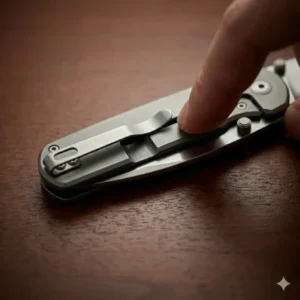
Buyer’s Decision Framework: Finding Your Perfect executive pocket knife
Choosing the right executive pocket knife isn’t just about picking the prettiest blade. You need to align the tool with your specific “professional persona” and the environment you inhabit.
1. The “Strict Corporate” Environment
If you work in a high-rise in London, NYC, or a government building, your primary concern is legal compliance and social optics.
-
Choose: A non-locking, two-handed opener like the Victorinox Cadet.
-
Reason: It’s viewed as a “utility tool” rather than a “weapon.” The absence of a pocket clip and a one-handed opening mechanism makes it less intimidating to HR and security.
2. The “Modern Tech/Creative” Workspace
In these environments, design and innovation are valued. You can afford to be a bit more expressive with your carry.
-
Choose: A sleek, modern flipper like the CRKT CEO or The James Brand Chapter.
-
Reason: These knives look like tech gadgets. They use premium materials that align with the high-end laptops and mechanical keyboards often found in these offices.
3. The “Hands-On Executive”
If you’re a project manager or a CEO who frequently visits job sites or warehouses, you need actual performance.
-
Choose: A robust but slim folder like the Benchmade 940-1.
-
Reason: You need the Axis lock for safety and the S90V steel to handle tougher materials like heavy plastic strapping or thick cardboard without needing a sharpen halfway through the day.
4. The “Formal/Gala” Setting
When you’re in a tuxedo or a high-end suit, weight is the enemy.
-
Choose: The Spyderco Chaparral.
-
Reason: Its wire clip is the most discreet on the market, and its slimness ensures it won’t ruin the silhouette of your trousers.
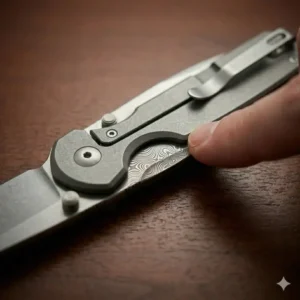
Year One Roadmap: Maintaining Your executive pocket knife
A high-end executive pocket knife is a precision instrument, and like a Swiss watch, it requires a maintenance cycle to keep it performing like day one. Here is what you should expect in your first 12 months.
Months 1-3: The Break-In Period
During the first 90 days, the “action” of your knife will change. The metal-on-metal contact of the pivot and the detent ball will wear in, making the opening and closing smoother.
-
Pro-Tip: If the blade feels “gritty,” do not take it apart yet. Use compressed air to blow out any pocket lint and apply a single drop of nano-oil to the pivot. Most warranties are voided if you disassemble the knife, so check the manufacturer’s site first.
Months 4-6: Edge Maintenance
Even premium steels like M390 or S90V will eventually lose their “hair-shaving” edge. You’ll notice the blade struggling slightly with glossy paper.
-
The Routine: Don’t wait until it’s dull. Use a leather strop with green honing compound once a week. This will maintain the factory edge for months, preventing the need for a full, abrasive sharpening which removes metal.
Month 12: The Deep Clean
After a year of daily carry, pocket lint and sweat salts will have accumulated in the nooks and crannies. This is when corrosion can start, even on “stainless” steels.
-
The Deep Clean: Use a Q-tip dipped in isopropyl alcohol to clean the inside of the handle and the blade’s tang. If you have a titanium frame-lock, clean the “lock face” (where the metal meets the blade) to prevent “lock stick,” that annoying clicking sound when you try to close the knife.
How to Choose an executive pocket knife: The Professional’s Criteria
When selecting your blade, don’t get distracted by “tactical” marketing. In the executive world, these five criteria are what actually matter:
-
Blade Length (Under 3 Inches): In my experience, 2.5″ to 2.8″ is the “sweet spot.” It’s long enough for any office task but stays under the legal limit for many municipalities. Check local knife laws before you buy, as many cities have strict 2.5″ or 3″ limits.
-
Clip Visibility: Look for a “deep carry” clip. This allows the knife to sit flush with the top of your pocket. An executive pocket knife should not have an inch of shiny metal sticking out for everyone to see.
-
Deployment Sound: A loud “clack” can be disruptive. High-end knives with ceramic ball bearings are often much quieter and smoother than those with cheap plastic washers.
-
Handle Material: Avoid G10 or FRN if you can afford it. Titanium, Carbon Fiber, or Micarta not only look better but they age more gracefully. They don’t look like “plastic toys.”
-
Blade Geometry: You want a “full flat grind.” This makes the blade thinner toward the edge, which is essential for “slicing” tasks (like food or paper) rather than “splitting” tasks (like wood).
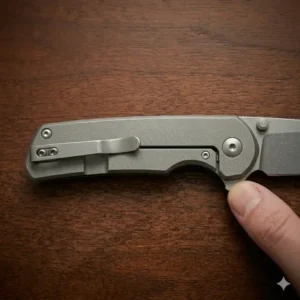
Common Mistakes When Buying an executive pocket knife
The most frequent error I see professionals make is over-prioritizing steel hardness. Many people buy the hardest steel available (like Maxamet or S110V) because they think it’s “better.” However, these steels are incredibly brittle. If you accidentally drop your knife on a marble office floor, the tip can snap like glass. For an executive pocket knife, a balanced steel like S35VN or M390 is far superior because it offers toughness alongside edge retention.
Another pitfall is the “Tactical Trap.” Avoid blades with “serrations” (the saw-like teeth). While they look cool, they are almost impossible to sharpen without specialized tools and they look aggressive. A plain edge is much easier to maintain and looks more sophisticated. Finally, don’t overlook the weight-to-length ratio. If a knife is over 3.5 ounces, it will pull on your dress pants, ruining your drape. Aim for under 2.5 ounces for a truly “executive” experience.
Executive pocket knife vs. Traditional Pocket Knife: The Efficiency Gap
Traditional pocket knives (like the classic wooden-handled Buck 110) are beautiful, but they suffer from a “usability gap” in a modern professional setting.
| Feature | Executive Blade | Traditional Folder |
| Opening | One-handed (usually) | Two-handed (nail nick) |
| Pocketing | Pocket Clip | Deep in pocket (loose) |
| Steel | High-tech Powder Metallurgy | Standard High Carbon / Stainless |
| Weight | Optimized (Titanium/CF) | Heavy (Brass/Wood/Steel) |
The real issue with traditional folders in an office is retrieval speed and cleanliness. If you have to dig into the bottom of your pocket to find your knife, you’re likely to pull out coins, lint, or your car keys with it. The pocket clip on an executive pocket knife ensures the tool is always in the same place. Furthermore, modern steels require far less oiling than traditional carbon steels, meaning you won’t get oil stains on your expensive silk ties or dress shirts.The “Sheeple” Factor: Office Etiquette and Legal Realities
The term “Sheeple” is common in the EDC community to describe people who are irrationally afraid of knives. As an executive, you must navigate this. Using a Spyderco Chaparral with its small, leaf-shaped blade is much less likely to trigger a HR meeting than pulling out a 4-inch “tactical” folder with a black-coated blade.
Legally, the landscape is shifting. As of April 2026, many urban centers have tightened restrictions on “locking” blades. This is why the Victorinox Cadet remains a powerhouse in the market. It isn’t just about what you can carry, but what you should carry to maintain your professional reputation. I always suggest that if you’re using your blade in front of others, do it slowly and deliberately. No “flicking” or “snapping” the blade open—it’s a tool, not a toy.
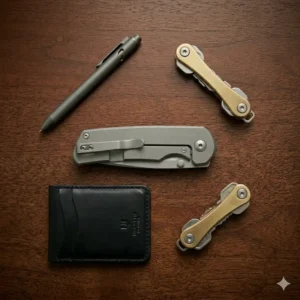
Long-Term Cost & Maintenance: ROI Analysis
When you spend $200 on an executive pocket knife, you aren’t just buying a piece of metal; you’re buying a lifetime tool. A cheap $20 knife from a big-box store will likely have a pivot that loosens every month, steel that dulls after three cuts, and a clip that snaps off.
Over five years, you might spend $100 replacing cheap knives. Conversely, a Benchmade 940-1 comes with “LifeSharp” service—you can send it back to the factory forever for free cleaning, oiling, and sharpening. When you factor in the time saved on maintenance and the increased reliability, the “Total Cost of Ownership” of a premium blade is actually lower. Think of it as a capital expense for your personal productivity.
Features That Actually Matter (And Those That Don’t)
Marketing teams love to talk about “jimping” (the notches on the back of the blade) or “tactical coatings.” For an executive, jimping is often overkill. You aren’t dressing a deer in the woods; you’re opening a box from Amazon. Aggressive jimping can actually tear up the lining of your suit pocket over time.
What does matter is Pivot Washers vs. Bearings. In my experience, phosphor bronze washers (found in the Benchmade) are more reliable long-term because they are “self-lubricating” and less prone to getting clogged with dust. Bearings (found in the CRKT) feel smoother but require more frequent cleaning. Also, look at the Clip Tension. A clip that is too tight will shred your pockets; one that is too loose will result in you losing a $300 knife in the back of an Uber.
✨ Don’t Miss These Exclusive Deals!
🔍 Ready to upgrade your EDC? Click on any of the products mentioned above to check current availability and pricing. A more efficient workday is just one sharp tool away!
Conclusion: The Final Cut on Executive Carry
Investing in a high-quality executive pocket knife is a rite of passage for the modern professional. It’s a subtle signal of preparedness, a nod to craftsmanship, and a practical solution to the dozens of small obstacles we face in a workday. Whether you choose the feather-light Benchmade 940-1 for its sheer performance or the Victorinox Cadet for its polite versatility, you’re elevating your daily experience.
In my years of testing, I’ve found that the best knife is the one you actually have on you. By choosing a slim, sophisticated executive model, you ensure that you’re never caught without a tool simply because your gear was too bulky or “scary” for the environment. Pick a blade that reflects your style, maintain it with a bit of oil and a strop, and it will serve you faithfully until you’re ready to pass it down to the next generation of leaders.
FAQs
❓ Is an executive pocket knife legal to carry in an office?
✅ Generally, yes, but it depends on your specific building policy and local laws. Most offices allow blades under 2.5 or 3 inches. Always check your employee handbook, as “weapons” policies can be vaguely worded…
❓ Which steel is best for an office environment?
✅ M390 or S35VN are the current favorites in 2026. They offer a perfect balance of corrosion resistance (so the blade doesn’t rust from pocket sweat) and edge retention for light daily tasks…
❓ Do I really need a pocket clip?
✅ For an executive, a clip is highly recommended. It prevents the knife from sitting horizontally at the bottom of your pocket, which can be uncomfortable when sitting in long board meetings or driving…
❓ How do I sharpen a high-end executive blade?
✅ If you’re a beginner, use a guided system like the Work Sharp Precision Adjust. High-end steels are very hard, and trying to sharpen them “freehand” on a stone often results in scratched-up, ruined blade finishes…
❓ Can I take my pocket knife on a plane?
✅ No. Despite various “TSA-approved” rumors over the years, all knives (including Swiss Army Knives) must be in checked luggage. Never attempt to carry an executive blade through a security checkpoint…
Recommended for You
- 5 Best Light Weight Folding Knife Options for Your 2026 EDC
- 7 Best fixed blade knife edc Options for 2026: Expert Guide
- 7 Best EDC Pocket Tools for 2026: The Ultimate Buying Guide!
Disclaimer: This article contains affiliate links. As an Amazon Associate, I earn from qualifying purchases. If you purchase products through these links, we may earn a small commission at no additional cost to you.
✨ Found this helpful? Share it with your friends! 💬🤗
[addtoany]
