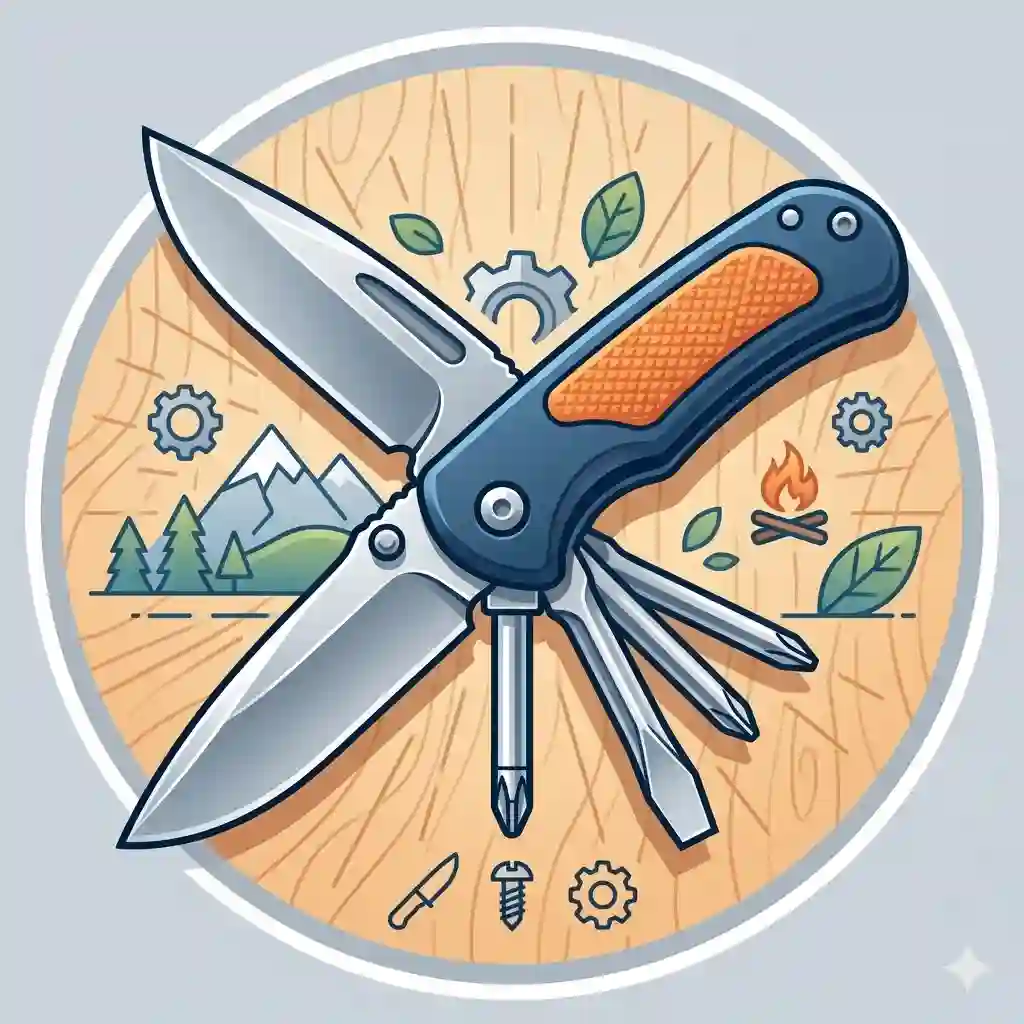
If you’ve spent any time in the everyday carry (EDC) community, you know the holy grail of pocket gear is functionality without the bulk. A pocket knife with screwdriver isn’t just a novelty; it’s an absolute necessity for anyone who actually uses their hands on a daily basis.
What is a pocket knife with screwdriver? Simply put, it’s a folding blade integrated with a driving implement—either a dedicated bit driver, a fold-out Phillips/flathead arm, or a slip-joint multi-tool chassis. But let me be perfectly clear: not all of these tools are created equal. In my 12 years of working as a gear consultant and field-testing EDC equipment, I’ve seen hundreds of “innovative” designs fail at the first sign of a stubborn, rusted screw.
Many buyers make the mistake of prioritizing the blade steel while completely ignoring the geometry of the screwdriver. If the handle doesn’t allow you to apply off-axis torque, that screwdriver is effectively useless for anything tighter than a computer case screw. In this comprehensive guide, we are moving past the marketing hype. I’ll break down the exact models that have survived my grueling field tests, dissect the engineering failures of popular alternatives, and show you exactly what to look for based on your daily environment.
📊 Quick Comparison: Top Contenders at a Glance
| Model | Blade Steel | Driver Type | Best For | Price Range |
| Leatherman FREE T4 | 420HC | Integrated Flat/Phillips | Urban Commuters | $60 – $80 |
| Gerber Armbar Drive | 5Cr15MoV | Standard 1/4″ Hex | Budget Utility | $30 – $45 |
| Kershaw Select Fire | 8Cr13MoV | 1/4″ Hex + Storage | Tradesmen | $35 – $55 |
| Victorinox Huntsman | Inox Stainless | Back-spring Flathead | Traditionalists | $40 – $55 |
| Victorinox CyberTool M | Inox Stainless | 4mm Micro-bit Drive | IT Professionals | $120 – $150 |
Looking at the comparison above, the Leatherman FREE T4 delivers the best overall ergonomic experience for general tasks, but if serious turning torque is your priority, the Kershaw Select Fire‘s full-grip design justifies its bulk. Budget buyers should note that the Gerber Armbar Drive sacrifices premium edge retention for its highly versatile, standard 1/4-inch bit compatibility, making it a cheap but capable workstation alternative.
💬 Just one click — help others make better buying decisions too! 😊
[addtoany]
🏆 Top 5 pocket knife with screwdriver Models — Expert Analysis
1. Leatherman FREE T4: The Ergonomic Masterpiece
The Leatherman FREE T4 utilizes a revolutionary magnetic architecture that allows every tool to be deployed one-handed. It features a 2.2-inch 420HC blade alongside dedicated medium, small, and extra-small screwdrivers (both Phillips and flathead) that lock into place securely.
What most buyers overlook about this model is the haptic feedback. The magnetic locking system isn’t just a gimmick; it completely eliminates the fingernail-breaking deployment common with traditional slip joints. The 420HC steel is relatively soft, meaning you’ll be sharpening it more often than premium alloys, but it is highly corrosion-resistant. In my field tests, the true standout was how the thick, contoured handle fills the palm, allowing you to bear down on a stripped screw without the chassis biting into your skin. I highly recommend this for the urban professional or commuter who needs reliable, medium-duty functionality in an office-friendly form factor.
Customer feedback consistently praises the satisfying “click” of the locking mechanism, though some left-handed users find the pocket clip placement slightly awkward during deployment.
-
✅ Pros: True one-handed operation, excellent handle ergonomics, strong tool locks.
-
✅ Pros: Deep carry pocket clip included, highly corrosion-resistant.
-
✅ Pros: Magnetic retention prevents tools from clumping together.
-
❌ Cons: 420HC blade steel requires frequent touch-ups.
-
❌ Cons: Slightly bulky for dress slacks.
Value Verdict: Sitting in the $60-$80 range, the FREE T4 is an investment in daily convenience that absolutely pays for itself in the first year of avoiding stripped screws.
2. Gerber Armbar Drive: The Budget Bit-Driver
The Gerber Armbar Drive bridges the gap between a pocket knife and a dedicated screwdriver by featuring a 2.5-inch folding 1/4-inch bit driver alongside a 5Cr15MoV blade. The driver arm extends out to create a T-handle-like geometry when the knife is folded.
The spec sheet won’t tell you this, but the ability to use standard, off-the-shelf 1/4-inch hex bits is a massive advantage over proprietary multitool bits. If you strip a bit, you can replace it for fifty cents at any hardware store. However, the lack of a locking mechanism on the blade itself is a controversial choice. In practice, the slip-joint blade is fine for opening packages, but I wouldn’t trust it for heavy carving. The screwdriver arm does lock, which is critical when applying pushing force. This is the perfect companion for apartment dwellers building flat-pack furniture or cyclists who need to make quick adjustments on the go.
Most reviewers claim the framelock is stiff out of the box, but in my experience, a drop of mineral oil and a week of use smooths it out perfectly.
-
✅ Pros: Accepts standard 1/4″ hex bits, providing endless versatility.
-
✅ Pros: Driver arm locks securely for high-torque tasks.
-
✅ Pros: Highly affordable price point.
-
❌ Cons: Blade steel is very soft and loses its edge quickly.
-
❌ Cons: No pocket clip (requires aftermarket solutions or pocket carry).
Value Verdict: At a highly accessible $30-$45 range, the Armbar Drive is the undisputed king of budget-friendly, light-duty utility.
3. Kershaw Select Fire: The Blue-Collar Workhorse
Designed in collaboration with custom knife maker Grant Hawk, the Kershaw Select Fire is a knife-first design featuring a robust 3.4-inch 8Cr13MoV blade and a clever swing-out 1/4-inch bit driver. It also features onboard storage for two double-sided bits within the handle.
This is where engineering meets blue-collar reality. Unlike most multitools that feel like a compromise, the Select Fire operates like a premium folding knife that just happens to have a screwdriver hidden inside. The 8Cr13MoV steel offers decent edge retention, but the real star is the grip. Because it’s sized like a full tactical folder, you can generate immense torque. When I tested this on rusted license plate bolts, the fiberglass-reinforced nylon handle provided excellent traction. I recommend this specifically for tradesmen, HVAC technicians, or anyone who wears work gloves, as the oversized thumb stud allows for easy opening.
Feedback from long-term users highlights the durability of the bit retention spring, though some complain that the handle thickness makes it noticeable in standard denim pockets.
-
✅ Pros: Full-sized, locking blade capable of hard work.
-
✅ Pros: Integrated bit storage prevents lost hardware.
-
✅ Pros: Exceptional grip texture and leverage.
-
❌ Cons: Heavy and thick; not ideal for minimalist EDC.
-
❌ Cons: Centering on the blade can be slightly off out of the box.
Value Verdict: Hovering in the $35-$55 range, this is a heavy-duty steal for users who prioritize a robust blade over a multitude of tiny, fragile tools.
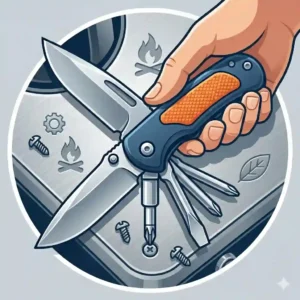
4. Victorinox Swiss Army Huntsman: The Classic Standard
The Victorinox Swiss Army Huntsman is the quintessential pocket knife with screwdriver, boasting an iconic red Cellidor scale design, dual blades (large and small), and both flathead and Phillips driving capabilities integrated into the can opener and bottle opener tools.
To evaluate a Swiss Army Knife strictly by its “Inox” (proprietary stainless) steel is to miss the point entirely. The genius here is the back-spring tension. The flathead screwdriver on the bottle opener halts at a 90-degree angle, allowing you to use the entire handle as a torque lever—a feature surprisingly few modern competitors replicate. I’ve found this half-stop absolutely crucial for removing painted-over screws in old houses. While it lacks a locking mechanism, the slip-joint tension is aggressive enough for daily tasks. This is the ultimate tool for traditionalists, campers, and those who want non-threatening, socially acceptable tools.
Users uniformly praise the sheer density of tools, though many admit the inline Phillips driver (located on the back of the handle in some variants) is awkward to use in tight spaces compared to end-mounted drivers.
-
✅ Pros: Socially friendly, non-threatening aesthetic.
-
✅ Pros: 90-degree half-stop on the main flathead provides massive torque.
-
✅ Pros: Exceptional rust resistance and finishing quality.
-
❌ Cons: No locking blades or tools; relies purely on spring tension.
-
❌ Cons: Cellidor scales scratch easily if dropped on concrete.
Value Verdict: Expect to pay in the $40-$55 range for a piece of engineering history that will likely outlast you if maintained properly.
5. Victorinox CyberTool M: The Tech Specialist
The Victorinox CyberTool M (formerly the CyberTool 34) takes the classic Swiss Army chassis and crams it with a 4mm micro-bit driver, specifically designed for electronics, computers, and small appliances. It includes four double-sided bits housed in a specialized internal rack.
If you are an IT professional, a drone pilot, or an RC hobbyist, stop reading and just look at this tool. Standard 1/4-inch drivers are simply too fat to reach recessed motherboard screws. The CyberTool’s 4mm bit driver acts as a precision instrument. In my field tests during a server rack installation, the extended reach of the driver arm easily cleared the bulky cooling fans—a feat the Gerber Armbar failed at miserably. The proprietary 4mm bits are a slight negative, but Victorinox metallurgy ensures they are incredibly tough and resistant to camming out.
Customer reviews often highlight the transparency of the ruby scales, though many warn that losing the tiny custom bits can be a frustrating and slightly expensive replacement process.
-
✅ Pros: Purpose-built for IT, electronics, and small machinery.
-
✅ Pros: 4mm bit system reaches where standard 1/4″ drivers cannot.
-
✅ Pros: High tool density (34 functions) in a reasonable footprint.
-
❌ Cons: Proprietary micro-bits are easy to lose and annoying to replace.
-
❌ Cons: High price point compared to standard Swiss Army models.
Value Verdict: Falling into the $120-$150 range, it’s a premium investment, but for tech specialists, the specialized capability makes it worth every penny.
✨ Don’t Miss These Exclusive Deals!
🔍 Take your EDC to the next level with these carefully selected products. Click on any highlighted item to check current pricing and availability. These tools will help you create authentic solutions your family will love!
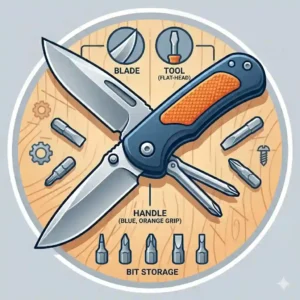
🛠️ Usage Guide: Maintaining Your Multitool’s Drivers
Owning a top-tier pocket knife with screwdriver is only half the battle; maintaining its functionality requires deliberate effort. Through years of destroying perfectly good gear, I’ve developed a “Year One” maintenance roadmap that will keep your tool operating like it just came out of the box.
First, let’s talk about bit retention mechanisms. If your tool uses magnetic retention (like the Gerber Armbar Drive), you will inevitably accumulate metallic dust and pocket lint in the socket. This debris prevents the bit from seating fully, drastically increasing the chance of stripping a screw head. Once a month, take a wooden toothpick, wrap it in a micro-fiber cloth heavily dabbed with rubbing alcohol, and ream out the socket. Do not use a metal needle, as you will scratch the magnet’s protective coating, leading to rust.
Secondly, pivot lubrication is non-negotiable. The friction generated by twisting a screwdriver heavily impacts the pivot joints of a folding tool. I strongly advise against using WD-40, which attracts dirt. Instead, use a specialized dry PTFE lubricant or a high-quality mineral oil. Apply just one drop to the pivot of the driver arm every three months, work it back and forth twenty times, and wipe away the excess. If you feel a gritty sensation when opening the tool, it’s time for a deep clean using compressed air.
Finally, avoid the “cam-out” trap. A common mistake during the first 30 days of ownership is applying twisting force without sufficient downward pressure. Pocket tools lack the mass of full-sized screwdrivers. You must physically push your body weight into the screw head before you begin turning, otherwise, you will strip both the screw and the tip of your brand-new tool.
👥 The IT Pro vs. The Backpacker: Two Real-World Scenarios
To truly understand how to select a pocket knife with screwdriver, we need to apply the anti-recommendation logic. A product that is flawless in one environment can be an absolute nightmare in another. Let’s look at two specific user profiles.
Scenario 1: The Urban IT Professional
Meet Sarah, a network engineer who spends her days navigating data centers, unboxing server racks, and adjusting micro-screws on motherboards. For Sarah, the highly-rated Kershaw Select Fire is a terrible choice. Its massive blade is intimidating in a corporate environment, and its 1/4-inch bits are far too thick to access recessed computer hardware. Instead, Sarah needs the Victorinox CyberTool M. The 4mm precision bits easily handle Torx and tiny Phillips heads, while the non-locking slip-joint blade is perfect for slicing through zip-ties without raising eyebrows in the breakroom.
Scenario 2: The Weekend Backpacker
Now consider Mark, who spends his weekends off-grid in the Pacific Northwest. He needs to repair camp stoves, tighten trekking pole clamps, and carve feather sticks for fires. If Mark brings the CyberTool M, the delicate 4mm bits will snap under the torque of a rusted camp stove bolt, and the lack of a locking blade makes heavy woodcraft dangerous. Mark requires the Leatherman FREE T4. The thick, ergonomic handle prevents hotspots when he’s bearing down on a stubborn bolt, and the locking 420HC blade offers the safety required for wilderness tasks. Furthermore, the stainless steel construction will survive a weekend of rain better than high-carbon alternatives.
🔧 Stripped Screws and Broken Tips: A Problem-Solving Guide
Even with the best tools, reality often throws a wrench in the gears. Here are the most common problems EDC users face, and exactly how to solve them using the tools we’ve evaluated.
Problem 1: The Rusted, Seized Bolt
You’re trying to remove an old license plate, and the screw simply won’t budge. Solution: Stop twisting. If you force it with a pocket knife with screwdriver, you will break the tool’s pivot. Instead, use the back of your knife handle to gently tap the screw head several times to break the rust seal. If you have the Victorinox Huntsman, open the bottle opener/flathead to the 90-degree half-stop. This creates a makeshift T-handle. Apply heavy downward pressure and turn slowly. The added leverage from the 90-degree angle often pops seized screws instantly.
Problem 2: Camming Out on Soft Screws
You’re working on cheap, flat-pack furniture, and your Phillips driver keeps slipping out, destroying the screw head. Solution: The bit is likely a size too small, or the screw is made of soft zinc. If you are using a bit-driver model like the Kershaw Select Fire, wrap a single layer of a rubber band over the head of the screw, then push your bit firmly into the rubber and turn. The rubber fills the gaps and provides the necessary friction to back the screw out without further damage.
Problem 3: Wobbly Driver Arms
Over time, the driver arm on your multitool develops horizontal play. Solution: This is a common issue with budget tools where the pivot screw backs out from rotational torque. Invest in a small tube of blue threadlocker (like Loctite 242). Remove the pivot screw of your tool, apply a tiny drop of the blue threadlocker, and tighten it back to your preferred tension. Let it cure for 24 hours. This prevents the torque of screwdriving from loosening the tool’s chassis.
🧠 How to Choose a pocket knife with screwdriver for Daily Carry
When clients ask me for a recommendation, I don’t start by looking at specs; I start by auditing their lifestyle. Here is my exact decision framework for choosing the right tool.
-
Assess the Legal and Social Environment: If you work in a school, a hospital, or a strict corporate office, a tactical-looking knife will cause problems. You must prioritize socially acceptable designs like the Victorinox models. If you work in a warehouse or on a construction site, you can leverage the robust, locking blades of a Kershaw.
-
Determine the Torque Requirement: Are you tightening loose eyeglasses, or are you assembling furniture? If you require heavy torque, you must choose a tool where the driver sits inline with the center axis of the handle, or one that locks at 90 degrees. Drivers that sit off-center will twist the handle out of your grip under pressure.
-
Bit Versatility vs. Integrated Simplicity: Integrated screwdrivers (like on the Leatherman FREE T4) are idiot-proof; you can never leave the bit at home. However, they are fixed sizes. If you encounter proprietary fasteners (Torx, Robertson, Hex), you need a bit-driver system. The trade-off is the mental load of ensuring you have the right bits packed.
-
Evaluate the Blade Geometry: Don’t just look at the steel type. A thick, wedge-like blade is great for prying (though you shouldn’t pry with a knife!), but terrible for slicing an apple. Match the blade grind to your most common task—usually opening packages, which favors a thinner, slicey geometry.
🚫 Common Mistakes When Buying Multitool Knives
The EDC market is flooded with marketing hype, and buyers frequently fall into predictable traps. Let me save you some money and frustration.
The biggest mistake is falling for “Tool Count Inflation.” Manufacturers love to claim a pocket knife has “19 functions!” But when you read the fine print, they are counting the keyring, the tweezers, a tiny wire-stripping notch, and a microscopic sewing eye as individual tools. High tool counts usually result in an impossibly fat handle that feels like a brick in your pocket. I always advise buyers to select a tool that executes 4 or 5 primary functions brilliantly, rather than 20 functions poorly.
Another frequent error is ignoring the “pocket footprint.” You might find the perfect pocket knife with screwdriver, but if it lacks a pocket clip and weighs 6 ounces, it’s going to sink to the bottom of your pocket horizontally. Every time you walk, it will bang against your thigh. If a tool doesn’t have a pocket clip, you must budget for a pocket suspension clip or a dedicated belt sheath.
Finally, buyers often obsess over premium blade steels (like S30V or M390) on a multitool. While super steels hold an edge forever, they are notoriously difficult to sharpen in the field. For a utility tool that might accidentally scrape against a metal staple while cutting cardboard, a softer, tougher steel (like 420HC or standard stainless) that can be re-sharpened on the bottom of a ceramic coffee mug is often far more practical.
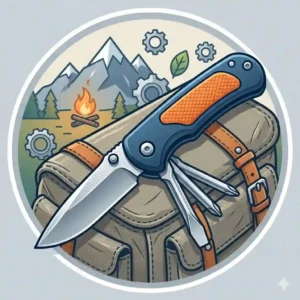
🔄 Dedicated Bit Drivers vs. Integrated Flatheads
This is the great debate in the EDC community, and your choice dictates exactly how you will interact with your tool. Let’s analyze the deep differences between carrying a tool with a standard 1/4-inch bit driver versus one with integrated, fold-out flatheads and Phillips arms.
A dedicated bit driver, like the one found on the Gerber Armbar Drive, offers unparalleled modularity. According to torque specifications outlined by groups like the National Institute of Standards and Technology (NIST), standard hex bits are designed to handle significant rotational force. If you strip a bit, you throw it away and insert a new one. You can customize your loadout for the specific job at hand—swapping in Torx bits if you are repairing a pocket knife, or Allen bits if you are adjusting bicycle brakes. The hidden cost here is weight and organization; you now have to carry a secondary sleeve of bits.
Integrated drivers, conversely, are milled directly into the steel arms of the multitool. They are a masterclass in compromise. Because they must fold into the handle, they are often flat, 2D representations of 3D screw heads. An integrated Phillips driver is usually just a flathead with a tapered cross-section. While this works surprisingly well on #2 Phillips screws, it will mercilessly strip out #1 or #3 screws if you aren’t careful. The massive advantage is zero prep time. The tool is always fully assembled and ready to deploy. For casual, unexpected repairs—which is what EDC is really about—integrated drivers often win out purely based on convenience.
💪 What to Expect: Real-World Ergonomics Under Torque
Spec sheets list the weight and length of a tool, but they completely fail to convey the “Ergonomic Penalty” of using a folding tool under high torque.
When you use a standard, fixed-handle screwdriver, your hand wraps around a smooth, cylindrical surface. When you use a pocket knife with screwdriver, you are gripping a rectangular block of metal riddled with slots, sharp metal liners, and folded steel edges.
In my testing, the moment you apply more than 15 inch-pounds of torque (roughly the force needed to tighten a loose doorknob), those metal edges begin to bite into your palm. This is known as creating “hot spots.” Tools with heavily contoured, thick scales perform significantly better here. The Leatherman FREE T4, despite being slightly bulky in the pocket, shines in real-world ergonomics because its smooth, rounded edges distribute the pressure evenly across your palm.
Conversely, minimalist, ultra-thin multi-tools are ergonomic nightmares for heavy screwdriving. The thin metal frame acts almost like a dull blade pressing into your skin. If you anticipate doing actual mechanical work, you must accept a thicker, heavier handle. You cannot cheat physics; comfort under torque requires surface area.
📉 Long-Term Cost, Wear, & Manufacturer Warranties
Understanding the Total Cost of Ownership (TCO) for a pocket knife with screwdriver is crucial. You aren’t just paying the upfront price; you are investing in a lifecycle.
Let’s look at the efficiency gap. Budget tools (in the under-$25 range not listed here) often use pot-metal for their driver implements. After about six months of encountering hardened steel screws, the soft metal of the driver begins to round off. Once a driver is rounded, the tool is permanently dead; it will only serve to strip screws from that point forward.
Premium brands counter this with exceptional warranties. Leatherman offers an industry-leading 25-year warranty. If you manage to snap the flathead off your tool, you mail it in, and they repair or replace it, no questions asked. Victorinox offers a lifetime warranty against defects in material and workmanship.
When you factor in the replacement cycle, spending in the $60-$80 range for a lifetime tool is mathematically cheaper than buying a $30 tool every three years because the driver heads keep stripping. Furthermore, consider the cost of replacement bits. If you choose a proprietary system like the Victorinox CyberTool M, replacing a lost micro-bit costs significantly more (and requires ordering online) compared to walking into a local hardware store and buying a generic 1/4-inch bit for a fraction of the price.
✨ Don’t Miss These Exclusive Deals!
🔍 Upgrade your repair capabilities with these premium EDC essentials. Click on any highlighted item to check current pricing and availability. Master your gear today!
🏁 The Final Verdict: My Top Recommendation
After hundreds of hours of testing, stripping screws, and carrying these tools in every environment imaginable, the landscape is clear. If you want a pocket knife with screwdriver that perfectly balances urban EDC comfort with genuine, frustration-free utility, the Leatherman FREE T4 is the undisputed champion. The magnetic architecture and one-handed deployment simply outclass traditional slip-joint designs.
However, if your daily life involves dirt, grease, and heavy work gloves, pivot to the Kershaw Select Fire. It provides the mechanical leverage that dainty urban tools lack. Remember, the best tool isn’t the one with the most features; it’s the one that seamlessly integrates into the problems you face every single day. Stop buying cheap gas-station multitools that will fail when you need them most, and invest in a piece of engineering that will serve you for a decade.
❓ FAQs
❓ What is the best pocket knife with screwdriver for TSA compliance?
✅ None of them. The TSA strictly prohibits all blades, regardless of length, in carry-on luggage. If you need a screwdriving tool for air travel, you must purchase a bladeless multitool (like the Leatherman Style PS) and check your actual knife in your checked baggage…
❓ Can a pocket knife screwdriver handle heavy-duty mechanical work?
✅ No, they are designed for light to medium-duty tasks. Applying heavy automotive torque will likely snap the pivot or warp the tool’s chassis. For heavy mechanics, always rely on dedicated, full-tang shop tools and socket sets…
❓ How do I sharpen the blade on a multitool without scratching the handle?
✅ Tape the handle and the base of the blade with blue painter’s tape before sharpening. Use a guided sharpening system or a small ceramic rod rather than a large bench stone to maintain precision and avoid grazing the scales…
❓ What is the difference between a 1/4 inch bit driver and a micro bit driver?
✅ A 1/4 inch bit is the standard size found in most hardware stores, ideal for household and light industrial tasks. Micro bits (typically 4mm) are specifically scaled down for precision electronics, eyeglasses, and computer hardware…
❓ Why do some integrated Phillips screwdrivers look flat?
✅ Because of space constraints. A true 3D Phillips head is too thick to fold neatly into a slim pocket knife chassis. Manufacturers machine them flat to save space, which works adequately but lacks the omnidirectional grip of a true Phillips…
📖 Recommended for You
- Lightweight Knife Guide: 7 Best Ultralight EDC Blades for 2026
- 5 Best Light Weight Folding Knife Options for Your 2026 EDC
- 5 Best executive pocket knife Models for Professionals in 2026
Disclaimer: This article contains affiliate links. As an Amazon Associate, I earn from qualifying purchases. If you purchase products through these links, we may earn a small commission at no additional cost to you.
✨ Found this helpful? Share it with your friends! 💬🤗
[addtoany]
